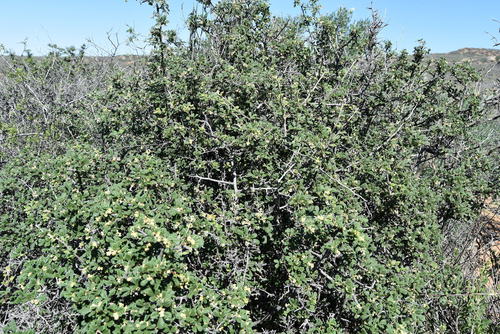
Rhus chirindensis forma legatii
Bak.f. , (Schonl.) R. & A.Fernandes
Bush jarrah, Red currant rhus
iNaturalist· cc-by-nc
(c) pete_leroux, some rights reserved (CC BY-NC)
iNaturalist· cc-by-nc
(c) pete_leroux, some rights reserved (CC BY-NC)
iNaturalist· cc-by-nc
(c) pete_leroux, some rights reserved (CC BY-NC)
Description
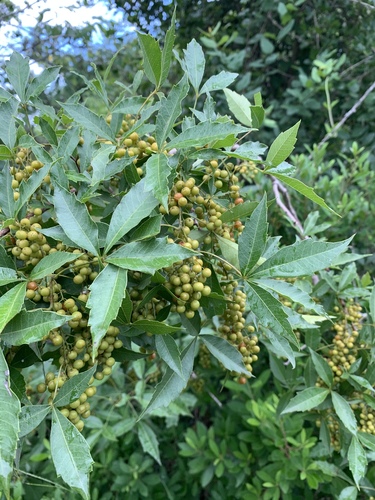
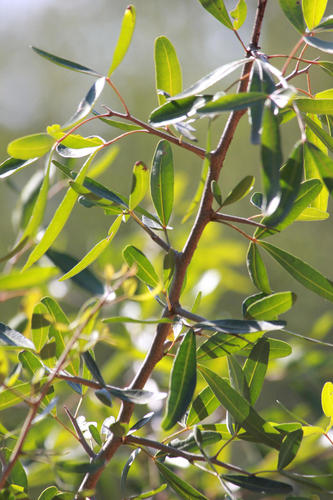
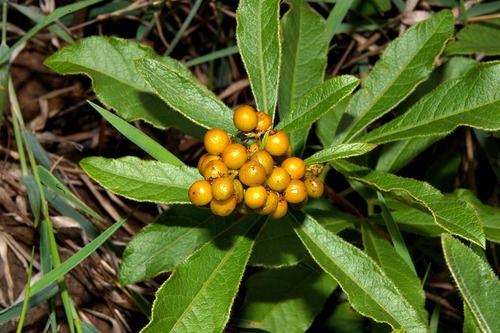
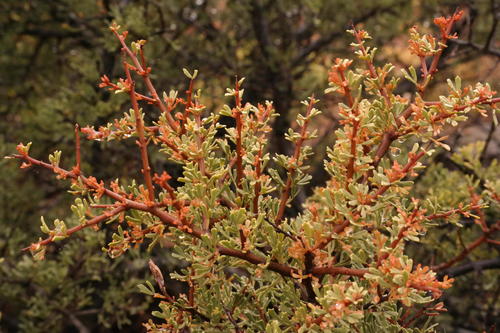
A tall tree. It normally loses its leaves during the year. It grows to 25 m tall. The trunk can be 0.6-1.3 m across. It can also grow as a straggling shrub. The stems of young plants are thorny but mature trees do not have thorns. The bark is rough. When the stem is cut the sap is blood red. The young leaves are reddish. Mature leaves are dark glossy green. The form of this tree in tropical Africa is hairy. The leaflets are large. They are 13 cm long and 6 cm wide. The side leaflets are smaller, narrow at both ends, have sharp points and without stalks. The end leaflet has a short stalk. The flowers are in branched sprays. The male flower sprays are at the end of branches and are long while the female sprays are in the axils of leaves and are shorter. The flowers are very small but occur in very large numbers. The fruit are small, round and red. The fruit are sweet and edible.
Edible Uses
The small round red fruit are sweet and edible.
Traditional Uses
The fruit are eaten.
This uses section is brief — help expand it
Distribution
A tropical plant. It grows in a wide variety of places. It can be in stony hillsides, open woodland, mountain scrub or along streams.
Where It Grows
Africa, East Africa, Eswatini, Malawi, Mozambique, South Africa, Southern Africa, Swaziland, Zimbabwe,
Notes
There are about 200 Rhus species.
Synonyms
Also Known As
Inhlangishane-lenkhulu
References (3)
- Palgrave, K.C., 1996, Trees of Southern Africa. Struik Publishers. p 474
- Palmer, E and Pitman, N., 1972, Trees of Southern Africa. Vol. 2. A.A. Balkema, Cape Town p 1243
- van Wyk, B, van Wyk, P, and van Wyk B., 2000, Photographic guide to Trees of Southern Africa. Briza. p 266