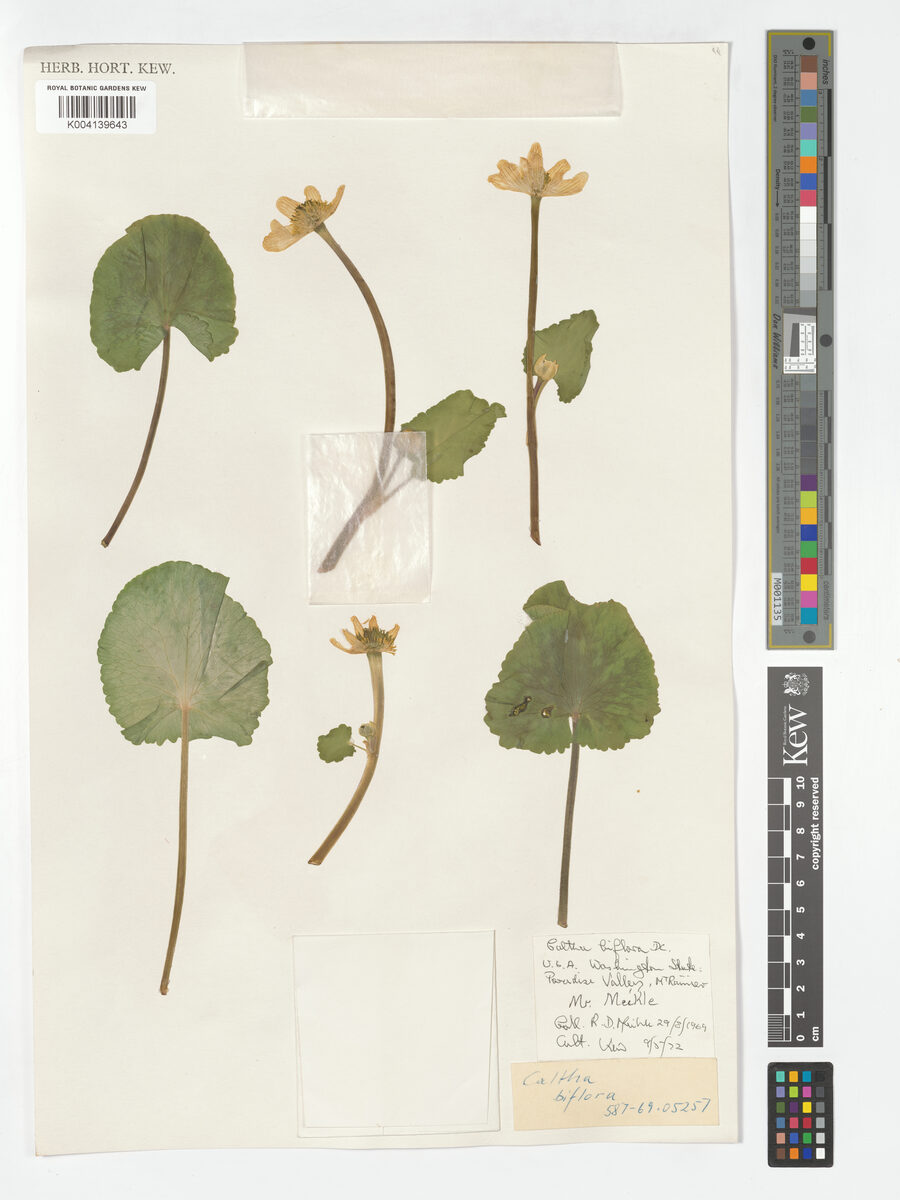
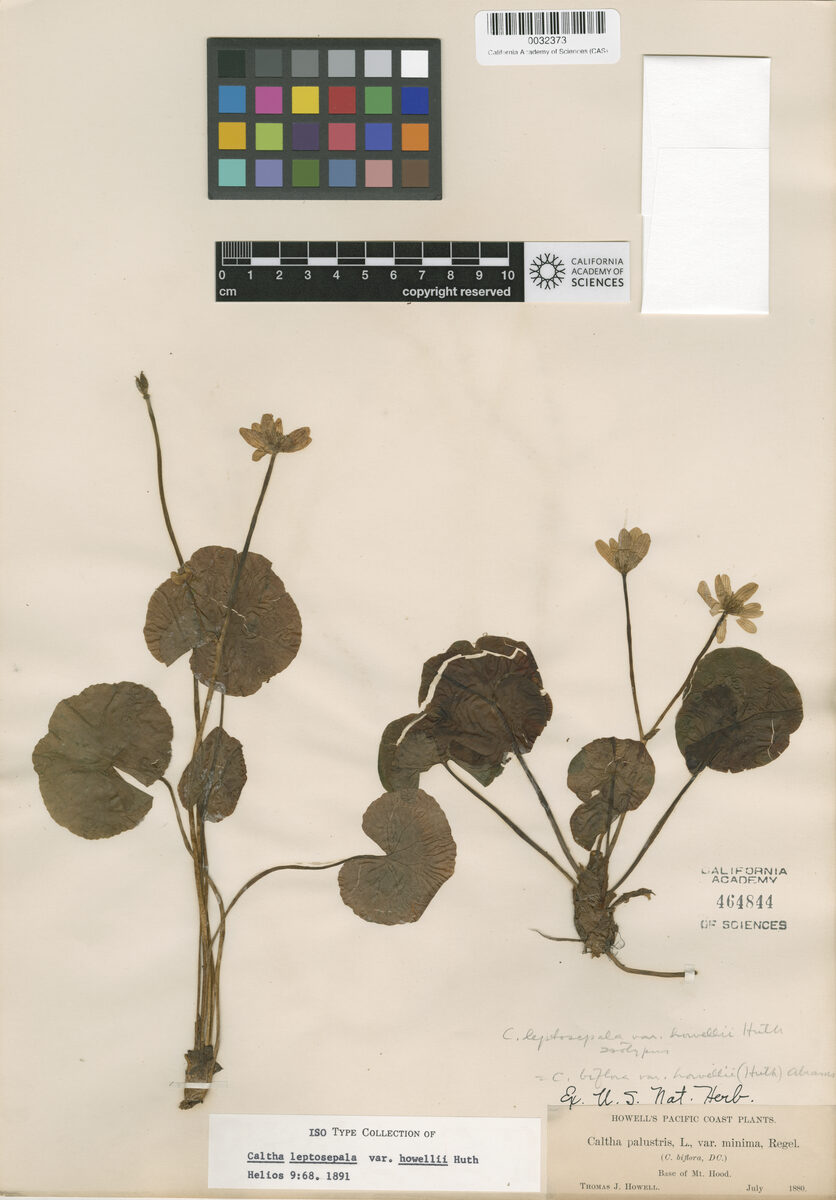
Ranunculus bulbosus
L.
Bulbous Buttercup, Bulbous crowfoot
iNaturalist· cc-by-nc-sa
(c) José María Escolano, some rights reserved (CC BY-NC-SA)
iNaturalist· cc-by-sa
(c) Douglas Goldman, some rights reserved (CC BY-SA)
Summary
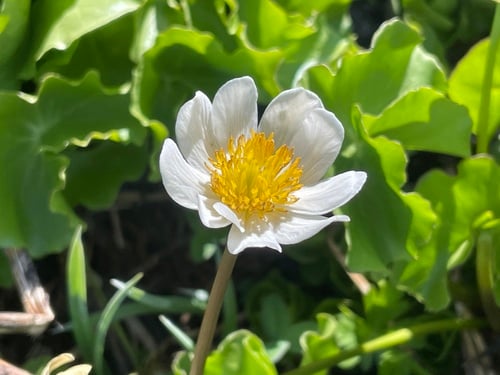
Source: WikipediaRanunculus bulbosus, commonly known as bulbous buttercup or St. Anthony's turnip, is a perennial flowering plant in the buttercup family Ranunculaceae. It has bright yellow flowers, and deeply divided, three-lobed long-petioled basal leaves.
Description
A small plant which keeps growing from year to year. It grows 30-50 cm high and spreads 50-100 cm wide. The leaves are oval and pointed and have 3 large lobes with teeth. The flowers are bright, shiny and yellow. They are 30 mm across.
Edible Uses
Leaves can be eaten cooked, though they are considered a famine food of last resort. The root must be dried thoroughly before use and then thoroughly cooked; when boiled, it is said to become mild enough to eat. Both uses come with the caveat that toxicity is a concern and neither is recommended without due consideration.
Traditional Uses
The starch of the root or bulb is used to add to bread flour after the bitter element is removed. The roots can be boiled and eaten after thorough boiling and drying. The young flowers are pickled. CAUTION The plant has strongly acrid juice that causes blistering.
Medicinal Uses
The whole plant, and especially the sap, is acrid, anodyne, antispasmodic, diaphoretic, and rubefacient. Historically it was rubbed on the skin by beggars to produce open sores. The root has been placed in a tooth cavity as a painkiller. A decoction of the plant has been used to treat venereal disease. This remedy should be used with caution given the plant's toxicity.
Known Hazards
All parts of the plant are poisonous, the toxins can be destroyed by heat or by drying[4, 10, 13, 19, 62, 65]. The plant has a strongly acrid juice that can cause blistering to the skin.
Distribution
It is a temperate plant. It suits hardiness zones 7-10.
Where It Grows
Africa, Australia, Britain, Chile, Europe, France, Luxembourg, North Africa, North America, Slovenia, South America, USA,
Cultivation
Prefers a moist loamy soil. A common weed of lawns and gardens, it can be very difficult to eradicate when established. It is a polymorphic species and there is at least one named variety which has been selected for its ornamental value. A greedy plant, inhibiting the growth of nearby plants, especially legumes.
Propagation
Sow seed in spring in a cold frame. This species is a common weed and establishes readily without much assistance. Division in spring is very easy, though likely unnecessary; larger divisions can be planted directly into their permanent positions.
Other Uses
None known
Notes
There are about 400 Ranunculus species.
Also Known As
Fracesilla, Gomoljasta zlatica, Hierba velluda
References (8)
- Bodkin, F., 1991, Encyclopedia Botanica. Cornstalk publishing, p 868
- Brickell, C. (Ed.), 1999, The Royal Horticultural Society A-Z Encyclopedia of Garden Plants. Convent Garden Books. p 858
- Cundall, P., (ed.), 2004, Gardening Australia: flora: the gardener's bible. ABC Books. p 1131
- Hedrick, U.P., 1919, (Ed.), Sturtevant's edible plants of the world. p 547
- http://www.botanic-gardens-ljubljana.com/en/plants
Show all 8 references Hide references
- Kermath, B. M., et al, 2014, Food Plants in the Americas: A survey of the domesticated, cultivated and wild plants used for Human food in North, Central and South America and the Caribbean. On line draft. p 738
- Plants for a Future database, The Field, Penpol, Lostwithiel, Cornwall, PL22 0NG, UK. http://www.scs.leeds.ac.uk/pfaf/
- Sp. pl. 1:554. 1753