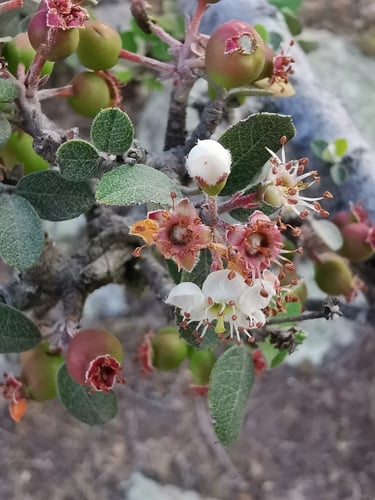
Prunus umbellata
Elliott
Sloe cherry, Flatwood plum, Black sloe, Sloe-of-the-South, Southern sloe
iNaturalist· cc-by
(c) mfeaver, some rights reserved (CC BY), uploaded by mfeaver
iNaturalist· cc-by-nc
(c) hollyyoung, some rights reserved (CC BY-NC), uploaded by hollyyoung
iNaturalist· cc-by-nc-sa
(c) Mary Keim, some rights reserved (CC BY-NC-SA)
Summary
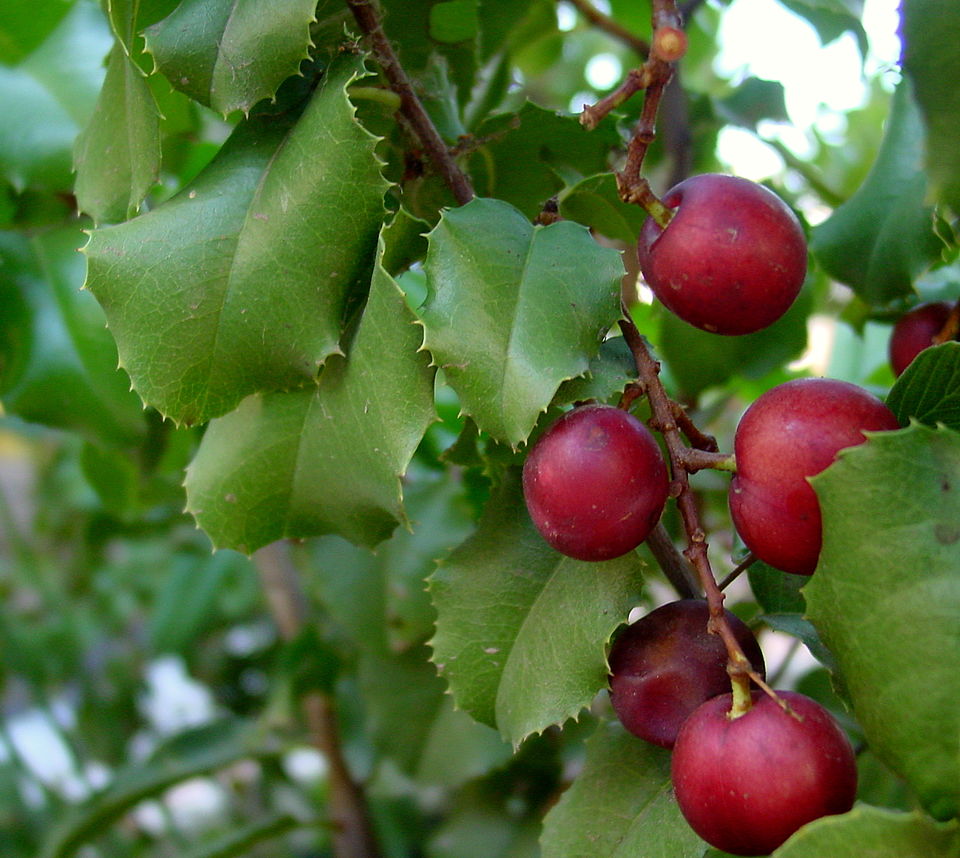
Source: WikipediaPrunus umbellata, called flatwoods plum, hog plum and sloe plum, is a plum species native to the United States from Virginia, south to Florida, and west to Texas. Prunus umbellata can reach 6.1 meters (20 feet) in height with a 4.6 m (15 ft) spread. It has alternate serrate green leaves that turn yellow in autumn. Flowers are white, creamy, or grayish. Fruits are round, purple, and 1.3–2.5 centimeters (1⁄2–1 inch) in diameter. The trees bloom and bear fruit later than other plums. The fruits mature August–October. Large crops appear only every 3–4 years. P. umbellata trees can live up to 40 years and are very difficult to distinguish from P. angustifolia, with which it hybridizes easily. The fruits are made into jellies and jams.
Description
A small tree. The trunk is short. The crown is broad and flattened. It can form thickets. It grows 6 m high. The trunk is 15 cm across. The bark is dark brown and scaly. The leaves are 4-7 cm long by 2-4 cm wide. They are narrowly oval and have fine teeth along the edge. They are dark green above and paler underneath. The flowers are 15 mm wide and have 5 rounded white petals. There are 2-5 flowers in a cluster. They are on slender equal length stalks. The fruit is a plum. It is 10-15 mm wide and the skin can be black, red or yellow. The pulp is thick and sour. The stone is oval.
Edible Uses
The fruit has thick, sour flesh and is used in large quantities in preserves, making excellent tart pies, jams, and jellies. The skin is thick and tough, and the fruit is about 20mm in diameter, containing one large seed. The seed is also edible raw or cooked, but should not be eaten if it tastes too bitter.
Traditional Uses
The fruit is used in preserves. They are used for jellies and jams.
This uses section is brief — help expand it
Medicinal Uses
Like all members of the genus, this species contains amygdalin and prunasin, which break down in water to release hydrocyanic acid (prussic acid). In small amounts, this compound stimulates respiration, aids digestion, and produces a sense of well-being.
Known Hazards
Although no specific mention has been seen for this species, it belongs to a genus where most, if not all members of the genus produce hydrogen cyanide, a poison that gives almonds their characteristic flavour. This toxin is found mainly in the leaves and seed and is readily detected by its bitter taste. It is usually present in too small a quantity to do any harm but any very bitter seed or fruit should not be eaten. In small quantities, hydrogen cyanide has been shown to stimulate respiration and improve digestion, it is also claimed to be of benefit in the treatment of cancer. In excess, however, it can cause respiratory failure and even death.
Distribution
Temperate. It grows along streams and in sandy or rocky slopes. It grows to 300 m altitude in the SE region of USA.
Where It Grows
North America, USA,
Cultivation
Thrives in a well-drained moisture-retentive loamy soil. Prefers some lime in the soil but is likely to become chlorotic if too much lime is present. Succeeds in sun or partial shade though it fruits better when growing in a sunny position. This species is not hardy in the colder areas of Britain, it tolerates temperatures down to between -5 and -10°c. The sub-species P. umbellata tarda. Wight. has a later-ripening fruit that matures in mid to late autumn. The fruit is sometimes sold in markets in N. America. Most members of this genus are shallow-rooted and will produce suckers if the roots are damaged. Plants in this genus are notably susceptible to honey fungus.
Propagation
Seed requires 2–3 months of cold stratification and is best sown in a cold frame as soon as it is ripe. Stored seed should be sown in a cold frame as early in the year as possible and protected from mice. Germination can be slow, sometimes taking 18 months. Prick out seedlings into individual pots when large enough to handle, overwinter in a greenhouse or cold frame, then plant out in late spring or early summer the following year. Cuttings of half-ripe wood with a heel can be taken in July/August in a frame. Softwood cuttings from vigorous plants can be taken in spring to early summer in a frame. Layering can be done in spring.
Other Uses
A green dye can be obtained from the leaves, and a dark grey to green dye from the fruit. The wood is heavy, hard, and close-grained.
Notes
There are about 200 Prunus species.
References (9)
- Beckstrom-Sternberg, Stephen M., and James A. Duke. "The Foodplant Database." http://probe.nalusda.gov:8300/cgi-bin/browse/foodplantdb.(ACEDB version 4.0 - data version July 1994)
- Elias, T.S. & Dykeman P.A., 1990, Edible Wild Plants. A North American Field guide. Sterling, New York p 203
- Facciola, S., 1998, Cornucopia 2: a Source Book of Edible Plants. Kampong Publications, p 205
- Hedrick, U.P., 1919, (Ed.), Sturtevant's edible plants of the world. p 530
- Kermath, B. M., et al, 2014, Food Plants in the Americas: A survey of the domesticated, cultivated and wild plants used for Human food in North, Central and South America and the Caribbean. On line draft. p 715
Show all 9 references Hide references
- Little, E.L., 1980, National Audubon Society Field Guide to North American Trees. Alfred A. Knopf. p 507
- Plants for a Future, The Field, Penpol, Lostwithiel, Cornwall, PL22 0NG, UK. http://www.scs.leeds.ac.uk/pfaf/
- Sketch bot. S. Carolina 1:541. 1821
- Uphof,