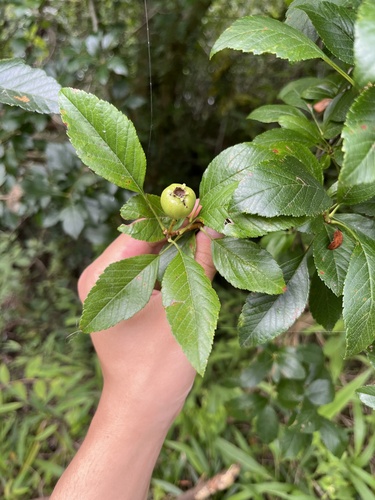
Prunus domestica
L.
European plum
iNaturalist· cc-by-sa
(c) Ввласенко, some rights reserved (CC BY-SA)
iNaturalist· cc-by-nc
(c) Koby Kilgore, some rights reserved (CC BY-NC)
Summary
Source: WikipediaPrunus domestica is a species of flowering plant in the family Rosaceae. A deciduous tree, it includes many varieties of the fruit trees known as plums in English, though not all plums belong to this species. The greengages and damsons also belong to subspecies of P. domestica.
Description
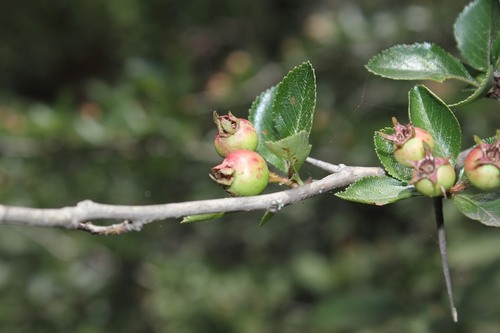
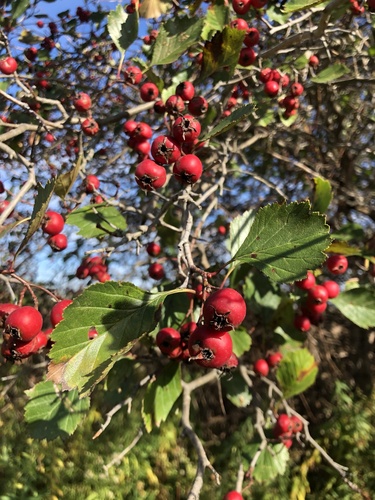
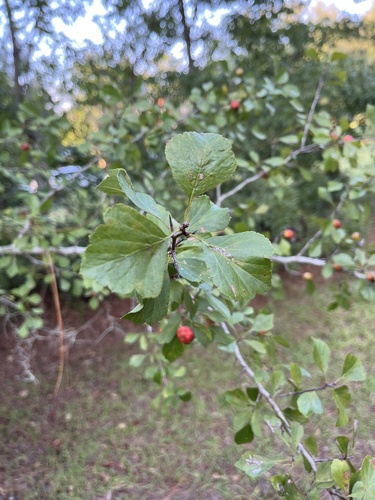
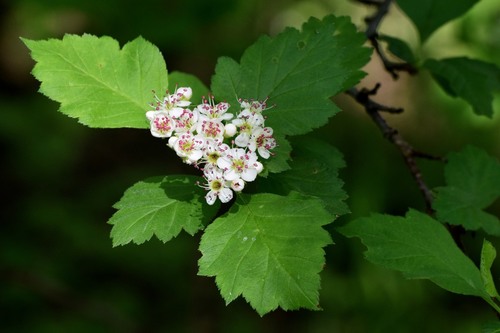
A small deciduous tree. It grows 6-10 m high. The young twigs are hairy. The bark is grey-brown and becomes cracked with age. The leaves have stalks. They are alternate. The leaves are 2-7 cm long by 0.7-3.5 cm wide. They are oval and taper to the tip. They have fine teeth. The base is rounded. The flowers are white. The fruit are round. They are golden yellow, green, red or dark purple. They have a waxy bloom. Fruit can be 7.5 cm long. The stone is large and rough or pitted. There are many cultivated varieties.
Edible Uses
The fruit can be eaten raw or cooked. Its character varies considerably by cultivar, but is generally somewhat mealy, soft and juicy with a flavour ranging from very sweet to acid; more acid fruits are typically used only for cooking. Fruit size varies widely by cultivar but can reach 8cm in length, and each fruit contains a single large seed. The seed is edible raw or cooked but should not be eaten if it tastes too bitter. An edible gum can be collected from points of damage on the trunk. The seed contains about 20% of an edible semi-drying oil with an agreeable almond smell and flavour. The flowers are also edible and can be used as a garnish for salads and ice cream or brewed into a tea.
Medicinal Uses
Dried fruit (prunes) act as a safe and effective laxative and are also stomachic. The bark is sometimes used as a febrifuge. All members of the genus contain amygdalin and prunasin, compounds that break down in water to release hydrocyanic acid (prussic acid or cyanide). In small amounts this exceedingly poisonous compound stimulates respiration, improves digestion and gives a sense of well-being.
Known Hazards
Although no specific mention has been seen for this species, it belongs to a genus where most, if not all members of the genus produce hydrogen cyanide, a poison that gives almonds their characteristic flavour. This toxin is found mainly in the leaves and seed and is readily detected by its bitter taste. It is usually present in too small a quantity to do any harm but any very bitter seed or fruit should not be eaten. In small quantities, hydrogen cyanide has been shown to stimulate respiration and improve digestion, it is also claimed to be of benefit in the treatment of cancer. In excess, however, it can cause respiratory failure and even death.
Distribution
It is a temperate plant. In Nepal it grows between 1200-2000 m altitude. It needs 1,000-1,200 hours of chilling below 7°C during the dormant period. They do best with 90-110 cm annual and well-distributed rainfall. A well drained soil and a pH of 5.5-6.8 is best. It suits hardiness zones 5-9.
Where It Grows
TEMPERATE ASIA: Turkey. EUROPE: Turkey,
Cultivation
Requires a well-drained moisture retentive soil and a sheltered position. Succeeds in light shade but fruits better in a sunny position. Thrives in a loamy soil, doing well on limestone. Grows well in heavy clay soils. Prefers some chalk in the soil but it is apt to become chlorotic if too much is present. Prefers a pH between 6 and 6.5. The plum is widely cultivated for its edible fruit in temperate zones, there are many named varieties able to supply fresh fruits from late July to November or December. Many cultivars are fully self-fertile, though some are partially self-sterile and others require cross-pollination. Where space is at a premium, or at the limits of their climatic range, plums can be grown against a wall. Most cultivars will grow well against a sunny south or west facing wall, whilst an east facing wall will suit some of the tougher cultivars, a north facing wall is not really suitable. This species is probably a hybrid of ancient origin between P. spinosa and P. cerasifera, coupled with chromosome doubling. It does not cross-pollinate with the Japanese plum, P. salicina. Prefers growing in a continental climate, mild winters tend to encourage earlier flowering with a greater risk of frost damage to the blossom. In Britain the best fruits are produced away from the western side of the country. Most members of this genus are shallow-rooted and will produce suckers if the roots are damaged. Plants in this genus are notably susceptible to honey fungus. A sprouting standard sending up shoots from the base. In garden design, as well as the above-ground architecture of a plant, root structure considerations help in choosing plants that work together for their optimal soil requirements including nutrients and water. Harvesting typically occurs in late summer to early autumn, with specific timing varying by species. For instance, plums and peaches are usually harvested from July to September (Northern Hemisphere), while almonds are harvested in August to September (Northern Hemisphere). Prunus species usually flower in early spring, often between March and April (Northern Hemisphere), depending on the species and local climate. Growth rates vary among species, but generally, Prunus trees can grow moderately fast and often reach full height in 3 to 5 years. However, depending on the species and growing conditions, they may take several years to bear fruit. Some Prunus species (like many plums and almonds) are self-fertile, while others (like sweet cherries and certain apricots) require cross-pollination with another compatible variety for optimal fruit set. Growth rates vary among species, but generally, Prunus trees can grow moderately fast, often reaching full height in 3 to 5 years. However, they may take several years to bear fruit, depending on the species and growing conditions.
Propagation
Seed requires 2–3 months of cold stratification and is best sown in a cold frame as soon as it is ripe. Stored seed should be sown in a cold frame as early in the year as possible and protected from mice. Germination can be slow, sometimes taking 18 months. Prick out seedlings into individual pots when large enough to handle, overwinter them in a greenhouse or cold frame, and plant out in late spring or early summer the following year. Cuttings of half-ripe wood with a heel can be taken in July/August in a frame. Softwood cuttings from strongly growing plants can be taken in spring to early summer in a frame. Layering can be done in spring.
Other Uses
Prunus species can be used as windbreaks and in alley cropping systems, improving biodiversity by providing habitats for pollinators and other wildlife, and some varieties contribute to soil health. A green dye can be obtained from the leaves, a dark grey to green dye from the fruit, and a yellow dye from the bark. Gum collected from points of damage along the stem can be used as an adhesive. The ground seeds are used in the production of cosmetic face-masks for dry skin. A semi-drying oil is obtained from the seed. The wood is hard and compact and is used for making musical instruments. The flowers are rich in nectar and pollen, attracting bees, butterflies, and other pollinators. The fruits provide food for birds and mammals, and the trees offer shelter and nesting or roosting sites. The bark and leaf litter provide overwintering sites for invertebrates.
Synonyms
Also Known As
Aaru bakhara, Abrunheiro, Ahom bogori, Alubukhara, Alucha, Ameixa-europeia, Ameixa, Ciruela, Dag erigi, Damsons, Endrina, Erik, Italian plum, Kreegipuu, Kreek, Li zi, Lucha, Naaspai schein, Ou zhou li, Pflaumenbaum, Ploomipuu, Plum, Prune commune, Prunero, Seiyou sumono, Susina, Zwetschge
References (75)
- Ambasta, S.P. (Ed.), 2000, The Useful Plants of India. CSIR India. p 495
- Anderson, E. F., 1993, Plants and people of the Golden Triangle. Dioscorides Press. p 219
- Awan, M. R., et al, 2011, Studies on traditional knowledge of economically important plants of Kaghan Valley, Mansehra District, Pakistan. Journal of Medicinal Plants Research Vol. 5(16), pp. 3958-3967
- Bianchini, F., Corbetta, F., and Pistoia, M., 1975, Fruits of the Earth. Cassell. p 142
- Blamey, M and Grey-Wilson, C., 2005, Wild flowers of the Mediterranean. A & C Black London. p 77
Show all 75 references Hide references
- Bodkin, F., 1991, Encyclopedia Botanica. Cornstalk publishing, p 840
- Bremness, L., 1994, Herbs. Collins Eyewitness Handbooks. Harper Collins. p 77
- Bussman, R. W., et al, 2016, A comparative ethnobotany of Khevsureti, Samtskhe-Javakheti, Tusheti, Svaneti, and Racha-Lechkhumi, Republic of Georgia (Sakartvelo), Caucasus. Journal of Ethnobiology and Ethnomedicine.
- Bussman, R. W. et al, 2017, Ethnobotany of Samtskhe-Javakheti, Sakartvelo (Republic of Georgia), Caucasus. Indian Journal of Traditional Knowledge Vol. 16(1) pp 7-24
- Chakraborty, S. & Chaturbedi, H. P., 2014, Some Wild Edible Fruits of Tripura- A Survey. Indian Journal of Applied research. (4) 9
- Chamorro, M. F., & Ladio, A., 2020, Native and exotic plants with edible fleshy fruits utilized in Patagonia and their role as sources of local functional foods. BMC Complementary Medicine and Therapies. 20:155
- Cheifetz, A., (ed), 1999, 500 popular vegetables, herbs, fruits and nuts for Australian Gardeners. Random House p 224
- Coombes, A.J., 2000, Trees. Dorling Kindersley Handbooks. p 260
- Cruz, I. M., et al, 2015, Edible fruits and seeds in the State of Mexico. Revista Mexicana de Ciencias Agricolas. Vol. 6. Num. 2 pp 331-346
- Cundall, P., (ed.), 2004, Gardening Australia: flora: the gardener's bible. ABC Books. p 1093
- Dashorst, G.R.M., and Jessop, J.P., 1998, Plants of the Adelaide Plains & Hills. Botanic Gardens of Adelaide and State Herbarium. p 74
- Facciola, S., 1998, Cornucopia 2: a Source Book of Edible Plants. Kampong Publications, p 202
- Farfan, B., et al, 2007, Mazahua Ethnobotany and Subsistence in the Monarch Butterfly Biosphere Reserve, Mexico. Economic Botany 61(2) 2007, pp 173-191
- Flora of China. www.eFloras.org Volume 9
- Flowerdew, B., 2000, Complete Fruit Book. Kyle Cathie Ltd., London. p 38 (As Prunus damascena)
- Glowinski, L., 1999, The Complete Book of Fruit Growing in Australia. Lothian. p 58
- Haj, F., et al, 2012, Species Diversity and Ethno Botanical Classes of the Flora of Allai Valley District Battagram Pakistan. International Journal of Plant Research 2012, 2(4): 111-123
- Hamayun, M., Ethnobotanical Studies of some Useful Shrubs and Trees of District Buner, NWFP, Pakistan
- Hedrick, U.P., 1919, (Ed.), Sturtevant's edible plants of the world. p 523
- Heywood, V. H. & Zohary, D.,1995, A Catalogue of the Wild Relatives of Cultivated Plants Native to Europe. Flora Mediterranea 5 - 1995, p 394
- Hibbert, M., 2002, The Aussie Plant Finder 2002, Florilegium. p 241
- Hu, Shiu-ying, 2005, Food Plants of China. The Chinese University Press. p 443
- INFOODS:FAO/INFOODS Databases
- Irving, M., 2009, The Forager Handbook, A Guide to the Edible Plants of Britain. Ebury Press p 272
- Jardin, C., 1970, List of Foods Used In Africa, FAO Nutrition Information Document Series No 2.p 156
- John, L., & Stevenson, V., 1979, The Complete Book of Fruit. Angus & Robertson p 234 (Also as Prunus damascena)
- Kalle, R. & Soukand, R., 2012, Historical ethnobotanical review of wild edible plants of Estonia (1770s-1960s) Acta Societatis Botanicorum Poloniae 81(4):271-281
- Kapelle, M., et al, 2000, Useful plants within a Campesino Community in a Costa Rican Montane Cloud Forest. Mountain Research and Development, 20(2): 162-171
- Kayabasi, N. P., et al, 2018, Wild edible plants and their traditional use in the human nutrition in Manyas (Turkey). Indian Journal of Traditional Knowledge. Vol. 17(2), April 2018, pp 299-306
- Khan, D. & Shaukat, S.S., 2006, The Fruits of Pakistan: Diversity, Distribution, Trends of Production and Use. Int. J. Biol. Biotech., 3(3):463-499
- Khan, W., et al, Ethnomedicinal plants of Kakul Hills, District Abbottabad, KPK, Pakistan.
- Kiple, K.F. & Ornelas, K.C., (eds), 2000, The Cambridge World History of Food. CUP p 1837
- Kumar, A., et al, 2012, Ethnobotanical Edible Plant Biodiversity of Lepcha Tribes. Indian Forester, 138 (9):798-803
- Ladio, A., Lozada, M. & M. Weigandt, 2007, Comparison of traditional wild plant knowledge between aboriginal communities inhabiting arid and forest environments in Patagonia, Argentina. Journal of Arid Environments 69 (2007) 695–715
- Lazarides, M. & Hince, B., 1993, Handbook of Economic Plants of Australia, CSIRO. p 199
- Little, E.L., 1980, National Audubon Society Field Guide to North American Trees. Alfred A. Knopf. p 498
- Lord, E.E., & Willis, J.H., 1999, Shrubs and Trees for Australian gardens. Lothian. p 67
- Lorenzi, H., Bacher, L., Lacerda, M. & Sartori, S., 2006, Brazilian Fruits & Cultivated Exotics. Sao Paulo, Instituto Plantarum de Estuados da Flora Ltda. p 497
- Macmillan, H.F. (Revised Barlow, H.S., et al) 1991, Tropical Planting and Gardening. Sixth edition. Malayan Nature Society. Kuala Lumpur. p 317
- Mabey, R., 1973, Food for Free. A Guide to the edible wild plants of Britain, Collins. p 170
- Maghradze, D. et al, 2012, Minor and Underutilized Fruits in Georgia and Their Wild Relatives. In Acta Horticulturae Number 948 p 41-47
- Manandhar, N.P., 2002, Plants and People of Nepal. Timber Press. Portland, Oregon. p 382
- Mashile, S. P., et al, 2019, Indigenous fruit plants species of the Mapulana of Ehlanzeni district in Mpumalanga province, South Africa. South African Journal of Botany 122 (2019) 180–183
- Mukemre, M., et al, 2016, Survey of wild food plants for human consumption in villages of Catak, (Van-Turkey), Indian Journal of Traditional Knowledge. Vol. 15(2) pp. 183-191
- Murtem, G. & Chaudhrey, P., 2016, An ethnobotanical note on wild edible plants of Upper Eastern Himalaya, India. Brazilian Journal of Biological Sciences, 2016, v. 3, no. 5, p. 63-81
- Pham-Hoang Ho, 1999, An Illustrated Flora of Vietnam. Nha Xuat Ban Tre. p 804
- Pieroni A, Nebel S, Santoro RF, Heinrich M., 2005, Food for two seasons: culinary uses of non-cultivated local vegetables and mushrooms in a south Italian village. Int J Food Sci Nutr. 56(4):245-72
- Pieroni, A. & Soukand, R., 2018, Forest as Stronghold of Local Ecological Practice: Currently Used Wild Food Plants in Polesia, Northern Ukraine. Economic Botany, XX(X) pp. 1-21
- Plants for a Future, The Field, Penpol, Lostwithiel, Cornwall, PL22 0NG, UK. http://www.scs.leeds.ac.uk/pfaf/
- Polunin, O., & Stainton, A., 2006, Flowers of the Himalaya, Oxford India Paperbacks. p 115
- Plants of Haiti Smithsonian Institute http://botany.si.edu/antilles/West Indies
- Postman, J. D., et al, 2012, Recent NPGS Coordinated Expeditions in the Trans-Caucasus Region to Collect Wild Relatives of Temperate Fruit and Nut Crops. In Acta Horticulturae Number 948 p 191-198
- Roa, J. A. G. & Boada, D. S. G., 2018, Fundación para el Fortalecimiento de la Fruticultura y Plantas Alimenticias no Convencionales en Colombia.
- Ruiters-Welcome, A. K., 2019, Food plants of southern Africa. Ph.D. thesis. Univ. of Johannesburg p 94
- Segura, S., et al, 2018, The edible fruit species in Mexico. Genet Resour Crop Evol (2018) 65:1767–1793
- Small, E., 2009, Top 100 Food Plants. The world's most important culinary crops. NRC Research Press. p 435
- Soukand, R. & Kalle, R., 2016, Perceiving the Biodiversity of Food at Chest-height: use of the Fleshy Fruits of Wild Trees and Shrubs in Saaremaa, Estonia. Hum Ecol 44:265–272
- Sp. pl. 1:475. 1753
- Tardio, J., et al, 2006, Ethnobotanical review of wild edible plants in Spain. Botanical J. Linnean Soc. 152, 27-71
- Tasmanian Herbarium Vascular Plants list p 51
- Tsering, J., et al, 2017, Ethnobotanical appraisal on wild edible plants used by the Monpa community of Arunchal Pradesh. Indian Journal of Traditional Knowledge. Vol 16(4), October 2017, pp 626-637
- Upson, R., & Lewis R., 2014, Updated Vascular Plant Checklist and Atlas for the Falkland Islands. Falklands Conservation and Kew.
- USDA, ARS, National Genetic Resources Program. Germplasm Resources Information Network - (GRIN). [Online Database] National Germplasm Resources Laboratory, Beltsville, Maryland. Available: www.ars-grin.gov/cgi-bin/npgs/html/econ.pl (10 April 2000)
- van Wyk, B., 2005, Food Plants of the World. An illustrated guide. Timber press. p 308
- Vivien, J., & Faure, J.J., 1996, Fruitiers Sauvages d'Afrique. Especes du Cameroun. CTA p 278
- Watkins, R., 1979, Cherry, plum, peach, apricot and almond, in Simmonds, N.W., (ed), Crop Plant Evolution. Longmans. London. p 242
- Welcome, A. K. & Van Wyk, B.-E., 2019, An inventory and analysis of the food plants of southern Africa. South African Journal of Botany 122 (2019) 136–179
- Wiersema, J. H. & Leon, B., 2013, World Economic Plants. A Standard Reference CRC Press. 2nd Ed. p 561
- World Checklist of Useful Plant Species 2020. Royal Botanic Gardens, Kew
- Zeven, A. C. & de West, J. M. J., 1982, Dictionary of cultivated plants and their regions of diversity. Wageningen. p 101