Prunella vulgaris
L.
Self Heal, Healall, All-heal
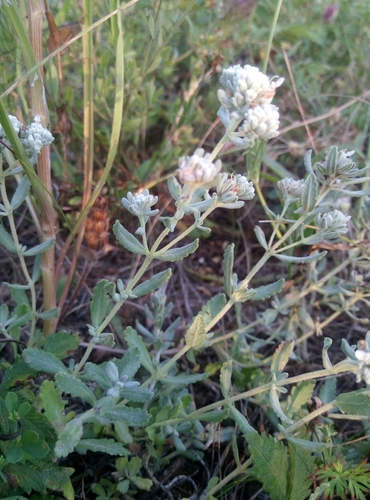
iNaturalist· cc-by-nc
(c) Valentin Hamon, some rights reserved (CC BY-NC), uploaded by Valentin Hamon
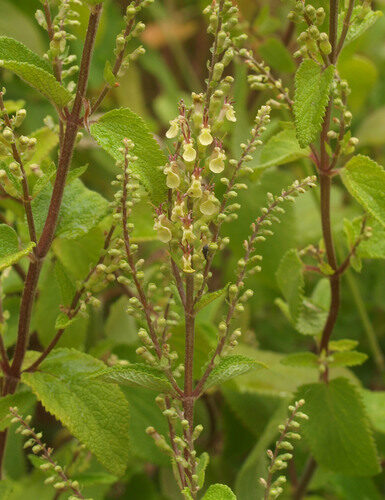
iNaturalist· cc-by-nc
(c) kenbuchholz, some rights reserved (CC BY-NC)
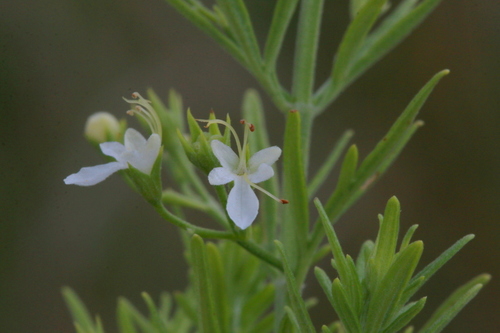
iNaturalist· cc-by-nc
(c) Теймуров А.А., some rights reserved (CC BY-NC), uploaded by Теймуров А.А.
Summary
Source: WikipediaPrunella vulgaris, the common self-heal, heal-all, woundwort, heart-of-the-earth, carpenter's herb, brownwort or blue curls, is an herbaceous flowering plant in the mint family (Lamiaceae).
Description
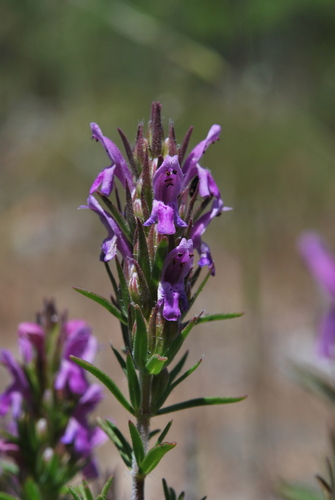
A creeping herb. It keeps growing from year to year. It has short underground stems or rhizomes which then produce upright stems. It can be slightly hairy. The stems can be 50 cm long. They are square or flattened in cross section and purple in colour. The leaves are oval and can be slightly scalloped. They have leaf stalks. The flowers are deep blue or purple but can be white. They grow in spikes. They are surrounded by rounded bracts with a long tapering point. They are purplish and with white bristles underneath.
Edible Uses
The leaves can be eaten raw or cooked and work well in salads, soups, and stews. They are somewhat bitter due to tannin content, though this can be reduced by washing the leaves. A cold water infusion of freshly chopped or dried and powdered leaves makes a refreshing and very tasty beverage.
Traditional Uses
A drink can be made by dropping the freshly chopped or dried leaves in cold water. The young leaves and shoots are eaten raw in salads. They are also cooked with other greens as a potherb. They can be added to soups or stews.
Medicinal Uses
Self heal has a long history of folk use, particularly for treating wounds, ulcers, and sores. It was also taken internally as a tea for fevers, diarrhoea, sore mouth, and internal bleeding. In Korea it is used to treat oedema, nephritis, scrofula, and goitre. The whole plant is alterative, antibacterial, antipyretic, antiseptic, antispasmodic, astringent, carminative, diuretic, febrifuge, hypotensive, stomachic, styptic, tonic, vermifuge, and vulnerary. It inhibits the growth of Pseudomonas, Bacillus typhi, E. coli, and Mycobacterium tuberculi, among others. The plant can be used fresh or dried; for drying, it is best harvested in mid-summer. It is experimentally confirmed as antibiotic and hypotensive.
Distribution
It is a temperate plant. It grows in moist shaded and partly shaded ground. In Argentina it grows between 200-1,200 m above sea level. It suits hardiness zones 3-9. Tasmania Herbarium. In Sichuan and Yunnan.
Where It Grows
Afghanistan, Africa, Alaska, Albania, Algeria, Andaman Islands, Argentina, Armenia, Asia, Australia, Austria, Azerbaijan, Balkans, Belarus, Belgium, Bermuda, Bhutan, Bolivia, Bosnia, Brazil, Britain, Bulgaria, Canada, Canary Islands, Cape Verde, Caucasus, Central America, Central Asia, Chile, China, Colombia, Costa Rica, Cyprus, Czech Republic, Denmark, Dominican Republic, Egypt, Estonia, Europe, Falklands, Faroe islands, Finland, France, Germany, Greece, Guatemala, Haiti, Hawaii, Himalayas, Hungary, India, Indochina, Iran, Iraq, Ireland, Israel, Italy, Jamaica, Japan, Kazakhstan, Korea, Korea N, Kyrgyzstan, Latvia, Lebanon, Lithuania, Lord Howe Island, Luxembourg, Manchuria, Mediterranean, Mexico, Middle East, Moldova, Mongolia, Morocco, Myanmar, Nepal, Netherlands, New Zealand, Norfolk Island, North America, Northeastern India, Norway, Pakistan, Palestine, Peru, Poland, Portugal, Romania, Russia, SE Asia, Siberia, Sicily, Sikkim, Sinai, South America, Spain, Sweden, Switzerland, Syria, Taiwan, Tajikistan, Tasmania, Tibet, Tunisia, Turkey, Türkiye, Turkmenistan, Ukraine, Uruguay, USA, Uzbekistan, Venezuela, Vietnam, West Indies, Xinjiang, Yugoslavia,
Cultivation
Thrives in any damp soil, in full sun or in light shade. Plants are apt to become troublesome weeds in turf that is at all damp. Self heal is a good plant for growing in the spring meadow.
Propagation
Sow seed in mid spring in a cold frame. Once seedlings are large enough to handle, prick them out into individual pots and plant out during summer. With sufficient seed, sowing can be done outdoors in situ from mid to late spring. Division in spring or autumn is very easy; larger divisions can go straight into permanent positions. Smaller divisions are better potted up and grown on in light shade in a cold frame until well established, then planted out in late spring or early summer.
Other Uses
An olive-green dye can be obtained from the flowers and stems. The plant makes good ground cover in sunny positions or light shade.
Other Information
It is available in Chinese stores in USA and Australia. It is sold in local markets in China.
Notes
It is used in medicine. There are 7 Prunella species. Leaves and flowers are high in antioxidants.
Synonyms
Also Known As
Brinola, Brunela, Czemborek, Metspiparmunt, Prunela
References (40)
- Beckstrom-Sternberg, Stephen M., and James A. Duke. "The Foodplant Database." http://probe.nalusda.gov:8300/cgi-bin/browse/foodplantdb.(ACEDB version 4.0 - data version July 1994)
- Benvenuti, S. & Mazzoncini, M., 2021, The Biodiversity of Edible Flowers: Discovering New Tastes and New Health Benefits. Frontiers in Plant Science Article 569499.
- Blamey, M and Grey-Wilson, C., 2005, Wild flowers of the Mediterranean. A & C Black London. p 394
- Bodkin, F., 1991, Encyclopedia Botanica. Cornstalk publishing, p 839
- Bremness, L., 1994, Herbs. Collins Eyewitness Handbooks. Harper Collins. p 208
Show all 40 references Hide references
- Cormack, R. G. H., 1967, Wild Flowers of Alberta. Commercial Printers Edmonton, Canada. p 291
- Cundall, P., (ed.), 2004, Gardening Australia: flora: the gardener's bible. ABC Books. p 1091
- Curtis, W.M., 1993, The Student's Flora of Tasmania. Part 3 St David's Park Publishing, Tasmania, p 549
- Dashorst, G.R.M., and Jessop, J.P., 1998, Plants of the Adelaide Plains & Hills. Botanic Gardens of Adelaide and State Herbarium. p 126
- Duke, J.A., 1992, Handbook of Edible Weeds. CRC Press. p 158
- Facciola, S., 1998, Cornucopia 2: a Source Book of Edible Plants. Kampong Publications, p 133
- Flora of Australia Volume 49, Oceanic Islands 1, Australian Government Publishing Service, Canberra. (1994) p 320
- Hibbert, M., 2002, The Aussie Plant Finder 2002, Florilegium. p 240
- Hussey, B.M.J., Keighery, G.J., Cousens, R.D., Dodd, J., Lloyd, S.G., 1997, Western Weeds. A guide to the weeds of Western Australia. Plant Protection Society of Western Australia. p 170
- Hu, Shiu-ying, 2005, Food Plants of China. The Chinese University Press. p 653
- Irving, M., 2009, The Forager Handbook, A Guide to the Edible Plants of Britain. Ebury Press p 220
- Jabeen, A., et al, 2009, Indigenous uses of economically important flora of Margallah Hills National Park, Islamabad, Pakistan. African Journal of Biotechnology Vol. 8 (5), pp. 763-784
- Kalle, R. & Soukand, R., 2012, Historical ethnobotanical review of wild edible plants of Estonia (1770s-1960s) Acta Societatis Botanicorum Poloniae 81(4):271-281
- Kew Plants of the World Online
- Lamp, C & Collet F., 1989, Field Guide to Weeds in Australia. Inkata Press. p 230
- Lawton, B.P., 2002, Mints. A Family of Herbs and Ornamentals. Timber Press, Portland, Oregon. p 177
- Lazarides, M. & Hince, B., 1993, Handbook of Economic Plants of Australia, CSIRO. p 199
- Li, D. et al, 2017, Ethnobotanical survey of herbal tea plants from the traditional markets in Chaoshan, China. Journal of Ethnopharmacology. 205 (2017) 195-206
- Luczaj, L. et al, 2013, Wild edible plants of Belarus: from Rostakinski's questionnaire of 1883 to the present. Journal of Ethnobiology and Ethnomedicine 9:21
- MacKinnon, A., et al, 2009, Edible & Medicinal Plants of Canada. Lone Pine. p 279
- Malezas Comestibles del Cono Sur, INTA, 2009, Buernos Aires
- Moerman, D. F., 2010, Native American Ethnobotany. Timber Press. p 439
- Mot So Rau Dai an Duoc O Vietnam. Wild edible Vegetables. Ha Noi 1994, p 128
- Paczkowska, G. & Chapman, A.R., 2000, The Western Australian Flora. A Descriptive Catalogue. Western Australian Herbarium. p 275
- Plants for a Future database, The Field, Penpol, Lostwithiel, Cornwall, PL22 0NG, UK. http://www.scs.leeds.ac.uk/pfaf/
- Plants of Haiti Smithsonian Institute http://botany.si.edu/antilles/West Indies
- Porsild, A.E., 1974, Rocky Mountain Wild Flowers. Natural History Series No. 2 National Museums of Canada. p 342
- Redzic, S. J., 2006, Wild Edible Plants and their Traditional Use in the Human Nutrition in Bosnia-Herzegovina. Ecology of Food and Nutrition, 45:189-232
- Simkova, K. et al, 2014, Ethnobotanical review of wild edible plants used in the Czech Republic. Journal of Applied Botany and Food Quality 88, 49-67
- Sp. pl. 2:600. 1753
- Tasmanian Herbarium Vascular Plants list p 36
- Turner, N., 1997, Food Plants of Interior First Peoples. Royal BC Museum Handbook p 168
- Upson, R., & Lewis R., 2014, Updated Vascular Plant Checklist and Atlas for the Falkland Islands. Falklands Conservation and Kew.
- Wang, J. et al, 2013, A Study on the Utilization of Wild Plants for Food in Liangshan Yi Autonomous Prefecture. Plant Diversity and Resources. 35(4): 416-471
- www.wildediblefood.com