Prinsepia utilis
Royle
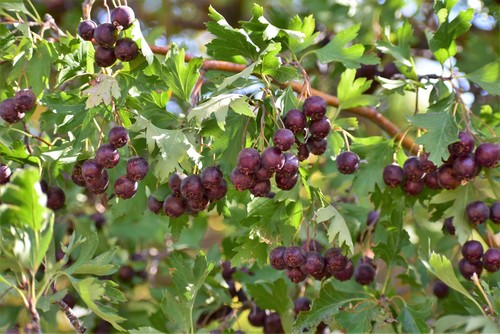
iNaturalist· cc-by-nc
(c) 江国彬, some rights reserved (CC BY-NC), uploaded by 江国彬
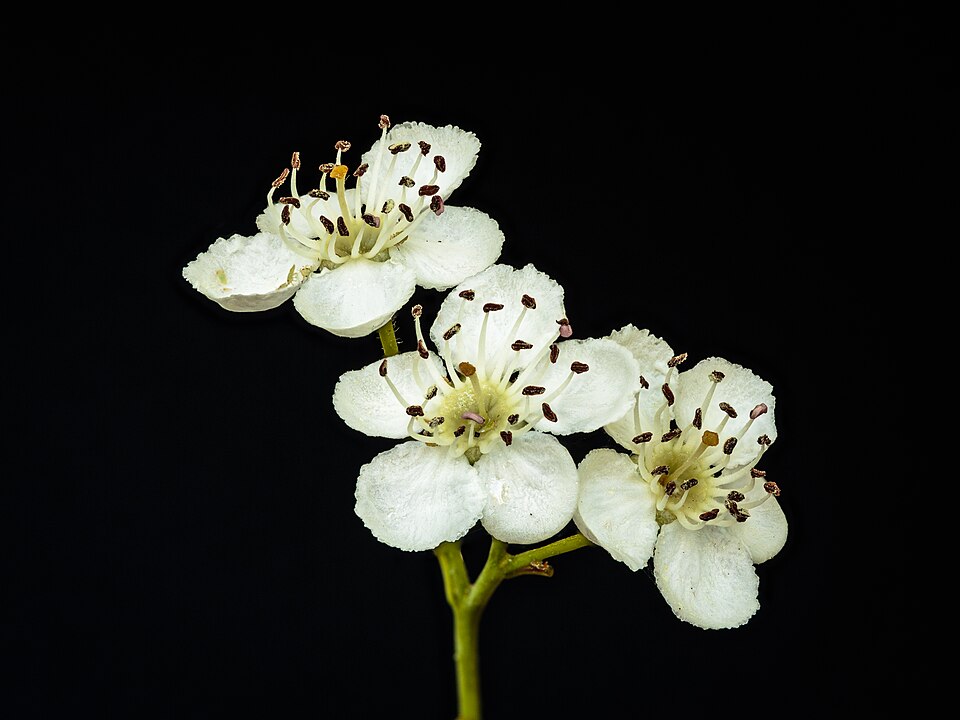
iNaturalist· cc-by-nc
(c) Morten Christensen, some rights reserved (CC BY-NC), uploaded by Morten Christensen
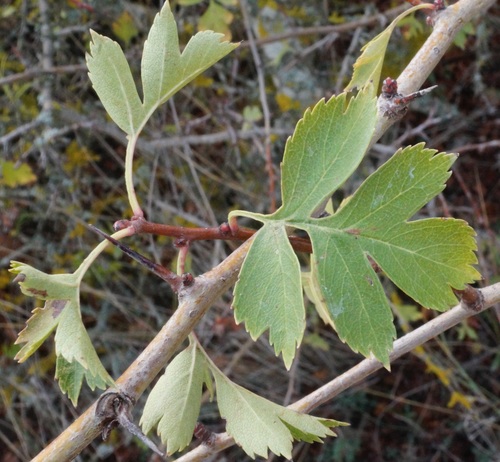
iNaturalist· cc-by-nc
(c) Taukeer Alam, some rights reserved (CC BY-NC), uploaded by Taukeer Alam
Summary
Source: WikipediaPrinsepia utilis, the Himalayan wild cherry or Himalayan cherry prinsepia, is a species of flowering plant in the family Rosaceae. It is native to the Himalayan region, from northeast Pakistan to south-central China. In the wild it is typically found at on valley slopes, wastelands, and on trailsides at elevations from 1,000 to 2,600 m (3,300 to 8,500 ft). A spiny shrub from 1 to 5 m (3 to 16 ft) in height, it bears edible fruit which are particularly liked by children, and whose seeds are used to produce a cooking oil. It is also planted as a hedge.
Description
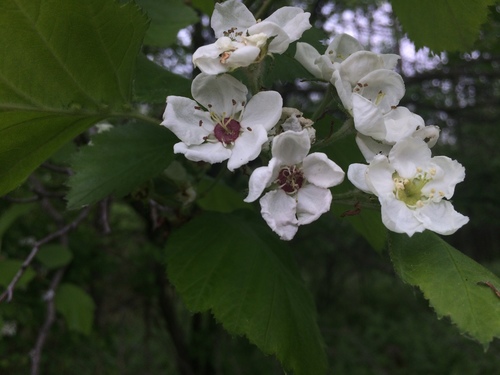
A shrub which loses its leaves during the year. It grows to about 2 m high. The branches have sharp spines. These can be 5 cm long. The leaves have stalks. They are alternate. The leaves are 6-7 cm long by 0.5-3 cm wide. The are sword shaped and taper to the tip. They have slight teeth. The flowers have stalks. They are white and in short groups in the axils of leaves. The fruit is fleshy with a hard covering over the seed. The fruit is oblong and purple when ripe.
Edible Uses
The fruit can be eaten raw or cooked and is popular with children. Sloe-like in character, it has a somewhat astringent flavour; the fruit is up to 17mm long and contains a single large seed. An edible oil extracted from the seed is used in cooking.
Traditional Uses
The ripe fruit are eaten. The seed oil is used for cooking. It is edible.
This uses section is brief — help expand it
Medicinal Uses
Oil from the seed is rubefacient and is applied externally to treat rheumatism and muscular pain caused by hard work. It is also applied to the forehead and temples for coughs and colds. The heated oilcake is applied as a poultice to the abdomen for stomachaches, and a paste of the seedcake is used as a poultice for ringworm or eczema. The fruit is used in Chinese medicine, though further details are not recorded.
Distribution
It is a temperate plant. In Nepal it grows between 1300-2900 m altitude. It grows in sunny, open places. In India it is in Garhwal Himalayas. It suits hardiness zones 5-9. In Yunnan.
Where It Grows
Asia, Australia, Bhutan, Britain, China, Europe, Himalayas, India, Nepal, Northeastern India, Pakistan, Sikkim, Tibet,
Cultivation
Succeeds in any moderately fertile well-drained soil in full sun or light shade. Requires a light not too fertile soil. Plants are hardy to about -10°c. The plants produce flowers and fruits better when they are growing in full sun. Flowers are produced on the previous seasons wood and can be produced in the autumn as well as the spring. The flowers are produced on the current years wood according to another report. Autumn flowers can produce ripe fruit in the following spring. Unfortunately, the plants only produce fruit in Britain after long hot summers.
Propagation
Seed is best given 2 months of cold stratification. Sow in autumn if possible, otherwise in late winter or early spring in a cold frame in light shade — germination may be inhibited by light. Prick out seedlings into individual pots when large enough to handle, grow on in a greenhouse or cold frame through their first winter, and plant out in late spring or early summer of the following year. Cuttings of half-ripe wood can be taken in July or August in a frame.
Other Uses
The seed contains 21% fatty oil, which can also be used for lighting in addition to its culinary use. The oilcake is used for washing clothes. A deep purple dye obtained from the fruits is used for painting windows and walls. Plants are grown as hedging in the Himalayas and have an extensive root system that makes them useful for soil binding. The wood is very hard and compact but highly liable to split.
Other Information
The fruit are eaten especially by children.
Also Known As
Arund, Bekar, Bekkli, Bekkra, Bhainkal, Bhek, Bhekal, Bhekoi, Bhekor, Biklain, Cherara, Dhatelo, Dhatila, Dieng-sia-soh-khar, Garandu, Gotyalo, Gurinda, Jhatela, Karanga, Kharngura, Krungora, Mhat, Phekray, Phekrey, Phulwara, Qingciguo, Sohmonrit, Tatua, Tischa
References (33)
- Agarwal, R. & Chandra, V., 2019, Diversity of wild edible plants in the Mandal-Chopta forest, Uttarakhand. Journal of Medicinal Plants Studies 2019; 7(1): 89-92
- Altschul, S.V.R., 1973, Drugs and Foods from Little-known Plants. Notes in Harvard University Herbaria. Harvard Univ. Press. Massachusetts. no. 1483
- Ambasta, S.P. (Ed.), 2000, The Useful Plants of India. CSIR India. p 491
- Cundall, P., (ed.), 2004, Gardening Australia: flora: the gardener's bible. ABC Books. p 1084
- Dangol, D. R. et al, 2017, Wild Edible Plants in Nepal. Proceedings of 2nd National Workshop on CUAOGR, 2017.
Show all 33 references Hide references
- Dobriyal, M. J. R. & Dobriyal, R., 2014, Non Wood Forest Produce an Option for Ethnic Food and Nutritional Security in India. Int. J. of Usuf. Mngt. 15(1):17-37
- Dutt, B., et al, 2011, Ethnobotanical Survey of Plants used by Gaddi Tribe of Bharmour Area in Himachal Pradesh. ENVIS Bulletin: Himalayan Ecology 19, 2011
- Flora of China @ efloras.org Volume 9
- Facciola, S., 1998, Cornucopia 2: a Source Book of Edible Plants. Kampong Publications, p 201
- Gautam, R. S., et al, 2020, Wild Edible Fruits of Nepal. Int. J. Appl. Sci. Biotechnol. Vol 8(3): 289-304
- Geng, Y., et al, 2016, Traditional knowledge and its transmission of wild edibles used by the Naxi in Baidi Village, northwest Yunnan province. Journal of Ethnobiology and Ethnomedicine. 12:10
- Ghimeray, A. K., Lamsal, K., et al, 2010, Wild edible angiospermic plants of the Illam Hills (Eastern Nepal) and their mode of use by local community. Korean J. Pl. Taxon. 40(1)
- GUPTA,
- Haj, F., et al, 2012, Species Diversity and Ethno Botanical Classes of the Flora of Allai Valley District Battagram Pakistan. International Journal of Plant Research 2012, 2(4): 111-123
- Hedrick, U.P., 1919, (Ed.), Sturtevant's edible plants of the world. p 516
- Ill. bot. Himal. Mts. 1(6):206. 1835; 2(3): t. 38, fig. 1. 1834
- Joshi, A. R.. and Joshi, J., 2009, Plant Diversity and Ethnobotanical Notes on tree species of Syabru Village, Langtang National Park, Nepal. Ethnobotanical Leaflets 13:651-64
- Ju, Y., et al, 2013, Eating from the wild: diversity of wild edible plants used by Tibetans in Shangri-la region, Yunnan, China, Journal of Ethnobiology and Ethno medicine 9:28
- Liu, Yi-tao, & Long, Chun-Lin, 2002, Studies on Edible Flowers Consumed by Ethnic Groups in Yunnan. Acta Botanica Yunnanica. 24(1):41-56
- Manandhar, N.P., 2002, Plants and People of Nepal. Timber Press. Portland, Oregon. p 381
- Mehta, P. S. et al, 2010, Native plant genetic resources and traditional foods of Uttarakhand Himalaya for sustainable food security and livelihood. Indian Journal or Natural products and Resources. Vol 1(1), March 2010 pp 89-96
- Menninger, E.A., 1977, Edible Nuts of the World. Horticultural Books. Florida p 58
- Radha, B., et al, 2013, Wild Edible Plant Resources of the Lohba Range of Kedarnath Forest Division (KFD), Garhwal Himalaya, India. Int. Res J. Biological Sci. Vol. 2 (11), 65-73
- Rana, D., et al, 2020, Use of medicinal plants for treating different ailments by the indigenous people of Churah subdivision of district Chamba, Himachal Pradesh, India. Environment, Development and Sustainability. Springer.
- Sundriyal, M., et al, 1998, Wild edibles and other useful plants from the Sikkim Himalaya, India. Oecologia Montana 7:43-54
- Sundriyal, M., et al, 2004, Dietary Use of Wild Plant Resources in the Sikkim Himalaya, India. Economic Botany 58(4) pp 626-638
- Tanaka,
- Thakur, D., et al, 2017, Why they eat, what they eat: patterns of wild edible plants consumption in a tribal area of Western Himalaya. Journal of Ethnobiology and Ethnomedicine (2017) 13:70
- Wickens, G.E., 1995, Edible Nuts. FAO Non-wood forest products. FAO, Rome. p147
- World Checklist of Useful Plant Species 2020. Royal Botanic Gardens, Kew
- www.efloras.org Flora of China Volume 9
- Zhang, L. et al, 2013, An Ethnobotanical Study of Traditional Edible Plants Used by Naxi People in Northwestern Yunnan, China. - A Case Study in Wenhai Village. Plant Diversity and Resources. p 484
- Zhang, L., et al, 2016, Ethnobotanical study of traditional edible plants used by the Naxi people during droughts. Journal of Ethnobiology and Ethnomedicine. 12:39