Anemopsis californica
(Nutt.) Hook. & Arn.
Yerba mansa
iNaturalist· cc-by-nc
(c) Annie Zell, some rights reserved (CC BY-NC), uploaded by Annie Zell
iNaturalist· cc-by-nc
(c) cbartels, some rights reserved (CC BY-NC)
iNaturalist· cc-by-nc
(c) Yael Orgad, some rights reserved (CC BY-NC), uploaded by Yael Orgad
Summary
Source: WikipediaAnemopsis californica is a perennial herb reaching 0.5 m (1ft 8in) tall. Hardy to UK zone 8. It grows in light sandy, medium loamy, and heavy clay soils, tolerating basic and very alkaline conditions. The plant thrives in wet soils and can grow partially submerged in water, preferring semi-shade to full sun.
Description
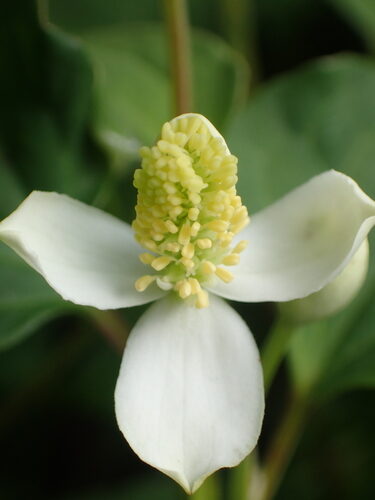
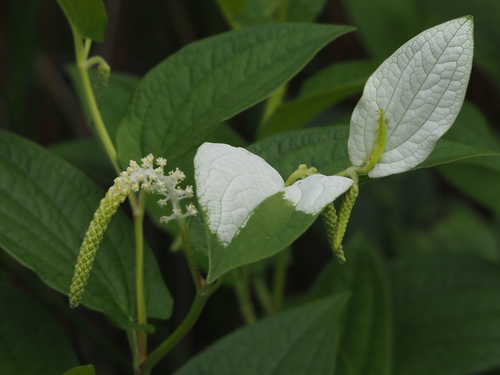
A herb which grows in water. It is erect and keeps growing from year to year. The roots have a sweet smell. It grows 38-45 cm tall. It can spread 3 m wide. The leaves are round or oblong. These roots near the base clasp the flower stem. They have long stems. The flowers are white and in a cone shape. They have large white bracts around them.
Edible Uses
The seeds are the only reliably edible part of Anemopsis californica. They can be eaten raw, toasted, or boiled into a starchy, slightly sweet mush with a copper tint, with all cooking methods yielding good results. The flavor is mild, hearty, and faintly minty-evergreen, with none of the bitterness or harshness found in many wild seeds. Toasting brings out a grain-like flavor and softens the texture, making them well suited as a staple wild food. The pulverized seeds can also be made into bread. The rhizomes and roots, while aromatic and technically chewable after long boiling, are best regarded as medicinal rather than edible — fresh rhizomes are pink, fragrant, and tough, with a complex aroma reminiscent of mints, citronella, and geraniums, but even after prolonged cooking their flavor remains strong and acrid with little food value. The peppery, aromatic root is astringent and is chewed raw for medicinal purposes.
Traditional Uses
The roots are wilted then sliced.
This uses section is brief — help expand it
Medicinal Uses
Yerba mansa was one of the most important traditional medicinal plants of the Southwest US and was widely used by native North American peoples for a broad range of complaints. The whole plant is analgesic, antiperiodic, antiphlogistic, a blood purifier, disinfectant, diuretic, laxative, stomachic, and vulnerary. Decoctions or teas of the rhizomes were used as a blood purifier, general pain remedy, and laxative, and for treating colds, chest congestion, stomach ulcers, asthma, and pleurisy. A root tea was also used for gonorrhoea, syphilis, and menstrual cramps. The tea produces a numbing effect on the tongue and mouth. An infusion of the plant is used to bathe aching muscles and sore feet. The root is chewed for complaints of the mucous membranes. Dried rhizome pieces were chewed as a breath freshener. The dried and powdered plant is applied as a disinfectant on wounds, while fresh moist leaves are used as a poultice or salve on burns, cuts, and wounds. An infusion of the bark is used as a wash for open sores. The plant is little used in modern herbalism.
Distribution
A tropical plant. It grows in tropical America. It grows in marshes, bogs and moist places up to 1,900 m altitude. It does best in alkaline soils. It suits hardiness zones 8-11.
Where It Grows
Australia, Central America, Mexico, North America, USA,
Cultivation
Seeds germinate 5 weeks after they are exposed to water. It can be grown from portions of the rootstock. Rooted small plantlets form along the runners and can be cut off and used.
Propagation
Sow seed in a greenhouse as soon as it ripens in summer, standing the pots in approximately 3 cm of water; germination should occur in about 5 weeks. Stored seed can be sown in a cold frame in spring. Once seedlings are large enough to handle, prick them out into individual pots and grow on in the greenhouse through their first winter, keeping the compost consistently wet. Plant out in late spring or early summer. Division can be carried out in spring.
Other Uses
Beads can be made from the rootstock.
Notes
There is only one Anemopsis species. It is used in medicine.
Synonyms
Also Known As
Apache beads, Hierba del mansa, Raiz del manso, Swamp root
References (8)
- Bot. Beechey Voy. 390, t. 92. 1840
- Brown, D., 2002, The Royal Horticultural Society encyclopedia of Herbs and their uses. DK Books. p 121
- Cundall, P., (ed.), 2004, Gardening Australia: flora: the gardener's bible. ABC Books. p 154
- Heywood, V.H., Brummitt, R.K., Culham, A., and Seberg, O., 2007, Flowering Plant Families of the World. Royal Botanical Gardens, Kew. p 298
- https://www.fireflyforest.com/flowers/category/edible-plants/ Edible Plants – Southeastern Arizona Wildflowers and Plants
Show all 8 references Hide references
- Plants for a Future database, The Field, Penpol, Lostwithiel, Cornwall, PL22 0NG, UK. http://www.scs.leeds.ac.uk/pfaf/
- Slocum, P.D. & Robinson, P., 1999, Water Gardening. Water Lilies and Lotuses. Timber Press. p 108
- Smith, N., Mori, S.A., et al, 2004, Flowering Plants of the Neotropics. Princeton. p 346