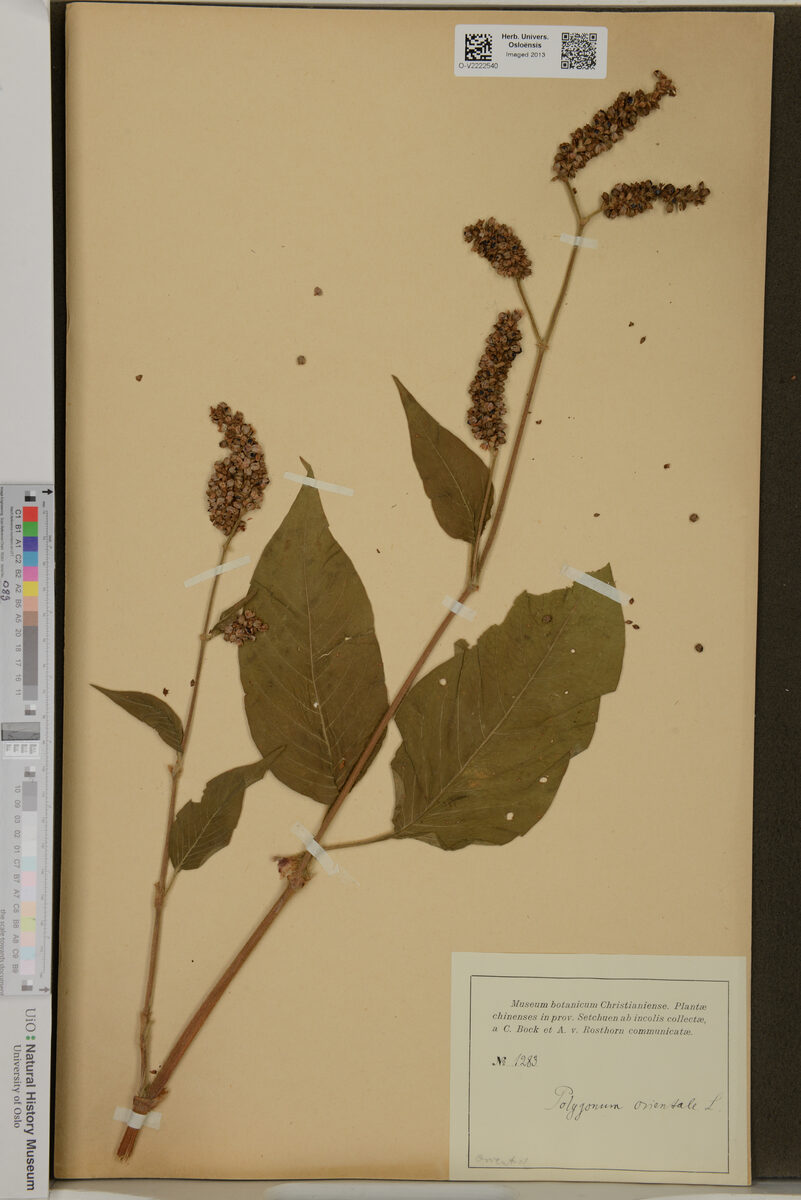
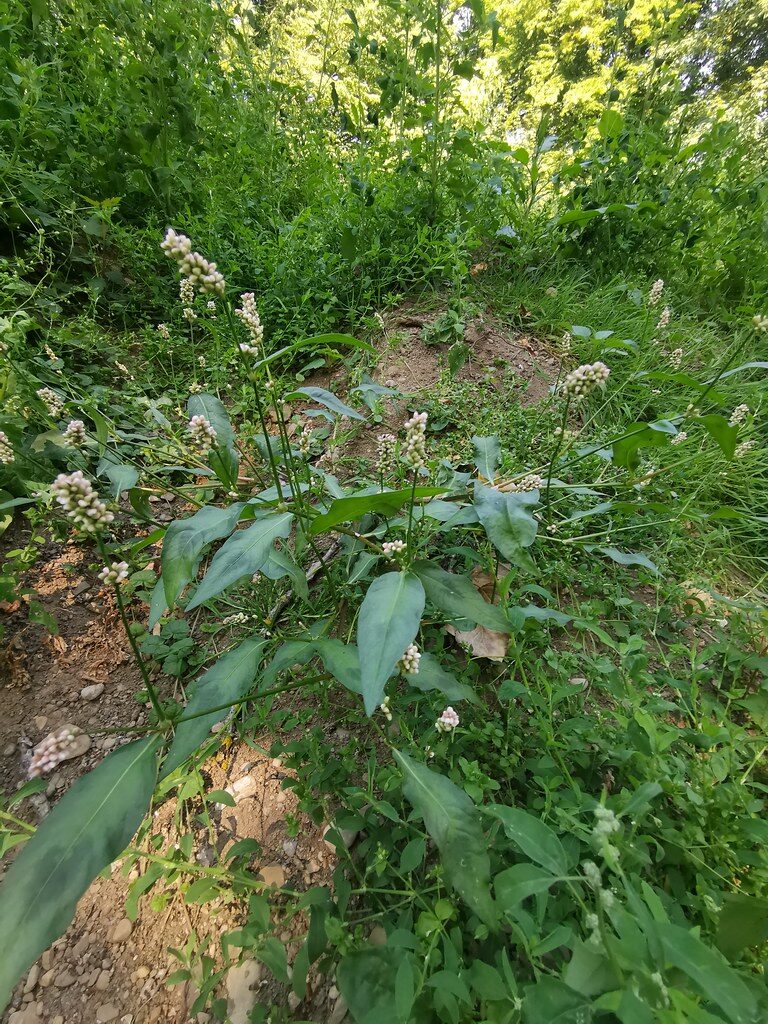
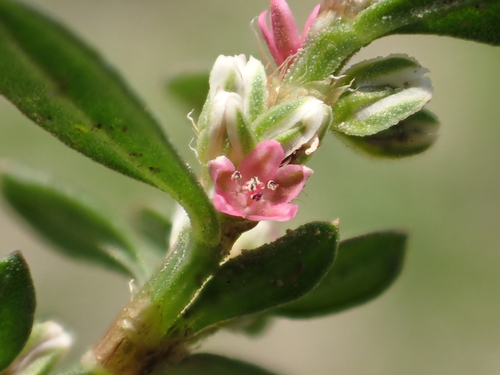
Polygonum japonicum
Meissn.
Japanese knotweed
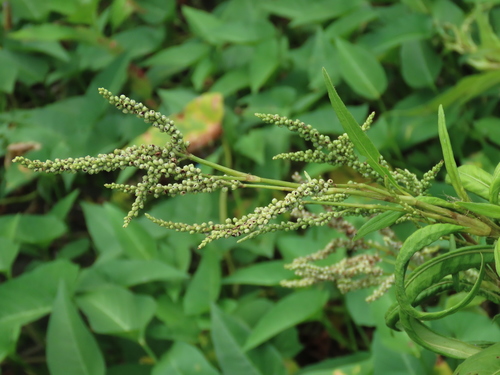
iNaturalist· cc-by-nc
(c) 戴勝, some rights reserved (CC BY-NC)
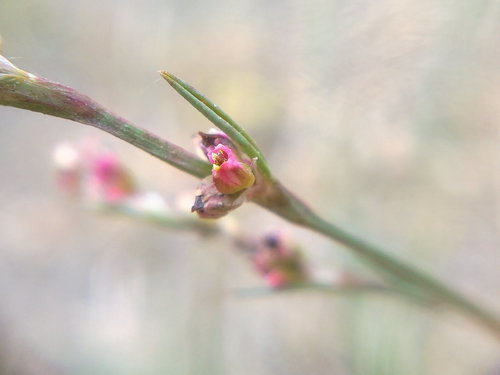
iNaturalist· cc-by-nc
(c) 戴勝, some rights reserved (CC BY-NC)
iNaturalist· cc-by-nc
(c) 戴勝, some rights reserved (CC BY-NC)
Summary
Source: WikipediaA fast-growing perennial reaching 3 meters tall and 5 meters wide, hardy to UK zone 5. Produces flowers from July to October with seeds ripening August to October. Dioecious, requiring both male and female plants for seed production. Tolerates sandy, loamy, or clay soils across a range of pH levels, from mildly acidic to mildly alkaline. Grows in semi-shade or full sun and prefers consistently moist conditions. Noted for attracting wildlife.
Description
A fast-growing perennial reaching 3 meters tall and 5 meters wide, hardy to UK zone 5. Produces flowers from July to October with seeds ripening August to October. Dioecious, requiring both male and female plants for seed production. Tolerates sandy, loamy, or clay soils across a range of pH levels, from mildly acidic to mildly alkaline. Grows in semi-shade or full sun and prefers consistently moist conditions. Noted for attracting wildlife.
Edible Uses
Young spring shoots are cooked and make a reasonable asparagus substitute. Their acid flavour also lends itself to use as a rhubarb substitute in pies, fruit soups, and jams. Older stems and shoot tips, cooked, taste like a milder version of rhubarb. Seeds can be eaten raw or cooked — small and fiddly to use, but they can be ground into a powder for use as a flavouring and thickener in soups, or mixed with cereals when making bread and cakes. The root is also sometimes eaten.
Medicinal Uses
The root is antiphlogistic, bechic, depurative, diuretic, emmenagogue, emollient, febrifuge, stomachic, and vulnerary, and is used for women's complaints. A decoction is used to treat burn injuries, boils, abscesses, poisonous snakebites, acute hepatitis, appendicitis, traumatic injuries, and menstrual irregularities. Leaves can be crushed and applied externally as a poultice to abscesses and cuts, and the dried root can be ground into a powder and applied externally. Extracts of the plant have shown antitumour activity.
Known Hazards
Although no specific mention has been made for this species, there have been reports that some members of this genus can cause photosensitivity in susceptible people. Many species also contain oxalic acid (the distinctive lemony flavour of sorrel) - whilst not toxic this substance can bind up other minerals making them unavailable to the body and leading to mineral deficiency. Having said that, a number of common foods such as sorrel and rhubarb contain oxalic acid and the leaves of most members of this genus are nutritious and beneficial to eat in moderate quantities. Cooking the leaves will reduce their content of oxalic acid. People with a tendency to rheumatism, arthritis, gout, kidney stones or hyperacidity should take especial caution if including this plant in their diet since it can aggravate their condition.
Distribution
It is a temperate plant. In Vietnam it grows at 700 m above sea level.
Where It Grows
Asia, Britain, China, Europe, Indochina, Japan, SE Asia, Vietnam,
Cultivation
A very easily grown plant, it succeeds in ordinary garden soil in sun or shade, though it prefers a moist soil in partial shade. Japanese knotweed is an extremely invasive plant capable of sending up new shoots at a considerable distance from the main clump and also of growing up through tarmac. The sub-species cuspidatum is the form that is most likely to cause problems. It is considered to be a pest in many areas, where it is forming large clumps in the wild and out-competing native species. If grown in the garden it should be planted within a strong barrier to contain its roots. The sub-species compacta is only about 70cm tall and is far less invasive, but should still not be grown in small gardens. A report on the Natural History Programme stated that Japanese knotweed is actually becoming a very valuable habitat for spiders, frogs, grass snakes and many other creatures. Its hollow stems allow a wide variety of insects and other small creatures to overwinter and find hiding places, thus a greater abundance of food is provided for insectivores such as frogs, who are themselves eaten by grass snakes. In areas of north Wales where Japanese knotweed has run rife, it is now the primary habitat for grass snakes. Plants seem to be immune to the predations of rabbits. Often cultivated as a dye and a medicinal plant. Very closely related to P. conspicuum. Dioecious, male and female plants must be grown if seed is required.
Propagation
Sow seed in spring in a cold frame; germination is generally free and easy. Once seedlings are large enough to handle, prick them out into individual pots and plant out during summer if they have reached sufficient size, or overwinter in a cold frame and plant out the following spring after the last expected frosts. Division can be done in spring or autumn and is very straightforward — larger divisions can go directly into permanent positions, while smaller ones do better potted up and grown on in light shade in a cold frame until well established before planting out in late spring or early summer.
Other Uses
A yellow dye is obtained from the root. The plant is potentially a useful source of biomass. It can also be grown as a dense ground cover that will exclude all other growth; the subspecies compactum is recommended for this purpose as it is less invasive.
Notes
There are about 50 Polygonum species.
Synonyms
Also Known As
Nghe hoa-to
References (2)
- Plants for a Future database, The Field, Penpol, Lostwithiel, Cornwall, PL22 0NG, UK. http://www.scs.leeds.ac.uk/pfaf/
- www.ediblewildfood.com (Naming unsure)