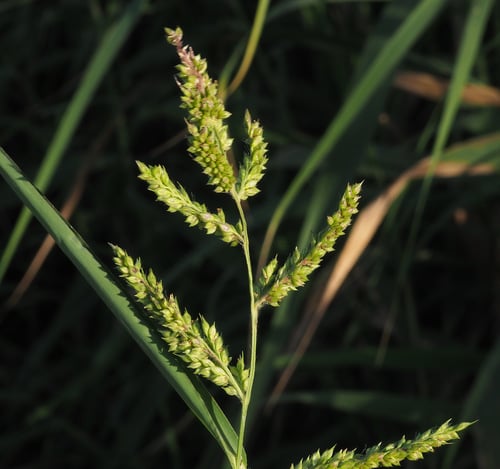
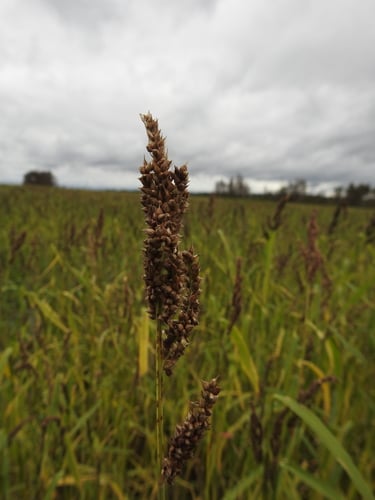
Phyllostachys castillonis
Siebold & Zucc.
Castillon bamboo
wikimedia· cc-by-sa
Wikimedia Commons - Bruno da Silva Lessa
wikimedia· cc-by-sa
Wikimedia Commons - peganum from Small Dole, England
Description
A temperate bamboo in the genus Phyllostachys.
This description is brief — help expand it
Edible Uses
Both madake and Phyllostachys edulis (known in Japanese as moso) are used in the making of shakuhachi flutes The hairless and flexible sheaths of madake - known as takekawa or takenokawa - make it apt for wrapping food, and in the production of baren woodblock printing tools. The uniform, plain-colour sheaths of the variety kashirodake were traditionally used to weave the coverings of some geta, a covering known as tatami omote; however, in modern times, the variety used is a different and unknown species, grown in China and bleached to be plain in colour. The long internodes and equally long fibres of the bamboo make it ideal for traditional basket-weaving and the production of fans. Historically, madake was used to create relatively durable carbon filaments in early incandescent light bulbs. The Edison Electric Light Company used madake from Yawata for about fifteen years.
Distribution
It is a temperate plant.
Where It Grows
Asia, Australia, China,
Notes
There are about 80 Phyllostachys species.
Synonyms
References (4)
- Garden (London) 47:3. 1895 (Lat.-Marl. ex Carriere) Mitford - = P. bambusoides ‘Castillonis’ ?
- Lord, E.E., & Willis, J.H., 1999, Shrubs and Trees for Australian gardens. Lothian. p 98
- Ryan, S., 2008, Dicksonia. Rare Plants Manual. Hyland House. p 85
- USDA, ARS, National Genetic Resources Program. Germplasm Resources Information Network - (GRIN). [Online Database] National Germplasm Resources Laboratory, Beltsville, Maryland. Available: www.ars-grin.gov/cgi-bin/npgs/html/econ.pl (10 April 2000)