Phyllospadix scouleri
Hook.
Scouler's Surf-grass, Sea grass
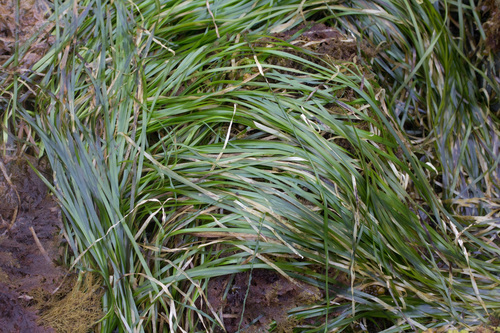
iNaturalist· cc-by-nc
(c) LSchare (she/her), some rights reserved (CC BY-NC), uploaded by LSchare (she/her)
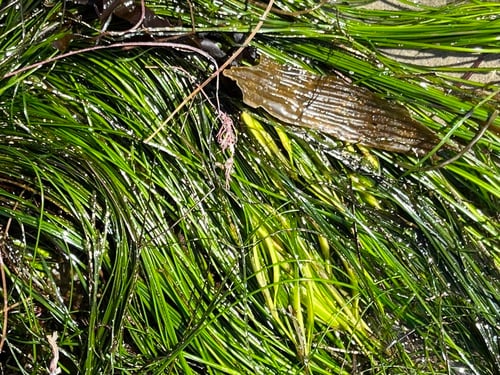
iNaturalist· cc-by-nc
(c) Rebecca Johnson, some rights reserved (CC BY-NC), uploaded by Rebecca Johnson
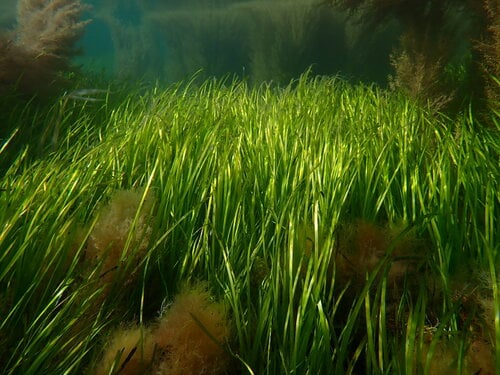
iNaturalist· cc-by
(c) Allison Gong, some rights reserved (CC BY), uploaded by Allison Gong
Summary
Source: WikipediaPhyllospadix scouleri, or Scouler's surfgrass, is a flowering marine plant in the family Zosteraceae. It is native to the coastline of western North America from the Alaskan panhandle to Baja California. This slender, vivid green plant has long, flat blades. It grows in large clumps or beds exposed during low tide and submerged at high tide. It is found attached to rocks in the middle to low intertidal zones.
Description
A slender green herb that grows along sea coasts. Male and female flowers are on separate plants.
This description is brief — help expand it
Edible Uses
The root can be eaten raw or cooked and is typically gathered in spring. Some native North American Indian tribes formed the entire plant — including the long, salty-tasting leaves — into square cakes that were dried for use as a winter food. The leaves were occasionally cooked and eaten by some tribes as well.
Traditional Uses
The underground stems or rhizomes are chewed raw. The leaves are occasionally cooked and eaten when they have herring eggs on them.
This uses section is brief — help expand it
Medicinal Uses
None known.
Distribution
It is a temperate plant.
Where It Grows
Alaska, Canada, North America, USA,
Cultivation
We have very little information on this species and do not know if it is hardy in Britain, though judging by its native range it should succeed outdoors in most parts of the country. The main problem with this plant is that it is likely to require maritime conditions and possibly also periodic inundation in salt water, so it might not be possible to cultivate the plant under normal garden conditions. Plants of Phyllospadix grow attached to rocks, many of which are exposed at low tide. In summary Phyllospadix vegetation protects the rocky substrate from erosion, and by accumulating sand in and between the tussocks, transforms the rocky substrate into sandy beaches or sublittoral sand flats. Rejuvenation of the Phyllospadix vegetation, however, is then no longer possible on the sand-covered rocks. The plants eventually die, exposing the sand-covered rocks to wave action, which results in erosion of the sand, again exposing the rocks.
Propagation
No specific information is available for this species. It is suggested to sow seed as soon as it is ripe in a greenhouse, possibly with some salt added to the growing medium. Prick seedlings into individual pots when large enough to handle and grow on in the greenhouse for at least their first winter before planting out into permanent positions in late spring or early summer after the last expected frosts.
Other Uses
None known.
Notes
The Zosteraceae are plants that grow in sea water. They grow under the surface.
Synonyms
References (5)
- Heywood, V.H., Brummitt, R.K., Culham, A., and Seberg, O., 2007, Flowering Plant Families of the World. Royal Botanical Gardens, Kew. p 409 (Family)
- Kermath, B. M., et al, 2014, Food Plants in the Americas: A survey of the domesticated, cultivated and wild plants used for Human food in North, Central and South America and the Caribbean. On line draft. p 645
- Moerman, D. F., 2010, Native American Ethnobotany. Timber Press. p 395
- Plants for a Future database, The Field, Penpol, Lostwithiel, Cornwall, PL22 0NG, UK. http://www.scs.leeds.ac.uk/pfaf/
- Turner, N., 1995, Food Plants of Coastal First Peoples. Royal BC Museum Handbook p 53