Parinari nonda
F. v. Muell. ex Benth.
Nonda plum, Solomon Islands parinari
iNaturalist· cc-by
(c) coenobita, some rights reserved (CC BY), uploaded by coenobita
iNaturalist· cc-by-nc
(c) leithallb, some rights reserved (CC BY-NC), uploaded by leithallb
iNaturalist· cc-by-nc
(c) Ian Cowan, some rights reserved (CC BY-NC), uploaded by Ian Cowan
Summary
Source: WikipediaParinari nonda is a shrub or small tree in the family Chrysobalanaceae. It occurs in northern Australia and New Guinea. The edible fruits are harvested in the wild. Common names include nonda plum, nonda tree, nunda plum and parinari.
Description
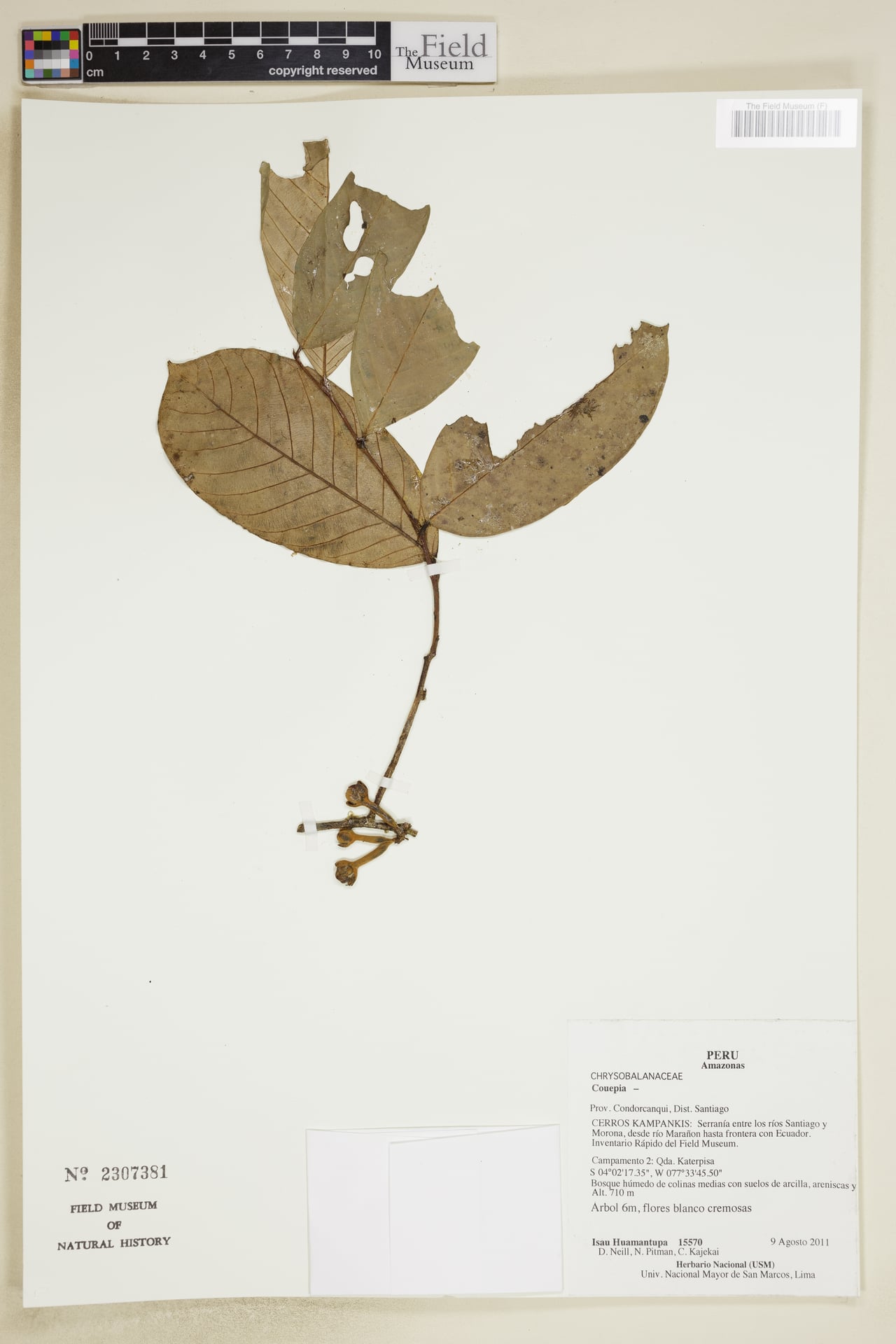
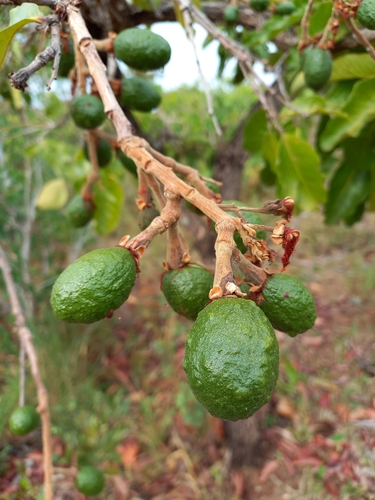
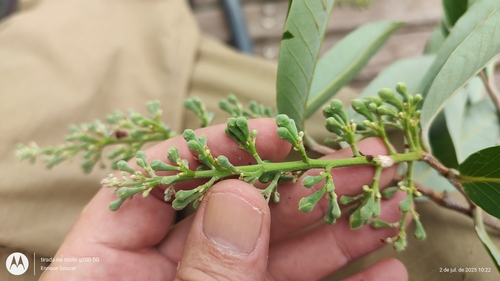
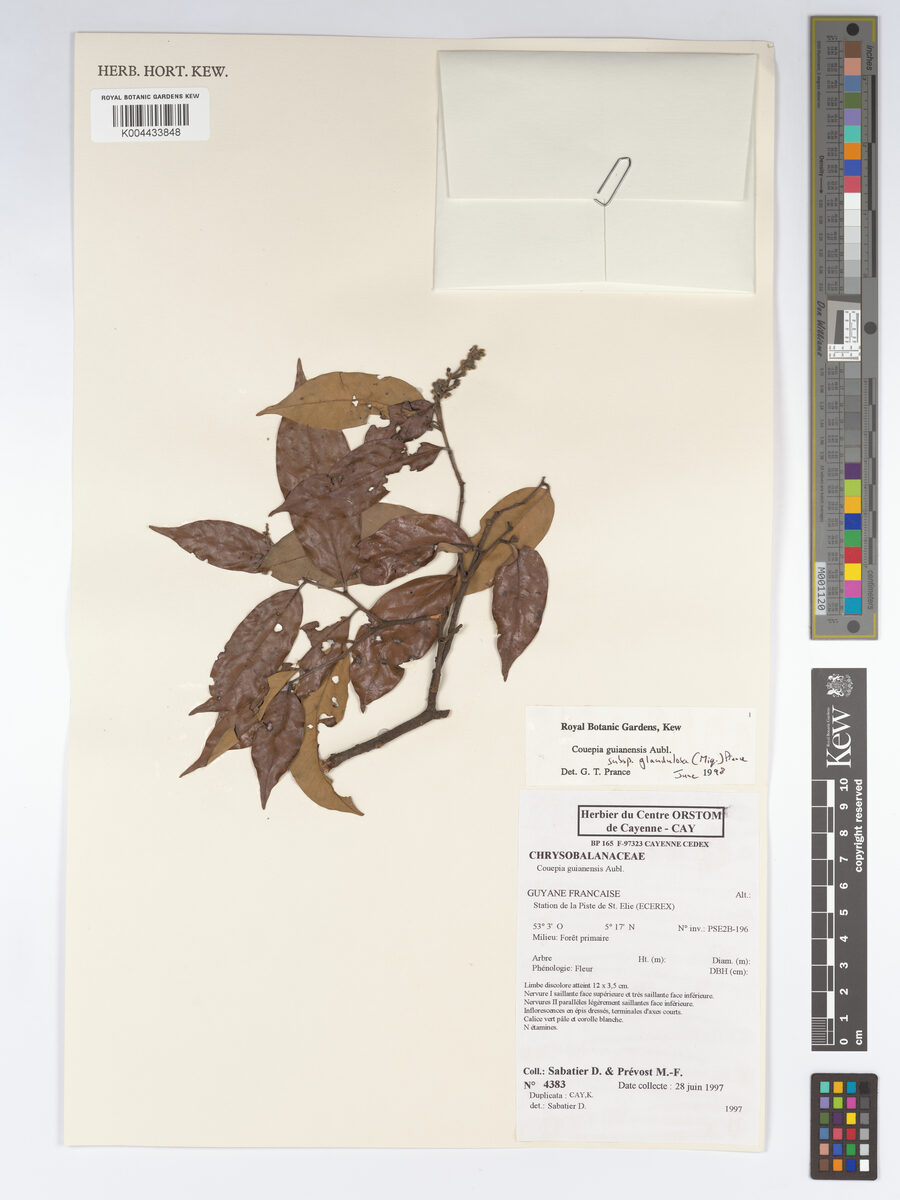
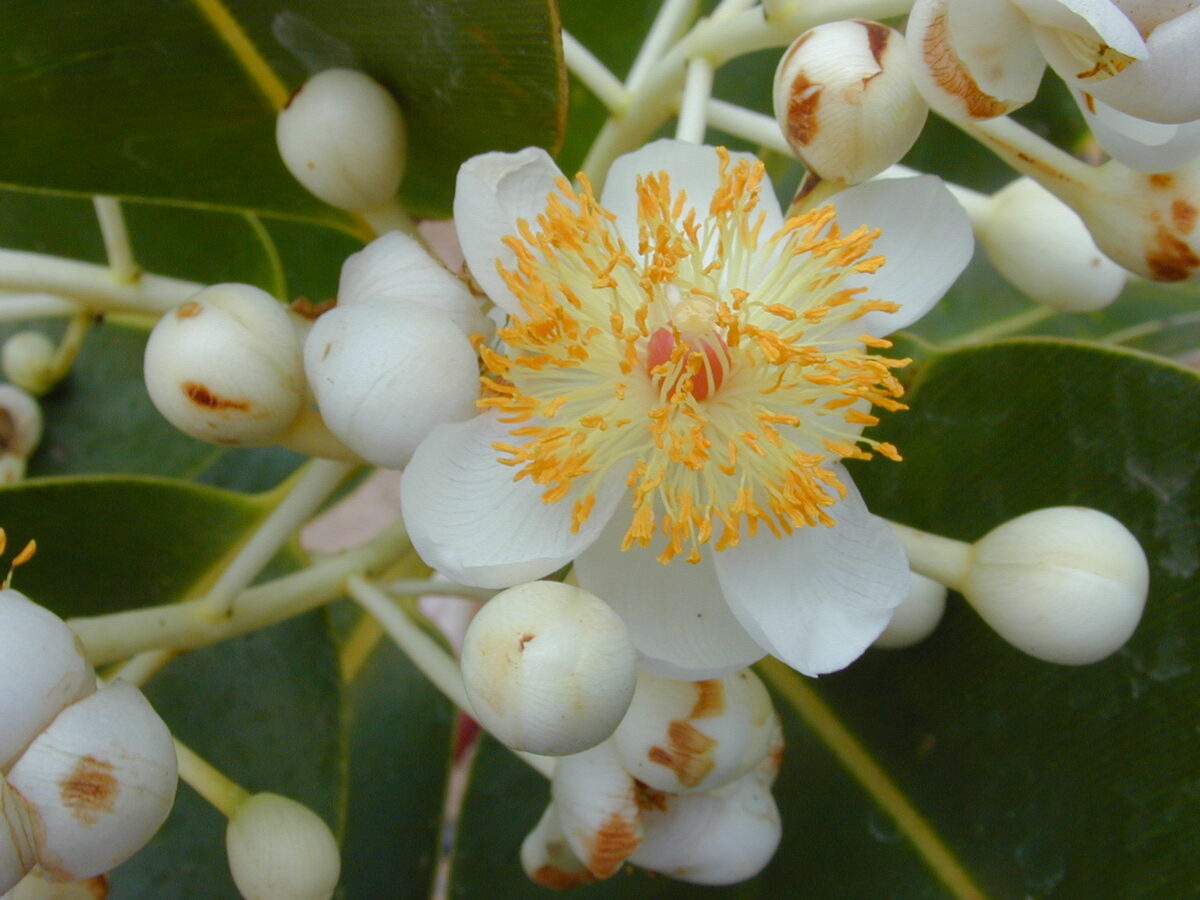
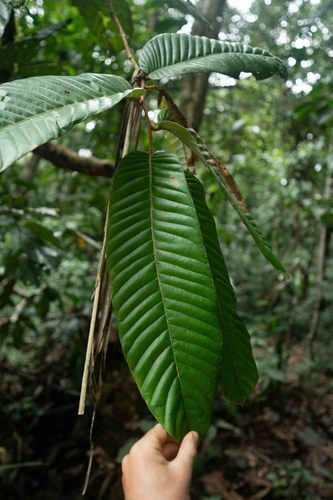
A small tree up to 10-15 m tall. It is often only 3 m tall but can be 34 m tall. It has an open growth habit. The bark is greyish-brown and cracked along its length. The small branches are angular, drooping and hairy. The leaves are narrow, oval and leathery. They are 3.5-8 cm long by 2-4.5 cm wide. They are dark green and smooth on the upper surface and paler with dense white hairs underneath. Under the leaf the midrib is prominent and the veins are like a net. The tip of the leaf has a blunt point. The leaf stalk is short. Flowers are brownish yellow and very small. They occur at the ends of branches and in the axils of upper leaves. The fruit is smallish (2 cm x 3 cm) and brownish. It hangs on the ends of the branches. The fruit has a slightly rough skin due to a brown scaly like layer. The fruit is edible. Inside the fruit is a rough kernel.
Edible Uses
The ripe fruit is eaten raw, and the floury pulp can be ground into flour and baked. The kernel can be eaten, and historically the 'nut-milk' was used for babies.
Traditional Uses
The ripe fruit is eaten raw. The floury pulp of the fruit can be ground into flour and baked.
This uses section is brief — help expand it
Known Hazards
The wood dust may cause dermatitis, probably because of irritation by silica deposits.
Distribution
A tropical plant. The tree grows in lowland areas from 6 to 1300 m altitude in Papua New Guinea. It occurs in moist rainforest and open woodland. It is often in dunes behind sandy beaches. It occurs in northern Australia. It suits seaside dry tropical regions. It can tolerate drought. It needs full sun.
Where It Grows
Australia*, Pacific, Papua New Guinea, PNG, Solomon Islands, Torres Strait,
Cultivation
The tree grows wild. They can be grown from fresh seed. It can probably be grown from cuttings of semi ripe wood.
Propagation
Seed - Root suckers.
Other Uses
The timber has good wearing properties and can be used for building construction material, agricultural implements, joinery, sleepers, poles, and turnery. The wood is a good fuel. The tree has been tried out in mined-land rehabilitation trials.
Production
it is slow growing. Fruit occur in August and November (May). Fruit are bitter when fresh from the tree so are best ripened off the tree to make them more sweet. Burying them for a week has been used to improve ripening. They can be harvested after they fall. To make nut-milk the fruit was dried and the kernels crushed and the mash was washed, squeezed and strained to extract the white "nut-milk".
Other Information
A minor edible wild fruit. The "nut-milk" was especially used for babies.
Notes
There are about 50 Parinari species. They grow in the tropics.
Nutrition
| Part | Moisture | kJ | kcal | Protein | Vit A | Vit C | Iron | Zinc |
|---|---|---|---|---|---|---|---|---|
| Fruit | 78.3 | 222 | 53 | 1 | — | 1 | 1.5 | 0.4 |
Synonyms
Also Known As
Nunda, Parinari, Weiba
References (22)
- Barwick, M., 2004, Tropical and Subtropical Trees. A Worldwide Encyclopedic Guide. Thames and Hudson p 309
- Bindon, P., 1996, Useful Bush Plants. Western Australian Museum. p 194
- Boland, D. J. et al, , 2006, Forest Trees of Australia. CSIRO p 86
- Cooper, W. and Cooper, W., 2004, Fruits of the Australian Tropical Rainforest. Nokomis Editions, Victoria, Australia. p 121
- Cribb, A.B. & J.W., 1976, Wild Food in Australia, Fontana. p 48
Show all 22 references Hide references
- Doran, J.C., & Turnbull, J.W. (Eds), 1997, Australian Trees and Shrubs: species for land rehabilitation and farm plantings in the tropics. ACIAR Monograph No 24. p 332
- Elliot, W.R., & Jones, D.L., 1997, Encyclopedia of Australian Plants suitable for cultivation. Vol 7. Lothian. p 166 (Photo)
- Fell, D.G. & Stanton, D.J., 2015: The vegetation and flora of Mabuyag, Torres Strait, Queensland. Memoirs of the Queensland Museum – Culture 8(1):1-33. Brisbane. ISSN 1440-4788
- French, B.R., 1986, Food Plants of Papua New Guinea, A Compendium. Asia Pacific Science Foundation p 298
- French, B.R., 2010, Food Plants of Solomon Islands. A Compendium. Food Plants International Inc. p 359
- Hardwick, G., 2001, Economically Useful Plants for Northern Australia: Master Species List. Crusader eBooks.
- Hedrick, U.P., 1919, (Ed.), Sturtevant's edible plants of the world. p 464
- Hiddins, L., 1999, Explore Wild Australia with the Bush Tucker Man. Penguin Books/ABC Books. p 155
- Isaacs, J., 1987, Bush Food, Aboriginal Food and Herbal Medicine. Weldons. p 77
- Jones D, L, 1986, Ornamental Rainforest Plants in Australia, Reed Books, p 340
- Kenneally, K.E., Edinger, D. C., and Willing T., 1996, Broome and Beyond, Plants and People of the Dampier Peninsula, Kimberley, Western Australia. Department of Conservation and Land Management. p 86
- Milson. J., 2000, Trees and Shrubs of north-west Queensland. DPI p 44
- Mua Bioversity Profile, 2013, Profile for Management of the Habitats and Related Ecological and Cultural Resources of Mua Island. Torres Strait Regional Authority Land & Sea Management Unit. p 32
- Paczkowska, G. & Chapman, A.R., 2000, The Western Australian Flora. A Descriptive Catalogue. Western Australian Herbarium. p 215
- Scarth-Johnson, V., 2000, National Treasures. Flowering Plants of Cooktown and Northern Australia. Vera Scarth-Johnson Gallery Association. Cooktown, Australia. p 46
- Wheeler, J.R.(ed.), 1992, Flora of the Kimberley Region. CALM, Western Australian Herbarium, p 281
- World Checklist of Useful Plant Species 2020. Royal Botanic Gardens, Kew