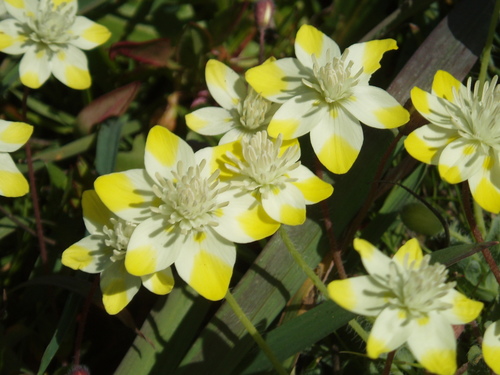
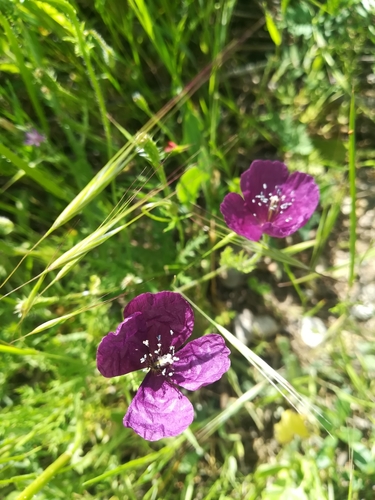
Papaver nudicaule
Linn.
Arctic poppy, Alaskan Poppy, Iceland Poppy, Icelandic Poppy
iNaturalist· cc-by-nc
(c) Leo Harden, some rights reserved (CC BY-NC)
iNaturalist· cc-by-nc
(c) Leo Harden, some rights reserved (CC BY-NC)
iNaturalist· cc-by-nc
(c) Leo Harden, some rights reserved (CC BY-NC)
Summary
Source: WikipediaA hardy perennial growing 0.3 meters tall at a medium rate, hardy to UK zone 2 and not frost tender. Flowers from May to September with seeds ripening June to October. Hermaphrodite, bee-pollinated, self-fertile flowers. Prefers light sandy and medium loamy well-drained soils with mildly acidic to basic pH. Grows in semi-shade or full sun and tolerates both dry and moist conditions.
Description
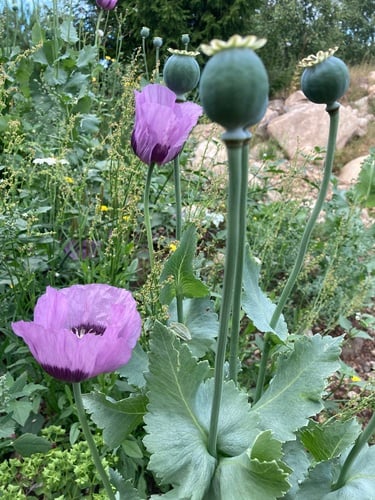
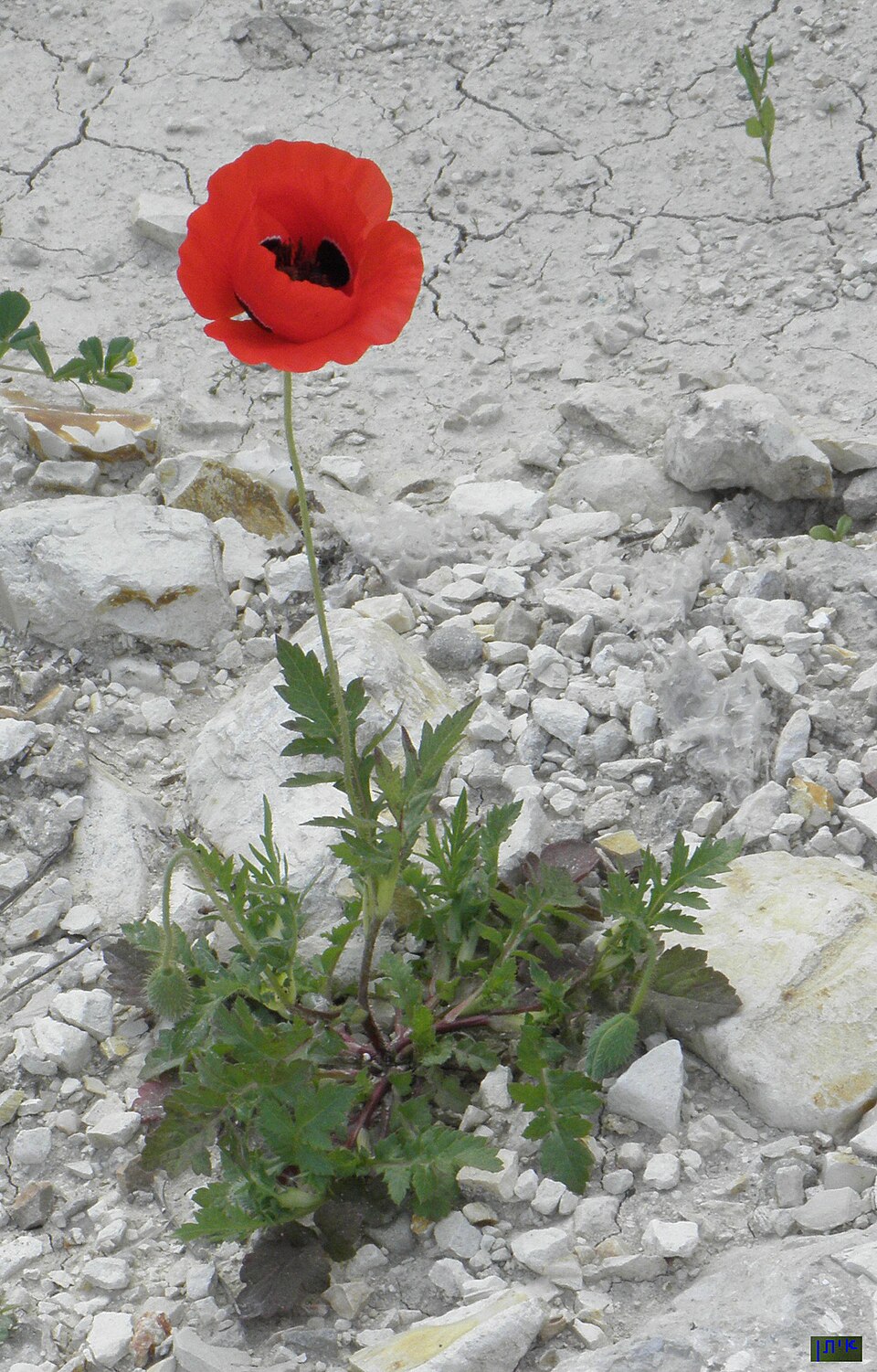
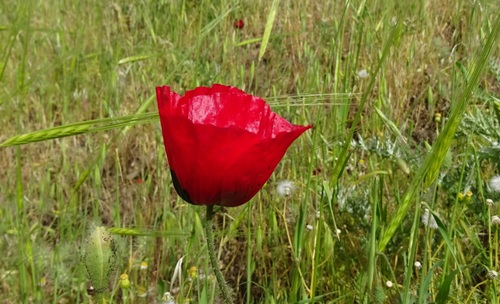
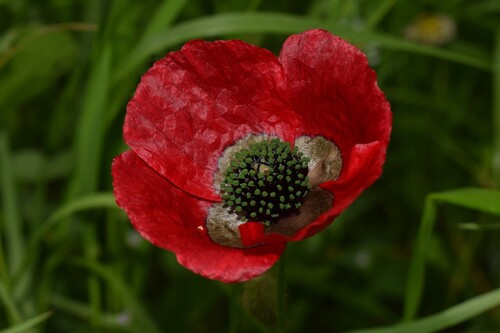
A perennial plant which grows 30-45 cm tall. It spreads to 25 cm across. It is best treated as a biennial plant. The leaves form rings or rosettes at the base. The leaves are 3-15 cm long. These are hairy and deeply divided. They are grey-green. The stems are long and slender and leafless. The buds at the top are plump, hairy and nodding. They open to bowl shaped flowers with four petals. They are 5-10 cm wide. The flowers have a slight scent. The flowers can be white, pink, orange or yellow.
Edible Uses
The leaves can be cooked and are very agreeable to the taste, providing a good source of vitamin C. Caution is advised — see notes on toxicity. The seed can be eaten raw or cooked; it is oleaginous and antiscorbutic with a very agreeable flavour, but contains some opium. Caution is advised.
Traditional Uses
CAUTION: The leaves may be slightly toxic. The leaves are cooked and eaten. The seed is eaten raw or cooked.
This uses section is brief — help expand it
Medicinal Uses
The plant is anodyne and antiscorbutic. The flowers and seed capsules are mildly diaphoretic.
Known Hazards
All parts of this plant are likely to be poisonous, containing (like all poppies) toxic alkaloids. In particular, O. nudicaulis has been shown to contain the benzophenanthidine alkaloid, chelidonine. It also contains (+)-amurine, (-)-amurensinine, (-)-O-methylthalisopavine, (-)-flavinantine and (-)-amurensine.
Distribution
It is a temperate plant. It grows naturally in Northern sub-arctic regions. It grows on stony or gravelly soils. It prefers a well drained sandy soil in a sunny position. It can grow in partial shade. It cannot tolerate wet soils. It suits hardiness zones 2-10.
Where It Grows
Afghanistan, Alaska, Arctic, Argentina, Australia, Central Asia, China, India, Kalmuk, Kasakhstan, Korea, Kyrgyzstan, Mongolia, North America, Pakistan, Russia, Siberia, South America, Taiwan, Tajikistan, Tasmania, Uzbekistan,
Cultivation
Plants can be grown from seed. They are best sown directly where they are to grow. The seeds are scattered and raked in lightly. Seedlings can be transplanted. Plants should be 15 cm apart. Plants can be grown by division if it is done with care. Root cuttings will grow.
Propagation
Sow seed in spring in situ. Plants can be transplanted. Division in March or October should be done with care; larger divisions can go directly into permanent positions, while smaller divisions are better potted up and grown on in light shade in a cold frame until well established before planting out in late spring or early summer. Root cuttings 10cm long can be taken in November or December and kept in a cold frame.
Other Uses
Red and beige dyes are obtained from the flowers. Yellow and brown dyes are obtained from the flower pods.
Production
It is a short lived perennial often grown as an annual or biennial.
Notes
There are 50-80 Papaver species.
Synonyms
References (9)
- Ambasta, S.P. (Ed.), 2000, The Useful Plants of India. CSIR India. p 428
- Burnie, G.(Ed.), 2003, Annuals and Bulbs. The Gardener's Handbooks. Fog City Press. p 202
- Cundall, P., (ed.), 2004, Gardening Australia: flora: the gardener's bible. ABC Books. p 980
- Flora of Pakistan. www.eFloras.org
- Hedrick, U.P., 1919, (Ed.), Sturtevant's edible plants of the world. p 462
Show all 9 references Hide references
- Hibbert, M., 2002, The Aussie Plant Finder 2002, Florilegium. p 218
- Plants for a Future database, The Field, Penpol, Lostwithiel, Cornwall, PL22 0NG, UK. http://www.scs.leeds.ac.uk/pfaf/
- Sp. pl. 1:507. 1753
- Urgamal, M., Oyuntsetseg, B., Nyambayar, D. & Dulamsuren, Ch. 2014. Conspectus of the vascular plants of Mongolia. (Editors: Sanchir, Ch. & Jamsran, Ts.). Ulaanbaatar, Mongolia. “Admon“ Press. 334pp. (p. 79-90).