Amelanchier asiatica
(Siebold. & Zucc.) Endl. ex Walp.
Korean juneberry, Service Berry, Shad Bush
iNaturalist· cc-by-nc
(c) Lee, seong-won, some rights reserved (CC BY-NC), uploaded by Lee, seong-won
iNaturalist· cc-by-nc
(c) Lee, seong-won, some rights reserved (CC BY-NC)
Summary
Source: WikipediaAmelanchier asiatica, commonly known as Korean juneberry or Asian serviceberry, is a species in the genus Amelanchier, native to China, Japan, and Korea. It is a shrub or small tree, growing to about 12 metres (39 ft) tall.
Description
A deciduous bush or small tree. It grows to 5-8 m high and spreads 3-10 m wide. The stem is erect and branching. The bark is grey-brown and becomes cracked with age. The leaves are oval and rounded at the base and pointed at the tip. They are 7.5 cm long by 4 cm wide. They turn red in autumn. The flowers are white and they have a smell. They are in upright spreading racemes which are 6 cm long. The fruit are black sweet berries. They are 1 cm across.
Edible Uses
The fruit is edible raw or cooked, up to 15mm in diameter, sweet and juicy with a few small seeds at the centre and a hint of apple in the flavour. It is of good quality and rich in iron and copper.
Traditional Uses
The fruit are eaten raw or cooked.
This uses section is brief — help expand it
Medicinal Uses
None known.
Distribution
It is a temperate plant. Plants grow naturally in hilly and mountainous regions in China, Japan, and Korea. It is drought and frost resistant. Hobart Botanical Gardens. It suits hardiness zones 5-9.
Where It Grows
Asia, Australia, China, Japan*, Korea, Tasmania,
Cultivation
Plants are grown from seed. The seed should be frozen before planting. It can be grown from seed, layering or suckers. Seed can take 18 months to germinate and layers can take 18 months to form roots.
Propagation
Seed is best harvested green — when fully formed but before the seed coat has hardened — and sown immediately in pots outdoors or in a cold frame. Stored seed obtained early in autumn can be given 4 weeks of warm stratification before being left outside over winter to germinate in spring; otherwise seed can be very slow, taking 18 months or more. Prick seedlings out into individual pots when large enough to handle and grow on in a sheltered outdoor position, planting out once they reach 20cm or more. Where sufficient seed is available, sow thinly in an outdoor seedbed and grow on for two years before planting into permanent positions during winter. Layering in spring takes 18 months. Suckers can be divided in late winter, but must have been growing for 2 years before lifting to ensure they have formed roots; they can be planted directly into permanent positions if needed.
Other Uses
None known.
Notes
There are about 25-30 Amelanchier species.
Synonyms
References (13)
- Bodkin, F., 1991, Encyclopedia Botanica. Cornstalk publishing, p 75
- Brickell, C. (Ed.), 1999, The Royal Horticultural Society A-Z Encyclopedia of Garden Plants. Convent Garden Books. p 107
- Coombes, A.J., 2000, Trees. Dorling Kindersley Handbooks. p 239
- Cundall, P., (ed.), 2004, Gardening Australia: flora: the gardener's bible. ABC Books. p 145
- Facciola, S., 1998, Cornucopia 2: a Source Book of Edible Plants. Kampong Publications, p 193
Show all 13 references Hide references
- Glowinski, L., 1999, The Complete Book of Fruit Growing in Australia. Lothian. p 51
- Hu, Shiu-ying, 2005, Food Plants of China. The Chinese University Press. p 428
- John, L., & Stevenson, V., 1979, The Complete Book of Fruit. Angus & Robertson p 167
- Lord, E.E., & Willis, J.H., 1999, Shrubs and Trees for Australian gardens. Lothian. p 47
- Lyle, S., 2006, Discovering fruit and nuts. Land Links. p 57
- Plants for a Future database, The Field, Penpol, Lostwithiel, Cornwall, PL22 0NG, UK. http://www.scs.leeds.ac.uk/pfaf/.
- Repert. bot. syst. 2:55. 1843
- Tanaka,
More from Rosaceae
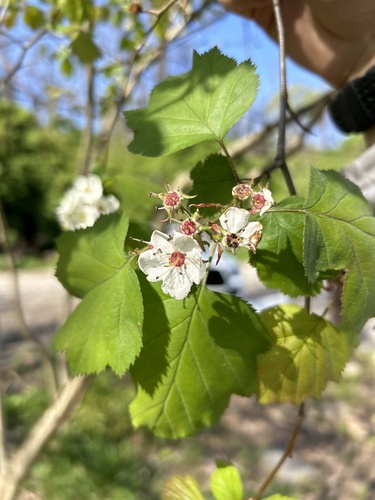
Crataegus pringlei
Pringle's Hawthorn
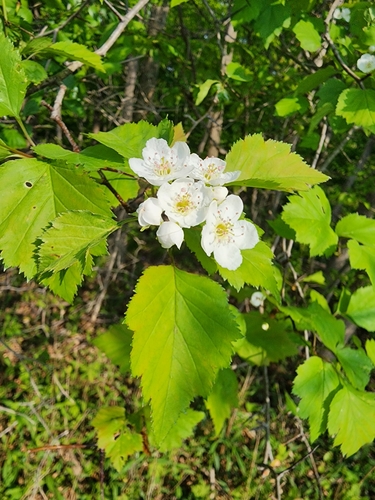
Crataegus pruinosa
Frosted hawthorn, Waxyfruit Hawthorn
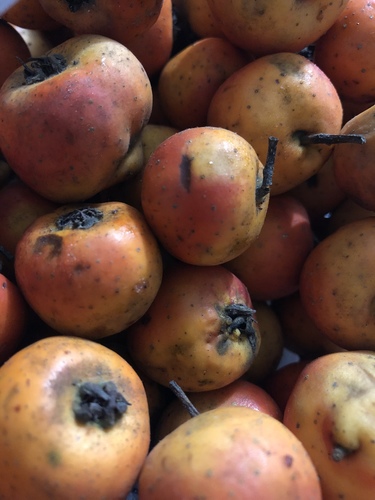
Crataegus pubescens
Mexican hawthorn
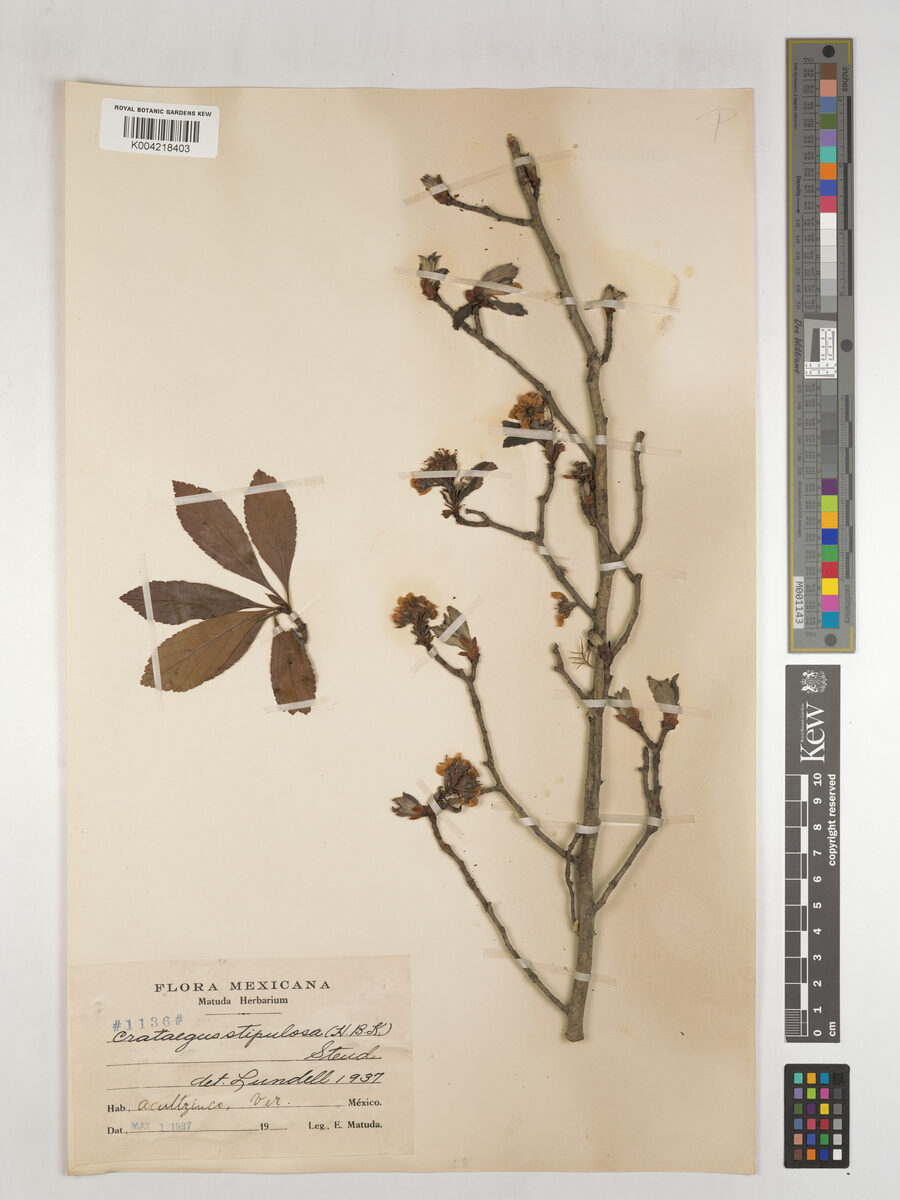
Crataegus pubescens stipulacea - (Loudon.)Stapf.
Manzanilla
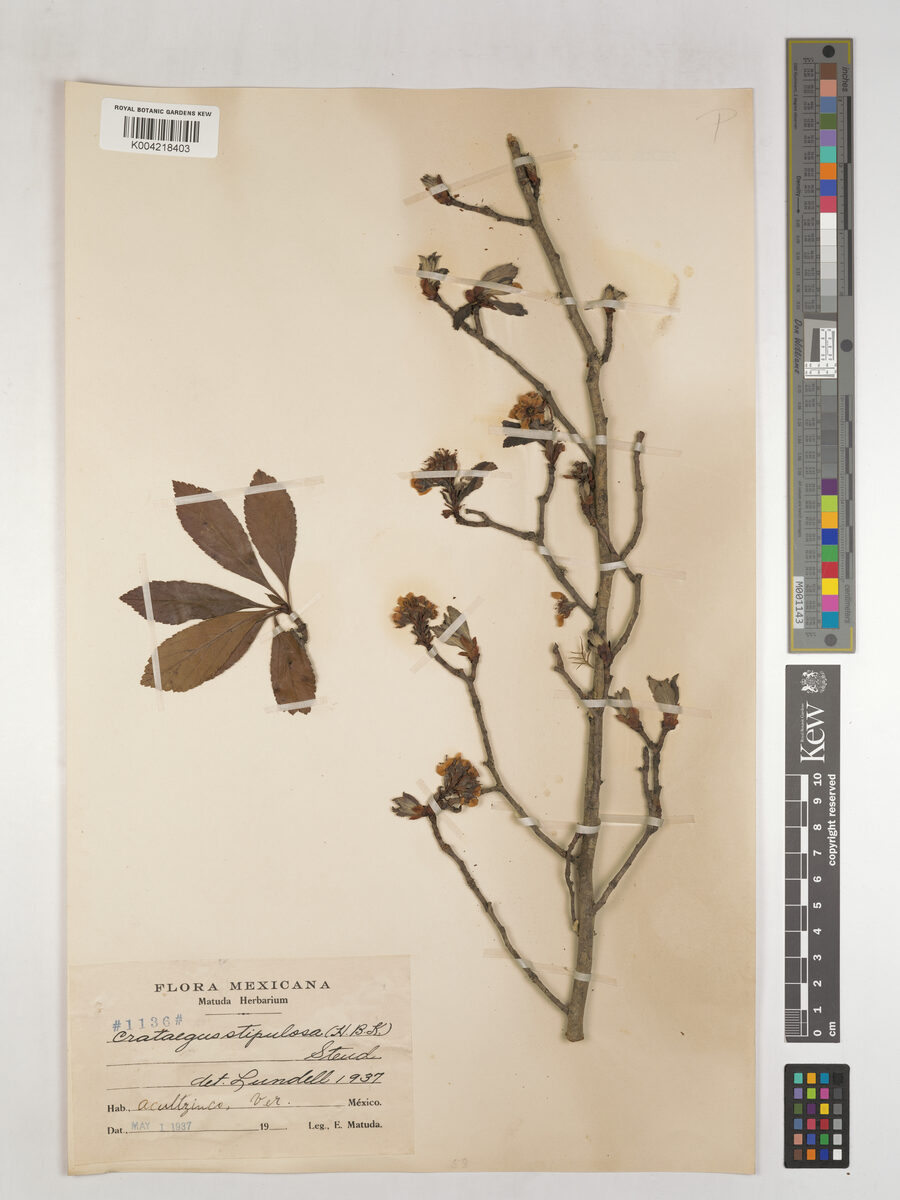
Crataegus pubescens var. stipulacea
Manzanilla
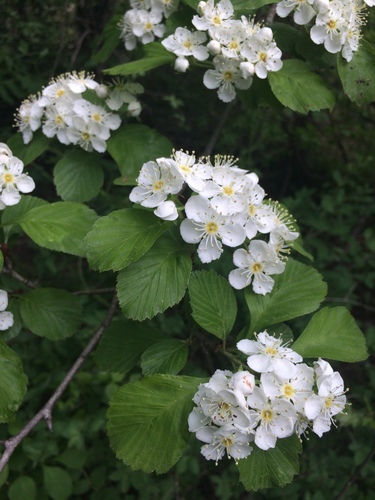
Crataegus punctata
Dotted hawthorn, Thicket hawthorn, Whitehaw