Alternanthera littoralis
(Mart.) St. Hil.
Mbimbi-tongo
iNaturalist· cc-by-nc
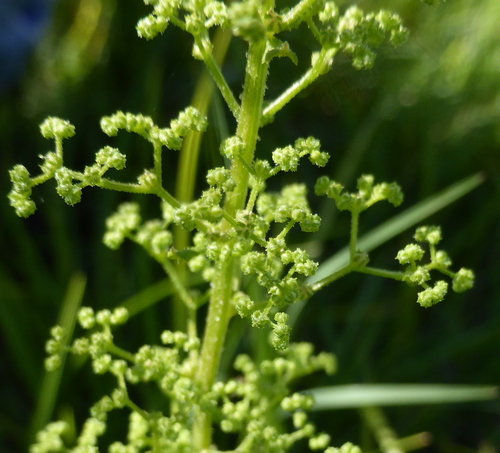
(c) Sylvain Piry, some rights reserved (CC BY-NC), uploaded by Sylvain Piry
iNaturalist· cc-by-nc
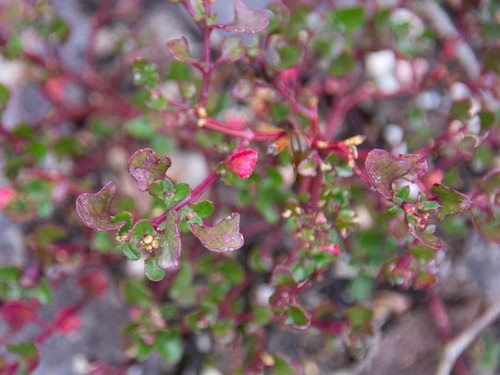
(c) Luís A. Funez, some rights reserved (CC BY-NC)
iNaturalist· cc0
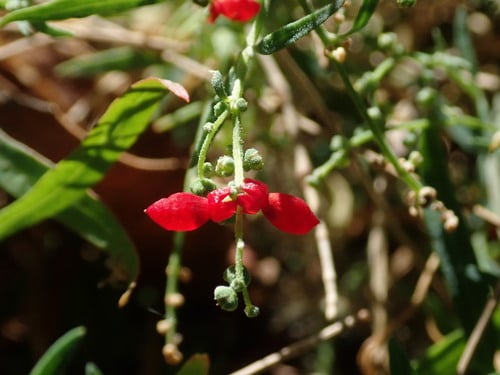
no rights reserved
Summary
Source: WikipediaAlternanthera littoralis is an African species of plant in the family Amaranthaceae. The leaves are eaten as a vegetable.
Description
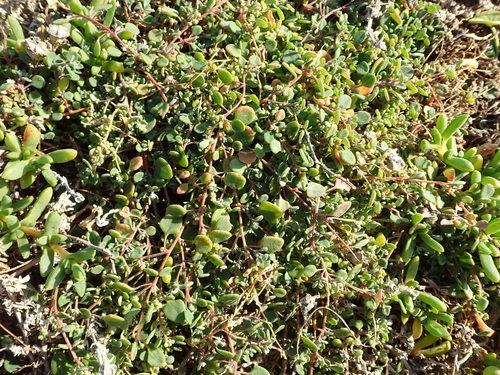
A creeping herb. The stems can be 10 m long. They form roots at the nodes. They are fleshy. The leaves are broadly oval and fleshy. They are 4 cm long by 2 cm wide. The flowers are silvery white. They are in clusters in the axils of leaves.
Edible Uses
The leaves are cooked and eaten as a vegetable.
Traditional Uses
The leaves are cooked and eaten as a vegetable.
This uses section is brief — help expand it
Medicinal Uses
The plant is used as an alterative to strengthen debilitated children. The plant is pulped and then used in friction rubs for treating oedema of the body.
Distribution
A tropical plant. It grows near the sea on coastal sands in West Africa. It can grow in soils with a high salt content.
Where It Grows
Africa, Angola, Benin, Brazil, Central Africa, Central America, Côte d'Ivoire, East Africa, Gabon, Ivory Coast, Liberia, Madagascar, Nigeria, Sao Tome and Principe, Senegal, Sierra Leone, Togo, West Africa,
Cultivation
Requires a sunny position. Succeeds in sandy soils and also in salty soils. Plants can flower and fruit all year round.
Propagation
Seed - Division
Other Uses
The plant has long stolons and is a strong creeper, it can be used as a sand-binder.
Other Information
It is a minor vegetable.
Notes
There are 200 Alternanthera species.
Synonyms
Also Known As
Kwagnan, Mbambi-tongo
References (7)
- Burkill, H. M., 1985, The useful plants of west tropical Africa, Vol. 1. Kew.
- Grubben, G. J. H. and Denton, O. A. (eds), 2004, Plant Resources of Tropical Africa 2. Vegetables. PROTA, Wageningen, Netherlands. p 61 (As Alternanthera littoralis)
- Jardin, C., 1970, List of Foods Used In Africa, FAO Nutrition Information Document Series No 2.p 53
- Martin, F.W. & Ruberte, R.M., 1979, Edible Leaves of the Tropics. Antillian College Press, Mayaguez, Puerto Rico. p 173
- Raponda-Walker, A & Sillans, R., 1961, Les Plantes Utiles du Gabon. Editions Paul Lechevalier, Paris. p 48
Show all 7 references Hide references
- Terra, G.J.A., 1973, Tropical Vegetables. Communication 54e Royal Tropical Institute, Amsterdam, p 20
- World Checklist of Useful Plant Species 2020. Royal Botanic Gardens, Kew