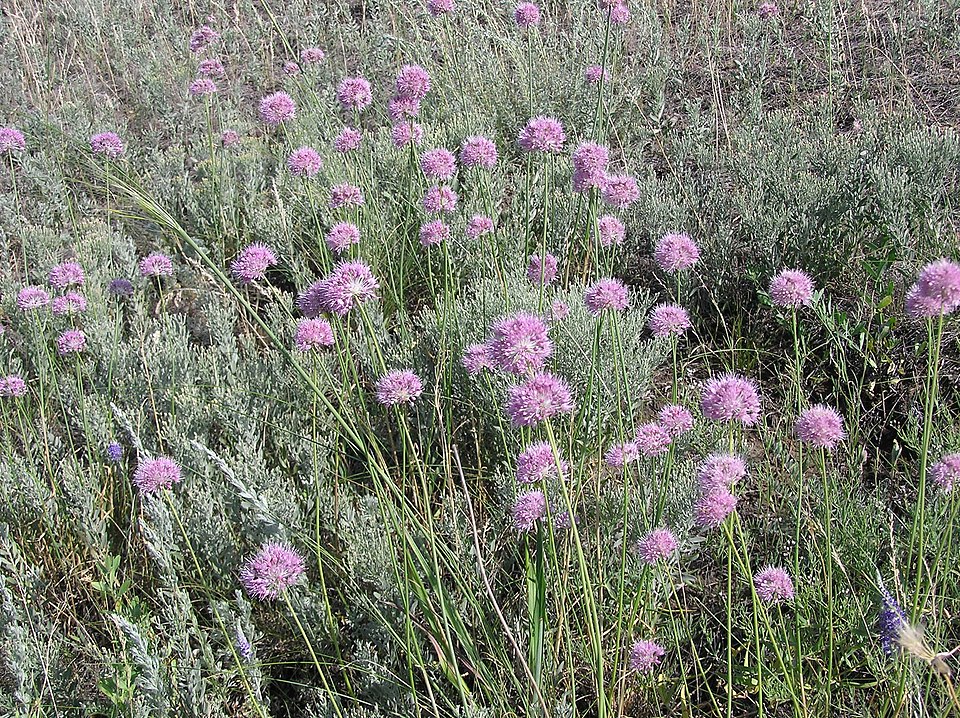
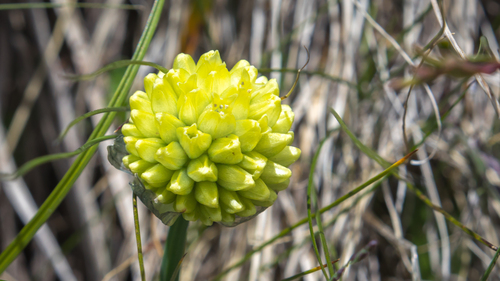
Allium stipitatum
Regel
Drumstick allium, Persian shallot
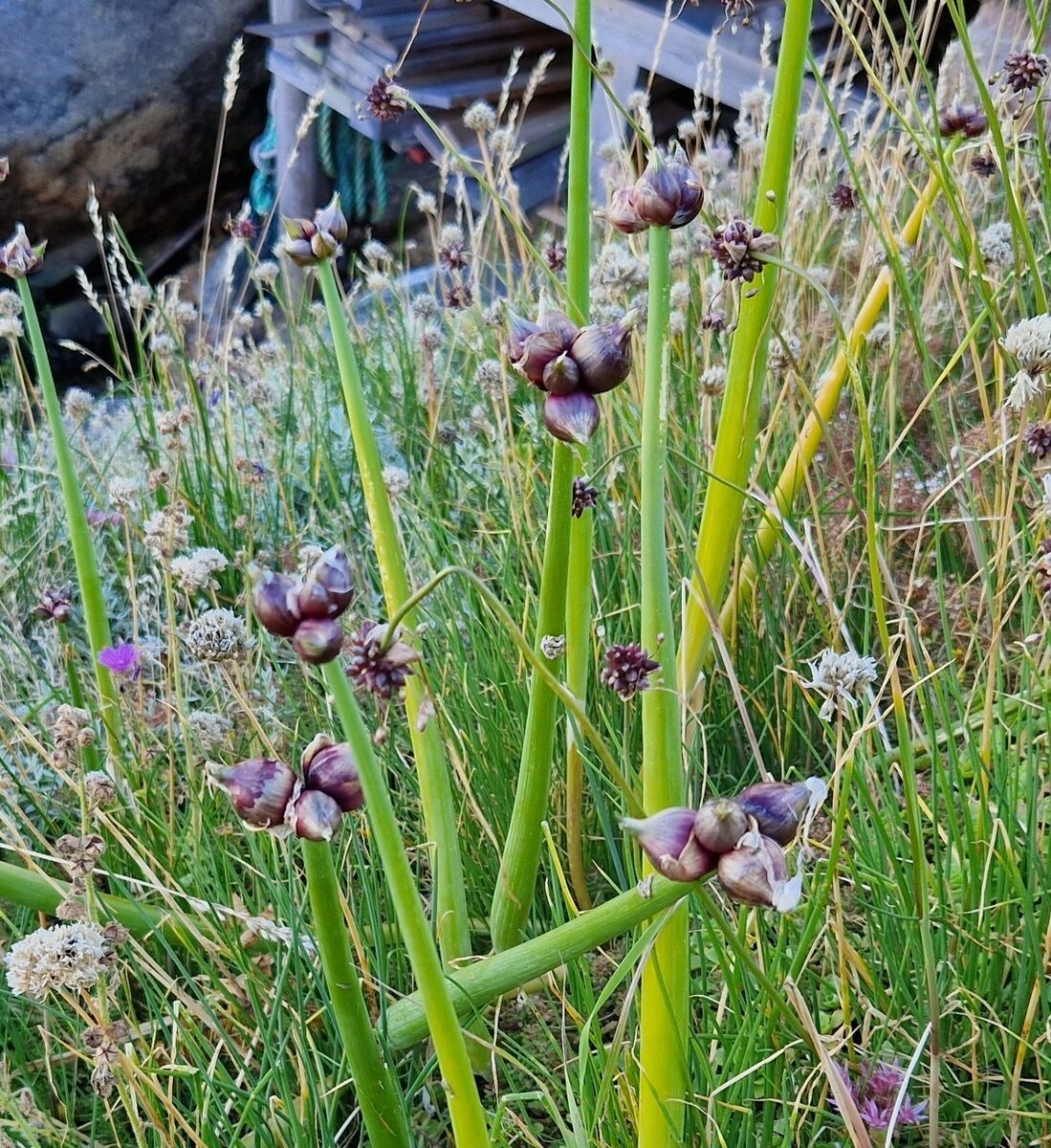
iNaturalist· cc-by-nc
(c) yelenasi, some rights reserved (CC BY-NC)
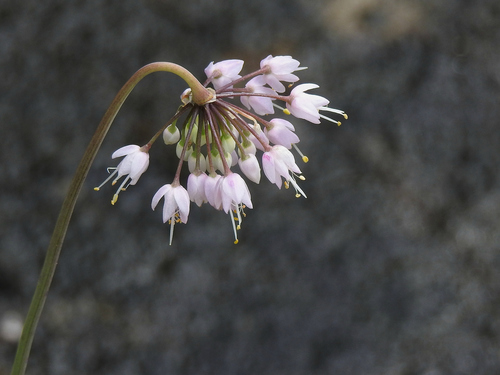
iNaturalist· cc-by-nc
(c) Наталья Бешко, some rights reserved (CC BY-NC), uploaded by Наталья Бешко
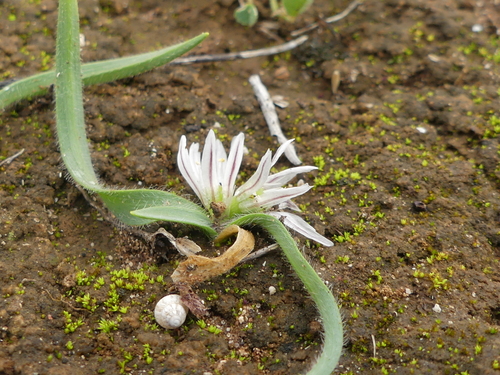
iNaturalist· cc-by-nc
(c) Наталья Бешко, some rights reserved (CC BY-NC), uploaded by Наталья Бешко
Summary
Source: WikipediaAllium stipitatum, Persian shallot, is an Asian species of onion native to central and southwestern Asia. Some sources regard Allium stipitatum and A. hirtifolium as the same species, while others treat A. stipitatum and A. hirtifolium as distinct. Allium stipitatum in the more inclusive sense occurs in Turkey, Iraq, Iran, Pakistan, Afghanistan, Turkmenistan, Tajikistan, Uzbekistan, Kyrgyzstan, and Kazakhstan. The epithet stipitatum means 'with a little stalk' referring to the ovary.
Description
An onion family plant. It is a bulb plant. This is 3-6 cm across. There are 4-6 leaves from the base. They are greyish green and slightly hairy. The leaves wither by the time the bulbs form. The flowers are on stems 60-150 cm tall. The individual flowers arise from one point forming a round head. These are 8-12 cm across.
Edible Uses
The bulbs measure 3–6cm in diameter and are eaten raw or cooked; they are sold as a food item in central Russia. The leaves are edible raw or cooked. The flowers are eaten raw and used as a garnish on salads.
Traditional Uses
The bulb is used for flavouring. The flowers can be eaten raw or used as a garnish on salads.
This uses section is brief — help expand it
Medicinal Uses
No specific medicinal uses have been recorded for this species, but members of this genus are generally considered very healthy additions to the diet. They contain sulphur compounds responsible for their onion flavour, and eaten regularly they help reduce blood cholesterol levels, act as a tonic to the digestive system, and support the circulatory system.
Known Hazards
Although no individual reports regarding this species have been seen, there have been cases of poisoning caused by the consumption, in large quantities and by some mammals, of certain members of this genus. Dogs seem to be particularly susceptible.
Distribution
It grows naturally on the rocky steppes of Afghanistan and Pakistan. It grows between 1,500-2,500 m above sea level.
Where It Grows
Asia, Afghanistan, Central Asia, Europe, India, Iran, Iraq, Kazakhstan, Kyrgyzstan, Middle East, Pakistan, Slovenia, Tajikistan, Turkey, Türkiye, Turkmenistan, Uzbekistan,
Cultivation
Prefers a hot sunny position in a light well-drained soil, growing well in the light shade of thinly clad shrubs that also thrive in hot dry conditions. The bulbs tend to rot when grown in cool wet climates, even if they are given sharp drainage. One report says that this species is only hardy to zone 8, which only covers the mildest areas of Britain, whilst another says that it is much hardier and will succeed in zone 4. It is being grown successfully about 60 kilometres west of London, and so should be hardy at least in the south of Britain. The bulbs should be planted fairly deeply. Most members of this genus are intolerant of competition from other growing plants. Grows well with most plants, especially roses, carrots, beet and chamomile, but it inhibits the growth of legumes. This plant is a bad companion for alfalfa, each species negatively affecting the other. Members of this genus are rarely if ever troubled by browsing deer.
Propagation
Sow seed in spring in a cold frame. Prick seedlings into individual pots when large enough to handle — for faster clumps, place three plants per pot. Grow on in the greenhouse for at least the first winter, then plant out in spring once growing vigorously. Division in spring is straightforward; plants can be divided at any point during the growing season — pot the divisions in a cold frame or greenhouse until growing well before planting out into permanent positions.
Other Uses
The plant juice is used as a moth repellent. The whole plant is also said to repel insects and moles.
Notes
There are about 300-700 Allium species. Most species of Allium are edible (Flora of China). All alliums are edible but they may not all be worth eating! They have also been put in the family Alliaceae.
Synonyms
Also Known As
Anzur pijoz, Mooseer, White Giant
References (7)
- Ebrahimi, R., et al, 2009, Scientia horticulturae 119: 345-351 (As Allium hirtifolium)
- Keusgen, M., et al., 2006, Wild Allium species (Alliaceae) used in folk medicine of Tajikstan and Uzbekistan. Journal of Ethnobiology and Ethnomedicine. 2:18
- Khassanov, F. O., 2007, Edible Alliums of Uzbekistan. in First Kazbegi workshop on "Botany, taxonomy and phytochemistry of wild Allium L. species of the Caucasus and Central Asia".
- Marinelli, J. (Ed), 2004, Plant. DK. p 224
- Plants for a Future database, The Field, Penpol, Lostwithiel, Cornwall, PL22 0NG, UK. http://www.scs.leeds.ac.uk/pfaf/
Show all 7 references Hide references
- Seidemann J., 2005, World Spice Plants. Economic Usage, Botany, Taxonomy. Springer. p 26
- Trudy Imp. S.-Peterburgsk. Bot. Sada 7:546. 1880 (Gartenflora 30:355, t. 1062. 1881.)