Hibiscus syriacus
L.
Syrian Hibiscus, Blue Hibiscus, Rose of Sharon
iNaturalist· cc-by-nc-sa
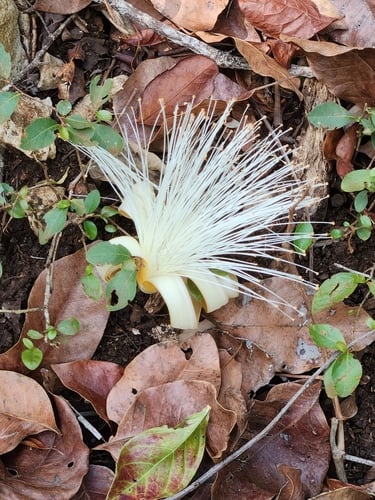
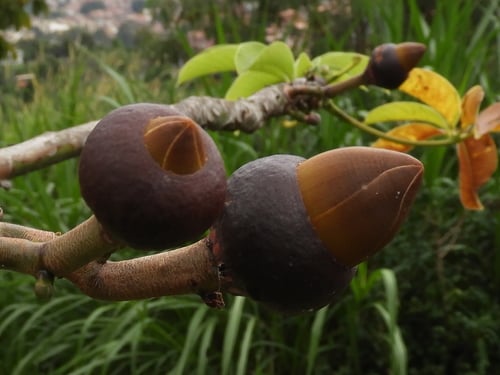
(c) Kai Yan, Joseph Wong, some rights reserved (CC BY-NC-SA)
iNaturalist· cc-by-nc
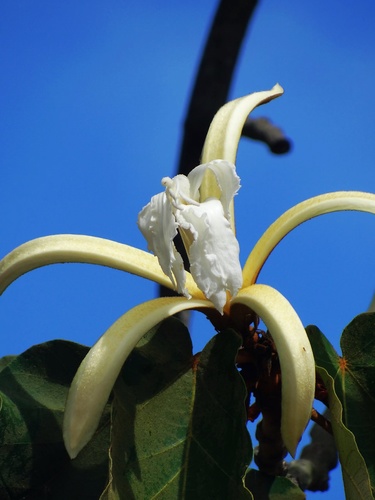
(c) mrhusky73, some rights reserved (CC BY-NC)
Summary
Source: WikipediaHibiscus syriacus is a species of flowering plant in the mallow family, Malvaceae. It is native to areas of east Asia, but widely introduced elsewhere, including much of Europe and North America. It was given the epithet syriacus because it had been collected from gardens in Syria. Common names include the rose of Sharon (especially in North America), Syrian ketmia, shrub althea (or simply althea), Korean rose and rose mallow (in the United Kingdom). It is the national flower of South Korea and is mentioned in the South Korean national anthem.
Description
A shrub 3-4 m high. It spreads 1.2-1.8 m wide. It loses its leaves in cooler climates. The leaves are oval with teeth around the edge. They are small and hairless. The flowers are purple with crimson centres. The flowers are bell shaped and can be single or double. They are produced in the axils of leaves. There are a range of cultivated varieties.
Edible Uses
Young leaves can be eaten raw or cooked. They have a very mild flavour, though slightly tough, and make an acceptable addition to the salad bowl. A tea can be brewed from the leaves or flowers. Flowers are edible raw or cooked, with a mild flavour and mucilaginous texture that makes them a delightful salad ingredient. Roots are edible but highly fibrous, with a mucilaginous texture and little flavour.
Traditional Uses
The young leaves are boiled and eaten with oil and salt. They are used for tea. The flowers can be eaten. They are used in soup. The calyces or the flower are eaten.
Medicinal Uses
The leaves are diuretic, expectorant and stomachic. A decoction of the flowers is diuretic, ophthalmic and stomachic, and is used to treat itch and other skin diseases, dizziness, and bloody stools accompanied by much gas. The bark contains several medically active constituents, including mucilage, carotenoids, sesquiterpenes and anthocyanidins. A decoction of the root bark is antiphlogistic, demulcent, emollient, febrifuge, haemostatic and vermifuge, used in the treatment of diarrhoea, dysentery, abdominal pain, leucorrhoea, dysmenorrhoea and dermaphytosis.
Distribution
It is a temperate plant. In the tropics it grows at high altitude. It is frost hardy but flowers are damaged by frost. It suits hardiness zones 5-9. At Anvers Chocolate factory. In Sichuan and Yunnan.
Where It Grows
Afghanistan, Africa, Andorra, Asia, Australia, Belgium, Britain, Bulgaria, Cameroon, Caucasus, Central Asia, China*, Cuba, East Africa, Ecuador, Europe, Fiji, France, Germany, Greece, Hawaii, Himalayas, India, Indochina, Iran, Italy, Korea, Marquesas, Mediterranean, Mexico, Mozambique, Myanmar, Nepal, Niue, Northeastern India, Pacific, Pakistan, Portugal, Romania, Rotuma, Samoa, SE Asia, Slovenia, Spain, Taiwan, Tajikistan, Tasmania, Thailand, Turkmenistan, USA, Uzbekistan, Vietnam, Yugoslavia,
Cultivation
Prefers a well-drained humus rich fertile soil in a sheltered position in full sun. Succeeds in any soil of good or moderate quality. Dislikes shade or badly drained soils. Plants grow best with their roots in cool moist soil and their tops in a hot sunny position. This species is hardy to about -20°c but plants only really succeed in the warmer counties of Britain because of their late flowering habit. When planted in colder areas of the country, they will need protection for the first few winters. The flowers only open in sunny weather. Plants rarely require pruning, though they respond well to pruning and trimming and this is best carried out in the spring or just after flowering. Plants are late coming into leaf, usually around the end of May or early June. A very ornamental plant, there are many named varieties.
Propagation
Sow seed in early spring in a greenhouse; germination is usually fairly quick. Prick seedlings into individual pots when large enough to handle and grow on in the greenhouse for the first year. Plant out into permanent positions in late spring or early summer. Some reports indicate that seed can be sown directly outdoors with a good germination rate. Half-ripe cuttings taken in July or August root well in a frame, as do cuttings of mature wood taken in early autumn. Layering can be carried out from midsummer to early autumn.
Other Uses
A low-quality fibre from the stems is used for cordage and paper. The seeds contain about 25% oil; no further details are given, but it is likely edible. A hair shampoo is made from the leaves. A blue dye is obtained from the flowers. The plant is used as a hedge in southern Europe.
Other Information
It is sold in local markets in China. It is cultivated.
Notes
There are about 220 Hibiscus species. It is also used as a medicine.
Synonyms
Also Known As
Bai jin hua, Chaba, Gurhal, Kembang sepatu mawar, Kembang sepatu saro, Mu jin, Shrubby Althæa, Sirski oslez, Swet jaba, Thon-ban-hla, Woody Hibiscus
References (35)
- Ambasta, S.P. (Ed.), 2000, The Useful Plants of India. CSIR India. p 267
- Blamey, M and Grey-Wilson, C., 2005, Wild flowers of the Mediterranean. A & C Black London. p 135
- Bodkin, F., 1991, Encyclopedia Botanica. Cornstalk publishing, p 558
- Brickell, C. (Ed.), 1999, The Royal Horticultural Society A-Z Encyclopedia of Garden Plants. Convent Garden Books. p 522
- Burkill, I.H., 1966, A Dictionary of the Economic Products of the Malay Peninsula. Ministry of Agriculture and Cooperatives, Kuala Lumpur, Malaysia. Vol 1 (A-H) p 1191
Show all 35 references Hide references
- Cundall, P., (ed.), 2004, Gardening Australia: flora: the gardener's bible. ABC Books. p 704
- DARLINGTON & AMMAL,
- Etherington, K., & Imwold, D., (Eds), 2001, Botanica's Trees & Shrubs. The illustrated A-Z of over 8500 trees and shrubs. Random House, Australia. p 382
- Facciola, S., 1998, Cornucopia 2: a Source Book of Edible Plants. Kampong Publications, p 148
- Flora of Pakistan. www.eFloras.org
- Hani Medicine of Xishuangbanna, 1999, p 375
- Hedrick, U.P., 1919, (Ed.), Sturtevant's edible plants of the world. p 346
- Hibbert, M., 2002, The Aussie Plant Finder 2002, Florilegium. p 139
- Hu, Shiu-ying, 2005, Food Plants of China. The Chinese University Press. p 541
- Jackes, D. A., Edible Forest Gardens
- Joyce, D., 1998, The Garden Plant Selector. Ryland, Peters and Small. p 144
- Kew Plants of the World Online
- Kremer, B.P., 1995, Shrubs in the Wild and in Gardens. Barrons. p 158
- Lazarides, M. & Hince, B., 1993, Handbook of Economic Plants of Australia, CSIRO. p 132
- Li, D. et al, 2017, Ethnobotanical survey of herbal tea plants from the traditional markets in Chaoshan, China. Journal of Ethnopharmacology. 205 (2017) 195-206
- Liu, Yi-tao, & Long, Chun-Lin, 2002, Studies on Edible Flowers Consumed by Ethnic Groups in Yunnan. Acta Botanica Yunnanica. 24(1):41-56
- Lord, E.E., & Willis, J.H., 1999, Shrubs and Trees for Australian gardens. Lothian. p 237
- Lyle, S., 2006, Discovering fruit and nuts. Land Links. p 240
- Maganha, A. G., et al, 2010, Pharmacological evidences for the extracts and secondary metabolites from plants of the genus Hibiscus. Food Chemistry 118: 1-10
- McMakin, P.D., 2000, Flowering Plants of Thailand. A Field Guide. White Lotus. p 28
- Pham-Hoang Ho, 1999, An Illustrated Flora of Vietnam. Nha Xuat Ban Tre. p 524
- Plants for a Future database, The Field, Penpol, Lostwithiel, Cornwall, PL22 0NG, UK. http://www.scs.leeds.ac.uk/pfaf/
- READ,
- Reis, S. V. and Lipp, F. L., 1982, New Plant Sources for Drugs and Foods from the New York Botanical Garden herbarium. Harvard. p 178
- Smith, A.C., 1981, Flora Vitiensis Nova, Lawaii, Kuai, Hawaii, Volume 2 p 421
- Sp. pl. 2:695. 1753
- Staples, G.W. and Herbst, D.R., 2005, A tropical Garden Flora. Bishop Museum Press, Honolulu, Hawaii. p 390
- Sukarya, D. G., (Ed.) 2013, 3,500 Plant Species of the Botanic Gardens of Indonesia. LIPI p 645
- Valder, P., 1999, The Garden Plants of China. Florilegium. p 290
- Young, J., (Ed.), 2001, Botanica's Pocket Trees and Shrubs. Random House. p 443