Helixanthera parasitica
Loureiro
Five-segmented parasite
iNaturalist· cc-by-nc
(c) eec, some rights reserved (CC BY-NC), uploaded by eec
iNaturalist· cc-by-nc
(c) Yvan, some rights reserved (CC BY-NC)
iNaturalist· cc-by-nc
(c) Yvan, some rights reserved (CC BY-NC)
Description
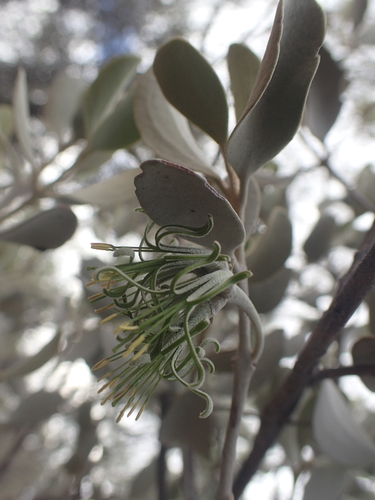
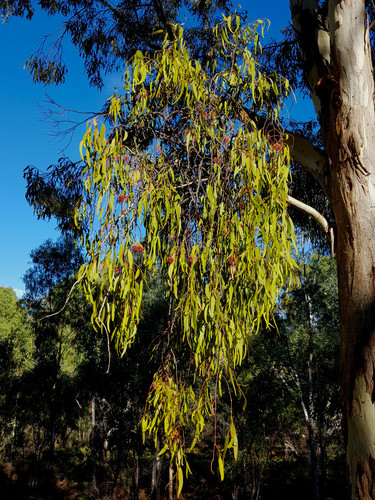
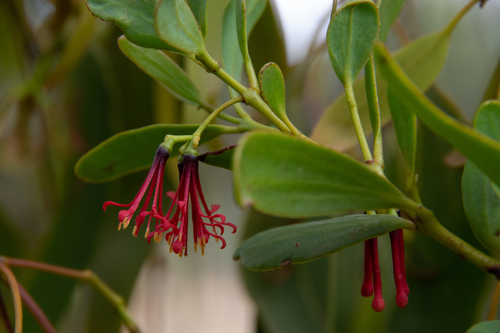
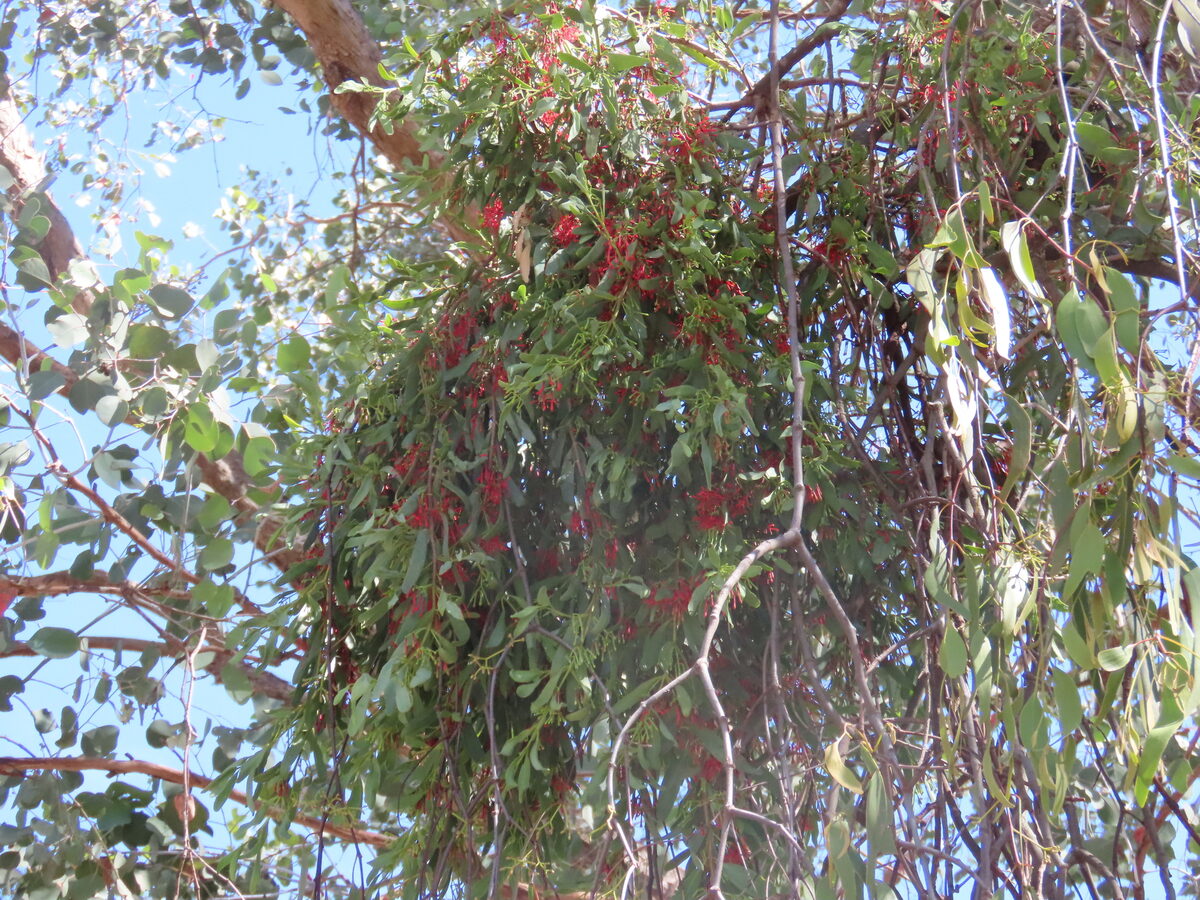
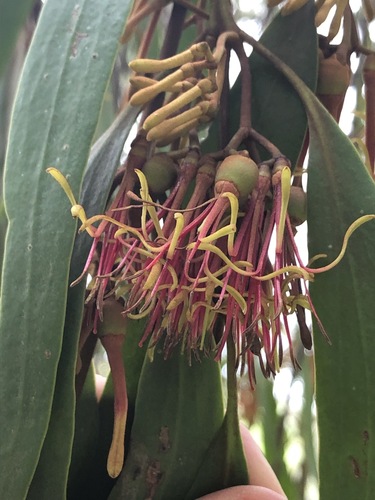
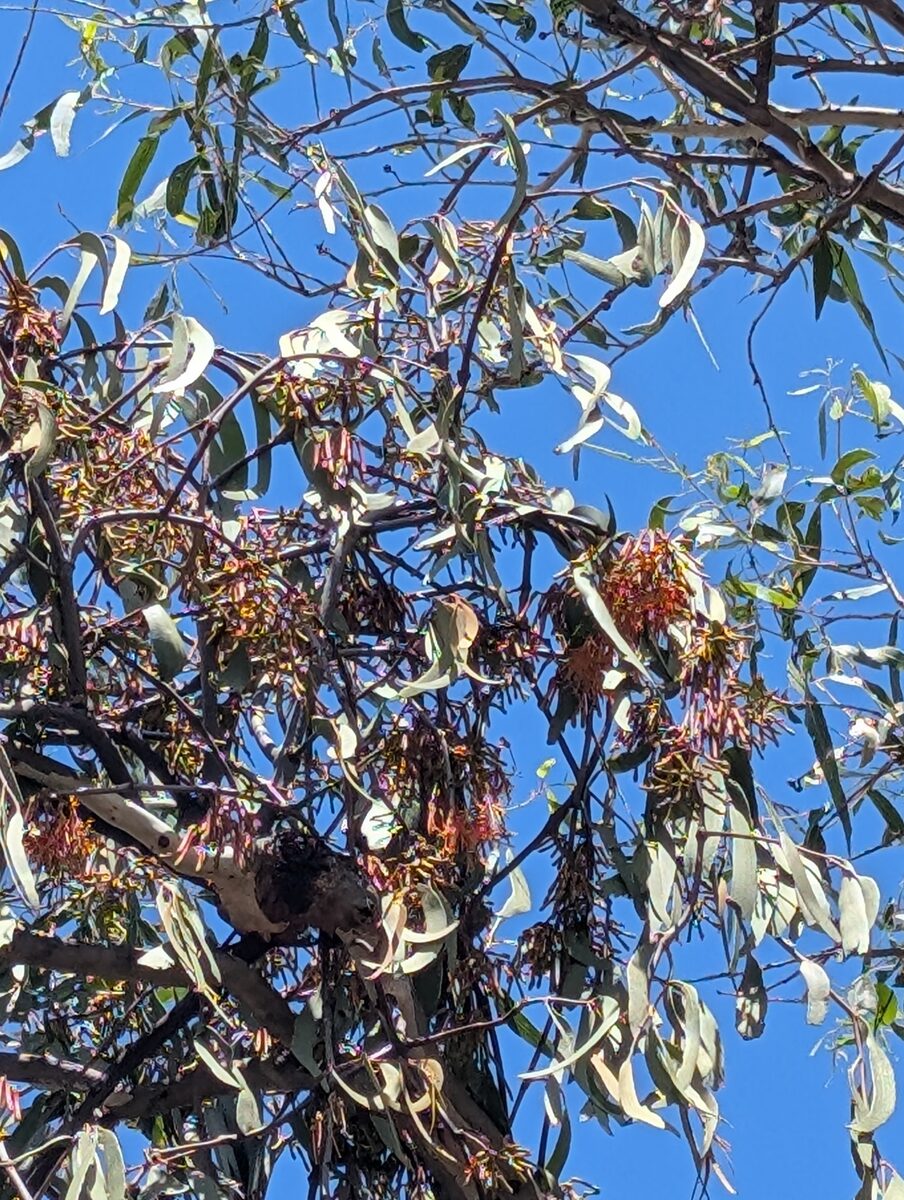
It is a parasite that grows over other trees and can kill them. It is a woody plant. The branches are up to 1.5 m long. The leaves are opposite and papery. They are oval and 5-12 cm long by 3-5 cm wide. The flowers are red or pink or yellow. They have short stalks. There are 40-60 flowers in spike like groups in the axils of leaves. These are 5-10 cm long. The fruit are red and oblong. They are 6 mm long by 4 mm wide. They are densely hairy.
Edible Uses
The leaves are used as a substitute for tea. The red oblong fruits are also edible.
Traditional Uses
The leaves are used as a substitute for tea.
This uses section is brief — help expand it
Distribution
A tropical plant. It grows on oaks, chestnuts, camphors, tung-oil trees and various wild figs.
Where It Grows
Asia, Cambodia, China, Himalayas, India, Indochina, Indonesia, Laos, Malaysia, Myanmar, Nepal, Pacific, Philippines, SE Asia, Thailand, Vietnam,
Notes
There are about 50 Helixanthera species. They are tropical and subtropical.
Also Known As
Dalimukey
References (3)
- Bodner, C. C. and Gereau, R. E., 1988, A Contribution to Bontoc Ethnobotany. Economic Botany, 43(2): 307-369
- Hu, Shiu-ying, 2005, Food Plants of China. The Chinese University Press. p 367
- www.eFloras.org Flora of China