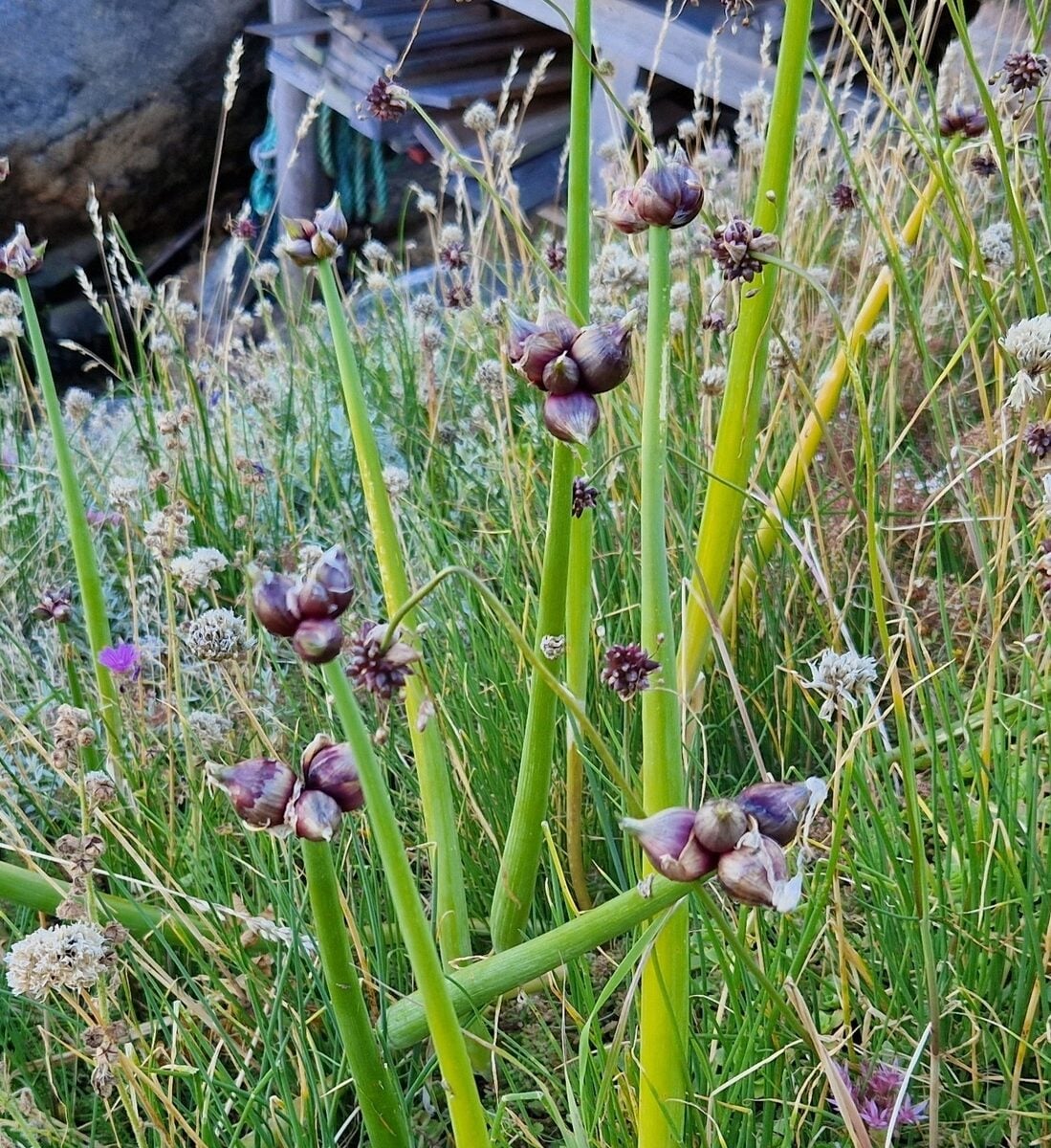
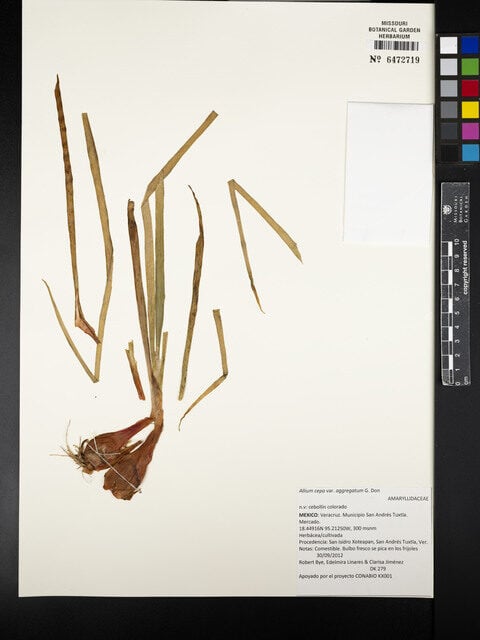
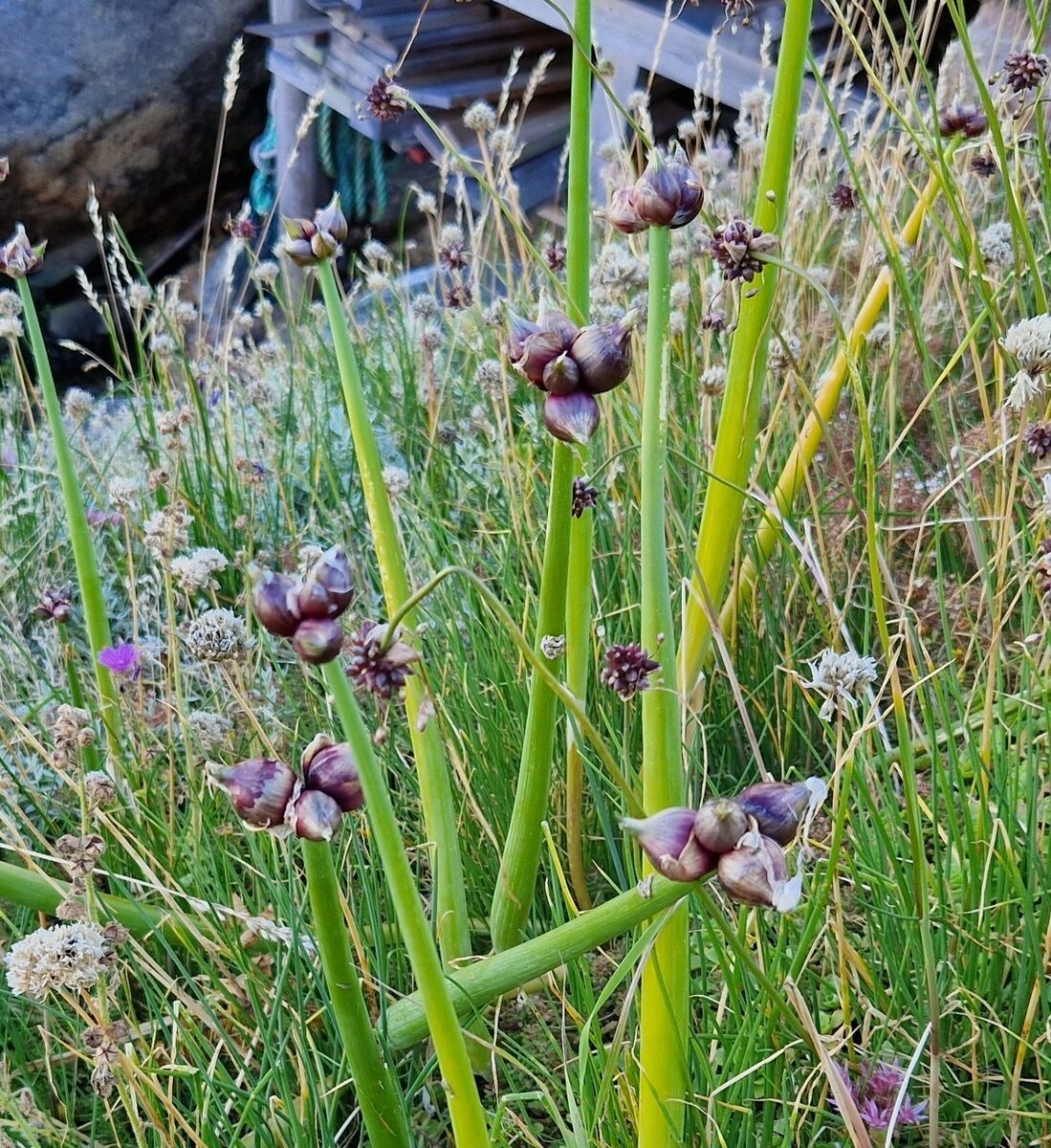
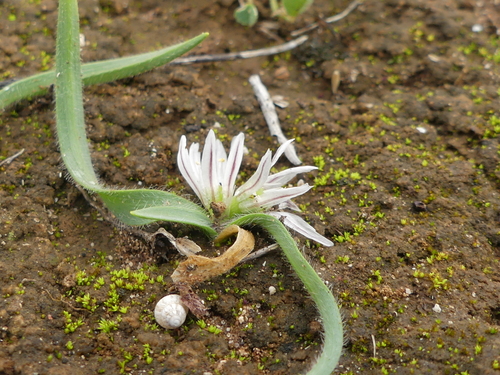
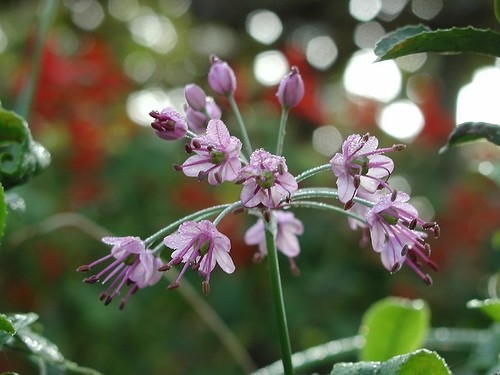
Allium cernuum
Roth.
Wild onion, Nodding onion, Lady's leek
iNaturalist· cc-by-nc
(c) Joanne Muis, some rights reserved (CC BY-NC), uploaded by Joanne Muis
iNaturalist· cc-by
(c) Jason Sturner, some rights reserved (CC BY)
iNaturalist· cc-by-nc-sa
(c) Anthony Mendoza, some rights reserved (CC BY-NC-SA)
Summary
Source: WikipediaAllium cernuum, known as nodding onion or lady's leek, is a perennial plant in the genus Allium. It grows in open areas in North America.
Description
An onion family bulb plant. It grows to 45 cm high and is 25 cm wide. The bulb is about 50 mm tall and 15 mm wide. The bulbs are grouped on a short rhizome. There are up to 6 leaves per bulb and they are flattened. They are 40 cm long. The flowering stems carry a drooping head of flowers. There are 20-30 pale pink or red, cup-shaped flowers. The flower heads straighten when seeds form.
Edible Uses
The bulb is eaten raw or cooked and has a strongly flavoured, spicy onion taste, making it most useful as a flavouring. It grows about 50mm tall and 15mm wide. Leaves are eaten raw or cooked and have a delicious, strong onion flavour that works very well in salads; they are available from spring through autumn and are considered among the most favoured onions in trial growing. Flowers are eaten raw or cooked with a strong onion flavour — somewhat more intense than the leaves, particularly as seeds begin to set — and make a decorative and tasty addition to salads.
Traditional Uses
The bulbs are eaten raw or cooked. They are best cooked. They can be dried. The leaves are eaten raw or cooked. The flowers are used raw or to flavour salads.
Medicinal Uses
The whole plant has mild medicinal activity similar to garlic. It is used specifically as a poultice applied to the chest for respiratory ailments, and the juice has been used in treating kidney stones. The juice is also used for colds, croup, and sore throats. Externally, a plant poultice is applied to sore throats, sores, swellings, chest pains, and pleurisy pains.
Known Hazards
Although no individual reports regarding this species have been seen, there have been cases of poisoning caused by the consumption, in large quantities and by some mammals, of certain members of this genus. Dogs seem to be particularly susceptible.
Distribution
It is a warm temperate plant. The plant grows naturally on ledges, gravels, rocky or wooded slopes and crests ascending to high altitudes in North America from Canada to Mexico. It prefers light well drained soil. Established plants can tolerate drought. It can grow in seaside gardens. It suits hardiness zones 6-10.
Where It Grows
Asia, Australia, Canada, India, Mexico, North America, Tasmania, USA,
Cultivation
An easily grown plant, it prefers a sunny position in a light well-drained soil. Succeeds in clay soils. Established plants are fairly drought tolerant. Plants succeed in maritime gardens. A very ornamental plant, it makes a very decorative edging to flower beds. This species is self-sowing quite freely in our Cornwall garden. The bulbs should be planted fairly deeply. Most members of this genus are intolerant of competition from other growing plants, though this species has tolerated considerable neglect in our Cornwall garden. The cultivar 'Major' is a more vigorous form with larger flower clusters. Grows well with most plants, especially roses, carrots, beet and chamomile, but it inhibits the growth of legumes. This plant is a bad companion for alfalfa, each species negatively affecting the other. A widespread and very variable species. It is closely allied to A. stellatum. Members of this genus are rarely if ever troubled by browsing deer. Alliums are typically harvested in late spring to early summer, when the bulbs mature and the tops begin to yellow. Allium species typically flower in late spring to early summer, depending on the species and local climate conditions. Allium species generally have a moderate growth rate, with bulbs typically taking about 100 to 150 days from planting to harvest, depending on the variety and growing conditions.
Propagation
Sow seed in spring in a cold frame. Prick seedlings into individual pots when large enough to handle — three plants per pot will build clumps more quickly. Grow on in a greenhouse through at least the first winter, then plant out in spring once growing vigorously and large enough. Division in spring is very easy; plants can be divided at any point in the growing season and divisions planted directly into their permanent positions if needed.
Other Uses
The plant juice acts as a moth repellent. The whole plant is said to repel insects and moles. The juice can be applied directly to exposed skin to repel biting insects.
Other Information
It has been a popular food.
Notes
There are about 300-700 Allium species. Most species of Allium are edible (Flora of China). All alliums are edible but they may not all be worth eating! They have also been put in the family Alliaceae.
Dangerous Lookalikes
This plant can be confused with the following toxic species. Always verify identification carefully before consuming any wild plant.
Death Camas
Toxicoscordion venenosum
Craig Martin https://www.inaturalist.org/people/craigmartin
Wild onion
Allium cernuum
(c) Joanne Muis, some rights reserved (CC BY-NC), uploaded by Joanne Muis
Death Camas: NO onion or garlic smell, upright cream/white flowers, bulb without onion smell.
Wild onion: Strong onion smell, nodding pink/white flowers, bulb smells of onion.
References (22)
- Arch. Bot. (Leipzig) 1(2):40. 1799
- Beckstrom-Sternberg, Stephen M., and James A. Duke. "The Foodplant Database." http://probe.nalusda.gov:8300/cgi-bin/browse/foodplantdb.(ACEDB version 4.0 - data version July 1994) (Also as Allium recurvatum)
- Brickell, C. (Ed.), 1999, The Royal Horticultural Society A-Z Encyclopedia of Garden Plants. Convent Garden Books. p 96
- Cormack, R. G. H., 1967, Wild Flowers of Alberta. Commercial Printers Edmonton, Canada. p 30
- Crawford, M., 2012, How to grow Perennial Vegetables. Green Books. p 136
Show all 22 references Hide references
- Cundall, P., (ed.), 2004, Gardening Australia: flora: the gardener's bible. ABC Books. p 126
- Elias, T.S. & Dykeman P.A., 1990, Edible Wild Plants. A North American Field guide. Sterling, New York p 58
- Esperanca, M. J., 1988. Surviving in the wild. A glance at the wild plants and their uses. Vol. 2. p 336
- Facciola, S., 1998, Cornucopia 2: a Source Book of Edible Plants. Kampong Publications, p 5
- Hedrick, U.P., 1919, (Ed.), Sturtevant's edible plants of the world. p 39
- MacKinnon, A., et al, 2009, Edible & Medicinal Plants of Canada. Lone Pine. p 192
- Plants for a Future database, The Field, Penpol, Lostwithiel, Cornwall, PL22 0NG, UK. http://www.scs.leeds.ac.uk/pfaf/ (Also as Allium recurvatum)
- Porsild, A.E., 1974, Rocky Mountain Wild Flowers. Natural History Series No. 2 National Museums of Canada. p 94 (As Allium cernuum)
- Ryan, S., 2008, Dicksonia. Rare Plants Manual. Hyland House. p 120
- Scotter, G. W., & Flygare, H., 1993, Wildflowers of the Canadian Rockies. Hurtig. p 106 (As Allium cernuum)
- Stubbs, R. D., 1966, An investigation of the Edible and Medicinal Plants used by the Flathead Indians. MA thesis University of Montana. p 51
- Toupal, R. S. & Hollenback, K., 2009, An Ethnobotany of Indiana Dunes National Lakeshore: Plant Uses of the Ojibwa People. Bureau of Applied research in Anthropology. University of Arizona
- Turner, N., 1995, Food Plants of Coastal First Peoples. Royal BC Museum Handbook p 40
- Turner, N., 1997, Food Plants of Interior First Peoples. Royal BC Museum Handbook p 59
- Turner, N., et al, 2011, "Up on the Mountain": Ethnobotanical Important of Montane Sites in Pacific Coastal North America. Journal of Ethnobiology 31(1): 4-43
- Wiersema, J. H. & Leon, B., 2013, World Economic Plants. A Standard Reference CRC Press. 2nd Ed. p 33 Woodward, P., 1996, Garlic and Friends. The History, Growth and Use of Edible Alliums. Hyland House. p 192
- World Checklist of Useful Plant Species 2020. Royal Botanic Gardens, Kew