Heisteria parvifolia
Sm.
iNaturalist· cc-by-nc
(c) Bart Wursten, some rights reserved (CC BY-NC), uploaded by Bart Wursten
iNaturalist· cc-by-nc
(c) ryansig, some rights reserved (CC BY-NC)
Description
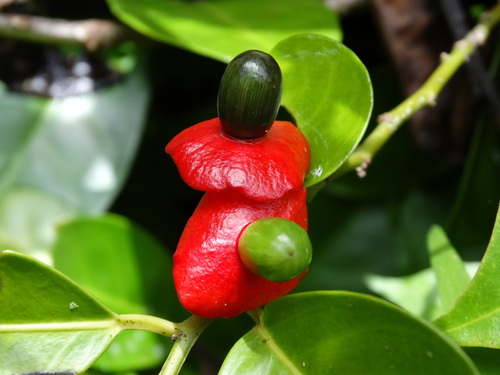
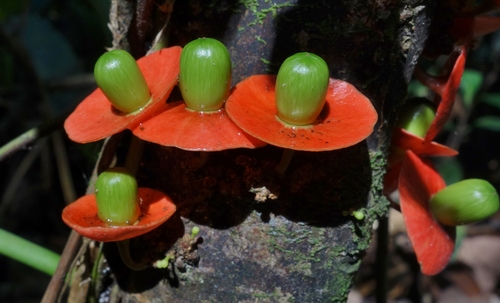
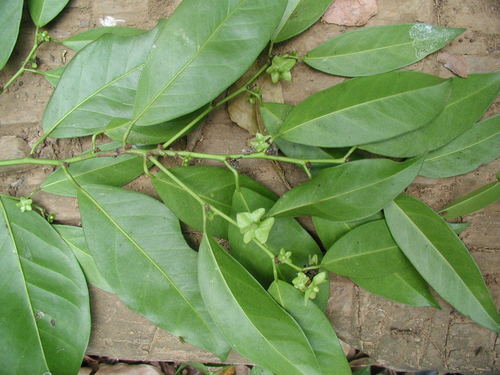
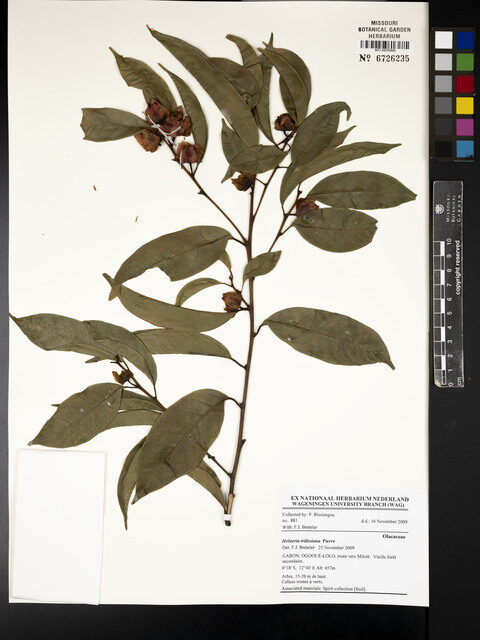
A shrub or small tree. It is 14 m high. It can grow to 20-25 m high. The trunk can be 50-60 cm across. It keeps its leaves throughout the year. The young twigs are slightly zigzag and have wings. The leaves are dark green and shiny on the upper surface. They are dull green underneath. The leaves are oval and taper to a short tip. The fruit have a red calyx or fleshy layer around it that is divided into five parts. The fruit contain a single seed.
Edible Uses
The fruit are eaten raw; the nuts and seeds are also edible.
Traditional Uses
The fruit are eaten raw.
This uses section is brief — help expand it
Distribution
A tropical plant. It grows in the under-storey of evergreen and deciduous forests in West Africa. It grows in forests along rivers. It can be in seasonally flooded forest.
Where It Grows
Africa, Angola, Cameroon, Central Africa, Central African Republic, CAR, Congo DR, Congo R, Côte d'Ivoire, Equatorial-Guinea, Gabon, Ghana, Guinea, Guinée, Guinea-Bissau, Ivory Coast, Liberia, Mali, Nigeria, Sao Tome and Principe, Senegal, Sierra Leone, Uganda, West Africa,
Notes
There are 33 Heisteria species in tropical America. Previously in the Olacaceae.
Nutrition
| Part | Moisture | kJ | kcal | Protein | Vit A | Vit C | Iron | Zinc |
|---|---|---|---|---|---|---|---|---|
| Nuts dried | 7.4 | 2721 | 651 | 9.4 | — | — | — | — |
Also Known As
Bonikya, Bosolo soku, Esamoko, Kla tehh, Komou-alie, Sikakyia, Vounk
References (19)
- Abbiw, D.K., 1990, Useful Plants of Ghana. West African uses of wild and cultivated plants. Intermediate Technology Publications and the Royal Botanic Gardens, Kew. p 47
- Aboagye, L. M., et al, 2007, Underutilized species Policies and Strategies. Report. CSIR Ghana. p 11
- Burkill, H. M., 1985, The useful plants of west tropical Africa, Vol. 4. Kew.
- Busson, 1965,
- Chapman, J. D. & Chapman, H. M., 2001, The Forest Flora of Taraba and Andamawa States, Nigeria. WWF & University of Canterbury. p 193
Show all 19 references Hide references
- Dalziel, J. M., 1937, The Useful plants of west tropical Africa. Crown Agents for the Colonies London.
- Diop, A. l., et al, 2021, Cultural importance of wild edible plants in three sympatric communities: Agni, Akyé and Gwa in the Department of Alépé (Southeast of Côte d’Ivoire). Ethnobotany Research and Applications 22:35. p 7
- Heywood, V.H., Brummitt, R.K., Culham, A., and Seberg, O. 2007, Flowering Plant Families of the World. Royal Botanical Gardens, Kew. p 233
- Jardin, C., 1970, List of Foods Used In Africa, FAO Nutrition Information Document Series No 2.p 33, 141
- Liengola, I. B., 2001, A contribution to the study of native edible plants by the Turumbu and Lokele of the Tshopo District, Province Orientale, D. R. Congo. Syst. Geogr. Pl. 71:687-698
- Manvell, A., 2011, Use of Non-Timber Forest Products around Sapo National Park, Liberia (Report B) p 19
- Menninger, E.A., 1977, Edible Nuts of the World. Horticultural Books. Florida p 9
- Nyadanu, D., et al, 2015, Agro-biodiversity and challenges of on-farm conservation: the case of plant genetic resources of neglected and underutilized crop species in Ghana. Genet. Resourc. Crop Evol. 62(7):
- Peters, C. R., O'Brien, E. M., and Drummond, R.B., 1992, Edible Wild plants of Sub-saharan Africa. Kew. p 156
- A. Rees, Cycl. 17: Heisteria no. 3. 1811
- Vascular Plants of Korup National Park. korupplants.myspecies.info
- Vivien, J., & Faure, J.J., 1996, Fruitiers Sauvages d'Afrique. Especes du Cameroun. CTA p 245
- Wickens, G.E., 1995, Edible Nuts. FAO Non-wood forest products. FAO, Rome. p145
- World Checklist of Useful Plant Species 2020. Royal Botanic Gardens, Kew