Acacia decurrens
(Wendl.) Willd.
Sydney green wattle
iNaturalist· cc-by-nc
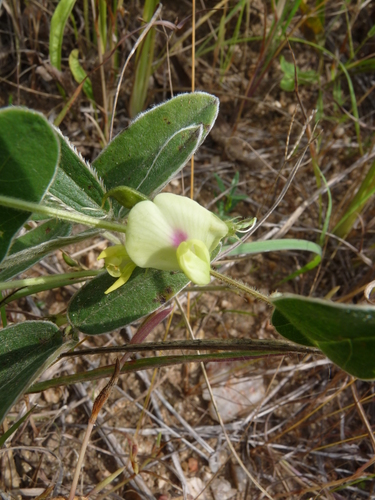
(c) Chris Ecroyd, some rights reserved (CC BY-NC), uploaded by Chris Ecroyd
iNaturalist· cc-by-nc-sa
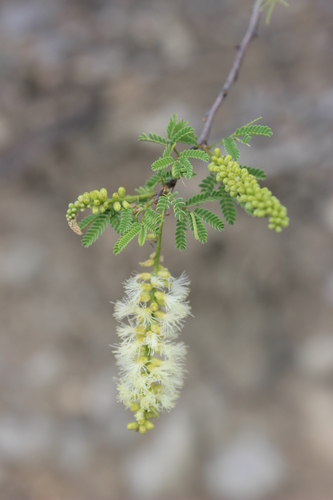
(c) David Hoare, some rights reserved (CC BY-NC-SA), uploaded by David Hoare
iNaturalist· cc-by-nc
(c) Chris Ecroyd, some rights reserved (CC BY-NC), uploaded by Chris Ecroyd
Summary
Source: WikipediaAcacia decurrens, commonly known as black wattle, Sydney green wattle or early green wattle and other common names, is a species of flowering plant in the family Fabaceae and is endemic to New South Wales, Australia. It is a tall shrub to tree with bipinnate, dark green leaves, spherical heads of golden yellow flowers and thinly leathery pods. Cultivated throughout Australia, Acacia decurrens has naturalised in other Australian states and introduced to many other countries.
Description
A shrub or small tree. It grows 5 m tall. There are prickles along the stem. The leaves are twice divided and there are 8-18 pairs of pinnae. There are up to 50 pairs of pinnules on each pinnae. The flowers are yellow. They are in large clusters at the ends of branches. The pods are flattened.
Edible Uses
Flowers and trunk gum are both edible. Flowers are cooked and, being rich in pollen, are often used in fritters. A gum that exudes naturally from the trunk is edible and can substitute for Gum Arabic in making jellies and similar preparations. It is insoluble in water and of low quality, though larger quantities can be obtained by tapping the trunk. Some species yield a dark gum that tends to be astringent and unpleasant; others produce a light gum that is sweet and pleasant — it can be sucked like candy, soaked in water to form a jelly, or warmed until soft and chewable.
Traditional Uses
The gum is eaten. The leaves have been used for tea.
This uses section is brief — help expand it
Medicinal Uses
The bark is astringent and should be stored for 12 months before use. Its main medicinal application is in the treatment of diarrhoea.
Known Hazards
Especially in times of drought, many Acacia species can concentrate high levels of the toxin Hydrogen cyanide in their foliage, making them dangerous for herbivores to eat.
Distribution
A temperate plant. It occurs naturally in Eastern Australia. It has been introduced to Tasmania. It prefers medium soils and a protected position. It is drought and frost resistant. It grows in areas with a rainfall between 450-3,600 m above sea level. It is frost tender while young. Because of its showy appearance and use as firewood it has been introduced to other countries. It suits warm temperate places. It can grow in arid places. It suits hardiness zones 9-10. Tasmania Herbarium. In Yunnan.
Where It Grows
Africa, Angola, Asia, Australia*, Brazil, Britain, Cameroon, Caribbean, China, Colombia, Dominican Republic, East Africa, Ecuador, Eswatini, Ethiopia, Europe, Haiti, Hawaii, Himalayas, India, Indonesia, Jamaica, Lesotho, Madagascar, Malaysia, Mozambique, Myanmar, New Caledonia, New Zealand, North America, Northeastern India, Pakistan, Puerto Rico, Reunion, SE Asia, South Africa, Southern Africa, South America, Sri Lanka, St Helena, Swaziland, Tanzania, Tasmania, USA, Venezuela, West Indies, Zimbabwe,
Cultivation
It is grown from seed. The seed need treatment to break the hard seed coat. Normally this is by putting the seeds in very hot water and letting the water cool down overnight then planting the seeds immediately.
Propagation
Seed is best sown as soon as ripe in a sunny position in a warm greenhouse. Stored seed should be scarified, pre-soaked for 12 hours in warm water, then sown in a warm greenhouse in March. Germination takes 3–4 weeks at 25°C. Prick seedlings into individual pots as soon as they are large enough to handle and grow on in a sunny greenhouse position through their first winter. Plant out in late spring or early summer after the last expected frosts, with some cold protection recommended for the first winter outdoors. Cuttings of half-ripe wood with a heel taken in July/August can be potted individually in a frame, overwintered in a greenhouse, and planted out in late spring or early summer. Fair success rate.
Other Uses
A yellow dye is obtained from the flowers and a green dye from the seed pods. The plant's extensive root system helps prevent soil erosion. The species is often grown as a screen in Australia. The bark contains about 40% tannin, or 36.6% on a 10% moisture basis.
Production
It is fast growing.
Notes
There are about 1,350 Acacia species. Over 1,000 occur in Australia. This one has spread in an uncontrolled manner in South Africa. Also as Mimosaceae.
Synonyms
Also Known As
Akasia, Early Black Wattle, Green Wattle, Queen Wattle, Seemai velam pattai
References (36)
- Ambasta S.P. (Ed.), 2000, The Useful Plants of India. CSIR India. p 5
- Bekele-Tesemma A., Birnie, A., & Tengnas, B., 1993, Useful Trees and Shrubs for Ethiopia. Regional Soil Conservation Unit. Technical Handbook No 5. p 46
- Bodkin, F., 1991, Encyclopedia Botanica. Cornstalk publishing, p 14
- Brickell, C. (Ed.), 1999, The Royal Horticultural Society A-Z Encyclopedia of Garden Plants. Convent Garden Books. p 60
- Burkill, I.H., 1966, A Dictionary of the Economic Products of the Malay Peninsula. Ministry of Agriculture and Cooperatives, Kuala Lumpur, Malaysia. Vol 1 (A-H) p 17
Show all 36 references Hide references
- Cherikoff V. & Isaacs, J., The Bush Food Handbook. How to gather, grow, process and cook Australian Wild Foods. Ti Tree Press, Australia p 47
- Cronin, L., 1989, The Concise Australian Flora. Reed. p 180
- Cundall, P., (ed.), 2004, Gardening Australia: flora: the gardener's bible. ABC Books. p 75
- Curtis, W.M., 1956, The Students Flora of Tasmania Vol 1 p 125
- Elliot, W.R., & Jones, D.L., 1982, Encyclopedia of Australian Plants suitable for cultivation. Vol 2. Lothian. p 40
- Etherington, K., & Imwold, D., (Eds), 2001, Botanica's Trees & Shrubs. The illustrated A-Z of over 8500 trees and shrubs. Random House, Australia. p 51
- Flora of Pakistan. www.eFloras.org
- Greig, D., 1996, Flowering Natives for Home Gardens. Angus & Robertson. p 31
- Grieg, D., 2002, A photographic guide to Wildflowers of South-eastern Australia. New Holland. p 71
- Hall, N. et al, 1972, The Use of Trees and Shrubs in the Dry Country of Australia, AGPS, Canberra. p 342
- Hedrick, U.P., 1919, (Ed.), Sturtevant's edible plants of the world. p 19
- Holliday, I., 1989, A Field Guide to Australian Trees. Hamlyn. p 16
- ILDIS Legumes of the World http:www;ildis.org/Legume/Web
- Kew Plants of the World Online
- Lazarides, M. & Hince, B., 1993, Handbook of Economic Plants of Australia, CSIRO. p 3
- Lord, E.E., & Willis, J.H., 1999, Shrubs and Trees for Australian gardens. Lothian. p 38
- Low, T., 1991, Wild Food Plants of Australia. Australian Nature FieldGuide, Angus & Robertson. p 152
- Low, T., 1992, Bush Tucker. Australia’s Wild Food Harvest. Angus & Robertson. p 34
- Marinelli, J. (Ed), 2004, Plant. DK. p 442
- Paczkowska, G . & Chapman, A.R., 2000, The Western Australian Flora. A Descriptive Catalogue. Western Australian Herbarium. p 304
- Plants of Haiti Smithsonian Institute http://botany.si.edu/antilles/West Indies
- Purseglove, J.W., 1968, Tropical Crops Dicotyledons, Longmans. p 210
- Roa, J. A. G. & Boada, D. S. G., 2018, Fundación para el Fortalecimiento de la Fruticultura y Plantas Alimenticias no Convencionales en Colombia.
- Royal Botanic Gardens, Kew (1999). Survey of Economic Plants for Arid and Semi-Arid Lands (SEPASAL) database. Published on the Internet; http://www.rbgkew.org.uk/ceb/sepasal/internet [Accessed 26th April 2011]
- Sp. pl. 4(2):1072. 1806
- Swaziland's Flora Database http://www.sntc.org.sz/flora
- Tasmanian Herbarium Vascular Plants list p 38
- Townsend, K., 1994, Across the Top. Gardening with Australian Plants in the tropics. Society for Growing Australian Plants, Townsville Branch Inc. p 52
- Williams, K.A.W., 1999, Native Plants of Queensland Volume 4. Keith A.W. Williams North Ipswich, Australia. p 14
- World Checklist of Useful Plant Species 2020. Royal Botanic Gardens, Kew
- Young, J., (Ed.), 2001, Botanica's Pocket Trees and Shrubs. Random House. p 46