Griselinia littoralis
Raoul.
Kapuka, Broadleaf, Papauma, New Zealand privet
iNaturalist· cc-by
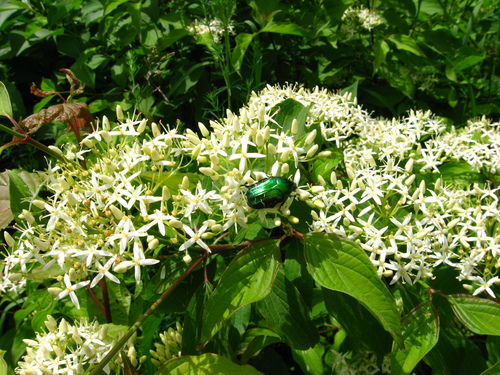
(c) Scott Zona, some rights reserved (CC BY)
iNaturalist· cc-by-nc
(c) josh jackson, some rights reserved (CC BY-NC)
iNaturalist· cc-by-nc
(c) Jon Sullivan, some rights reserved (CC BY-NC)
Summary
Source: WikipediaGriselinia littoralis, commonly known as kapuka, New Zealand broadleaf or pāpāuma, is a fast-growing small to medium-sized evergreen tree that is native to New Zealand.
Description
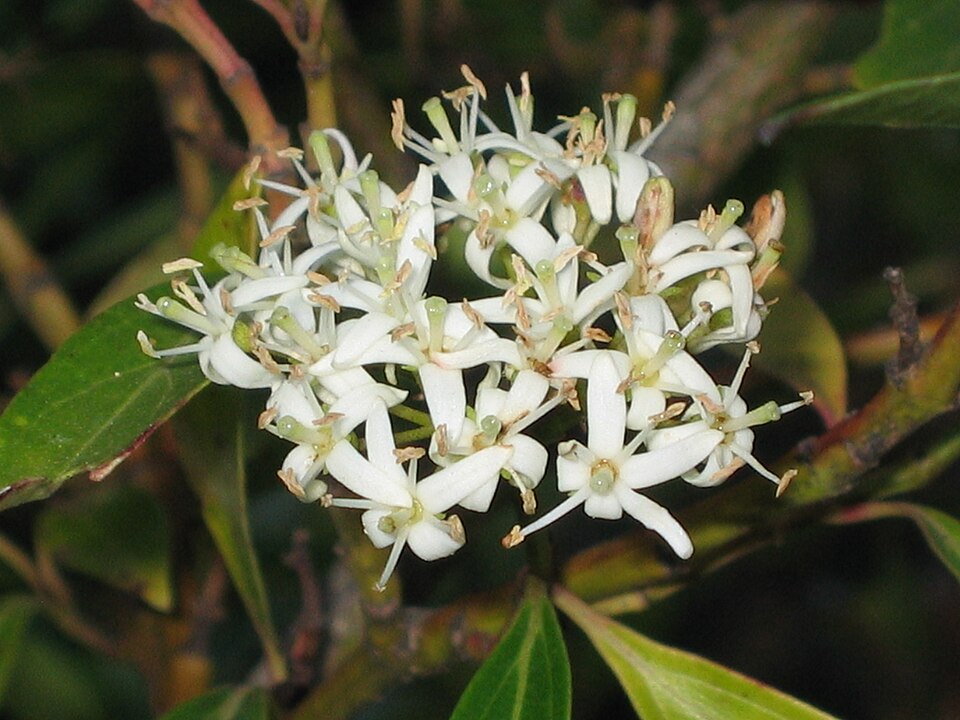
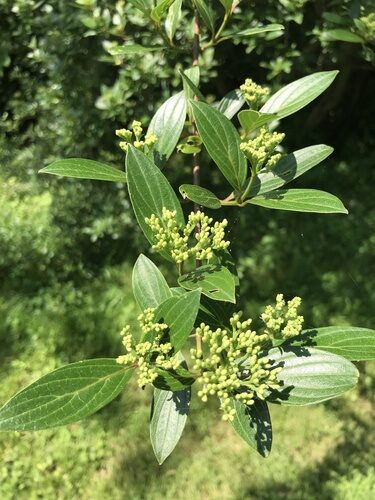
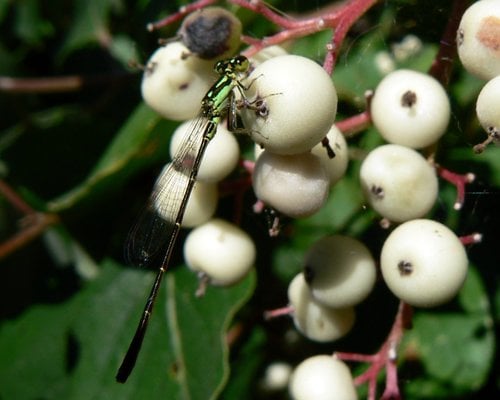
A tree or shrub. It grows to 6-12 m high. It spreads 4.5 m wide. The leaves are dense and are bright green. They are leathery and oval. Plants are separately male and female. The flowers are pale green. The fruit are purple to black.
Edible Uses
The fruit is edible but has a bitter flavour.
Medicinal Uses
None known
Distribution
A temperate climate plant. They need well drained soil and sunshine. They are resistant to salt. It suits hardiness zones 9-11. Tasmania Herbarium. Arboretum Tasmania. Hobart Botanical Gardens.
Where It Grows
Australia, New Zealand*, Slovenia, Tasmania,
Cultivation
Prefers a rich light loam in sun or semi-shade. Tolerates chalky soils. Plants are very tolerant of strong maritime winds but they can be damaged by cold dry winds. Tolerating temperatures down to about -10°c, this species is somewhat tender in most parts of Britain though it usually regrows if cut back by frost. The young shoots in spring are often cut back by late frosts. Very tolerant of root disturbance, it transplants well even when quite large though it would then require staking at first when growing in exposed positions. A number of cultivars have been developed for their ornamental value. Plants in this genus are notably resistant to honey fungus. Dioecious. Male and female plants must be grown if seed is required. It self-sows abundantly in the milder areas of Britain if both sexes are grown.
Propagation
Seed is best sown as soon as ripe in a greenhouse, though it can also be sown in spring in a cold frame. Prick out seedlings once large enough to handle and keep under glass through at least their first winter. Plant out in late spring after the last expected frosts, with some protection during the first winter outdoors. Cuttings of half-ripe wood, 7 cm with a heel, taken in July or August in a frame — keep the foliage moist, pot up in August, and overwinter in a sheltered spot before planting out the following late spring. Cuttings of mature wood, 7–10 cm with a heel, taken October to November in a frame, give a high success rate.
Other Uses
Griselinia littoralis thrives in coastal conditions and makes an excellent hedge that tolerates maritime exposure. Plants respond well to trimming, ideally cut in early summer, and can be cut hard back into old wood if needed. Growth is slow but the result is a dense, attractive hedge. The wood is very durable, firm, and dense, though slightly brittle, and has been used for ship building and railway sleepers.
Notes
There are 6 or 7 Griselinia species.
Synonyms
References (13)
- Crowe, A., 1997, A Field Guide to the Native Edible Plants of New Zealand. Penguin. p 153
- Cundall, P., (ed.), 2004, Gardening Australia: flora: the gardener's bible. ABC Books. p 657
- Etherington, K., & Imwold, D., (Eds), 2001, Botanica's Trees & Shrubs. The illustrated A-Z of over 8500 trees and shrubs. Random House, Australia. p 360
- Hibbert, M., 2002, The Aussie Plant Finder 2002, Florilegium. p 117
- Lavelle, M., 2008, Wild Flowers of Australia and Oceania. Southwater. p 97
Show all 13 references Hide references
- Lord, E.E., & Willis, J.H., 1999, Shrubs and Trees for Australian gardens. Lothian. p 56
- Matthews, J., 1987, New Zealand Native Plants for your Garden. Pacific Publishers, p 51
- Plants for a Future database, The Field, Penpol, Lostwithiel, Cornwall, PL22 0NG, UK. http://www.scs.leeds.ac.uk/pfaf/
- Ryan, S., 2008, Dicksonia. Rare Plants Manual. Hyland House. p 28
- Salmon, J.T., 1989, The Native Trees of New Zealand. Heinmann Reid p 264
- Stewart, K., 1984, Collins handguide to the Native Trees of New Zealand. Collins. p 46
- Tasmanian Herbarium Vascular Plants list p 23
- Young, J., (Ed.), 2001, Botanica's Pocket Trees and Shrubs. Random House. p 421