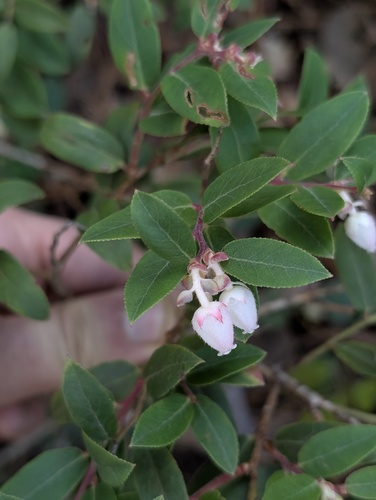
Gaultheria appressa
A.W. Hill
Snowberry, Waxberry
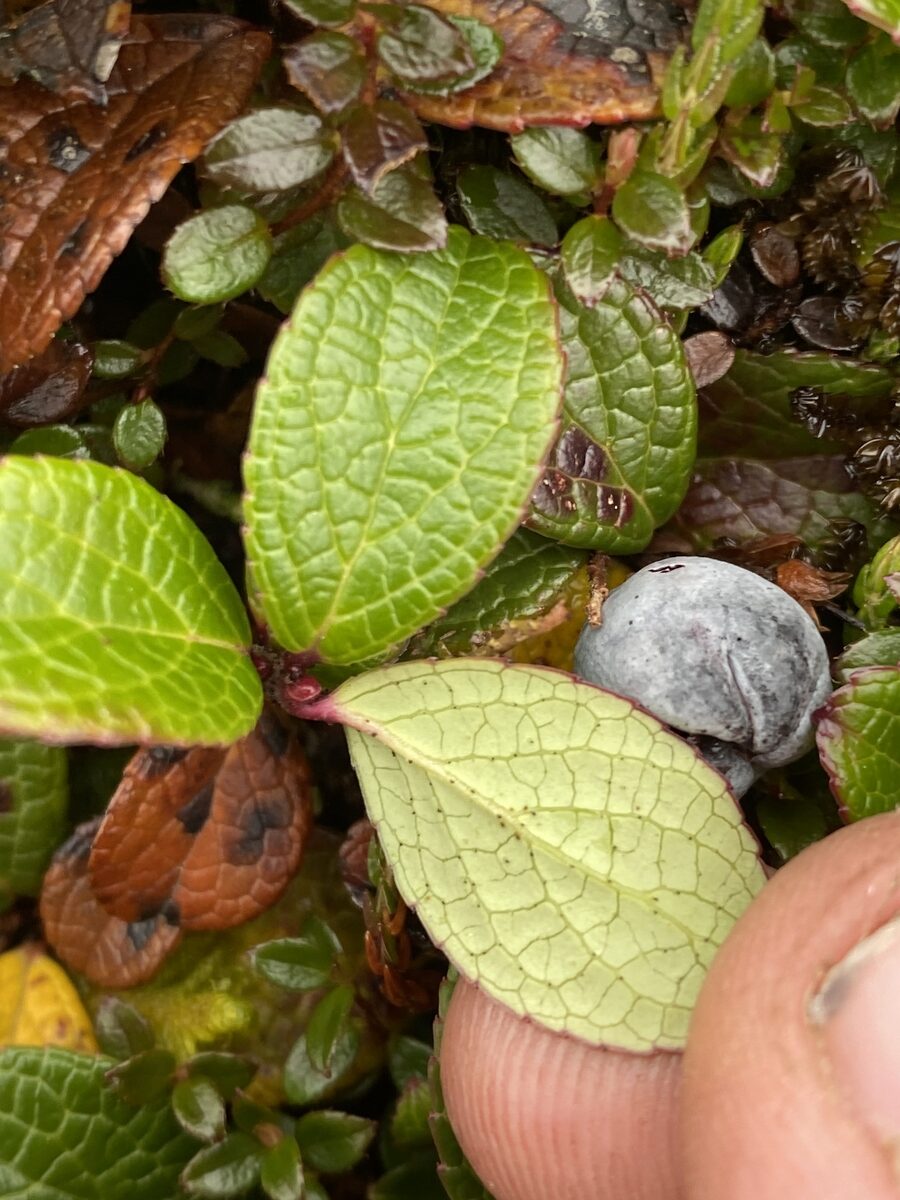
iNaturalist· cc-by-nc
(c) Wayne Martin, some rights reserved (CC BY-NC), uploaded by Wayne Martin
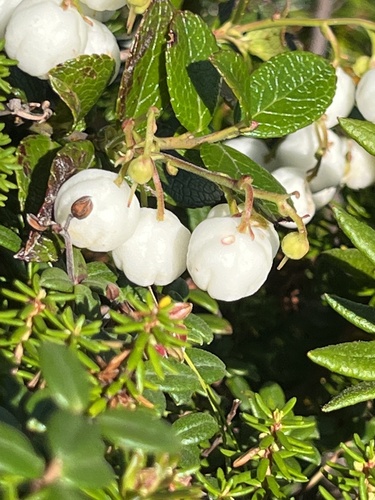
iNaturalist· cc-by-nc
(c) Greg Bellion, some rights reserved (CC BY-NC)
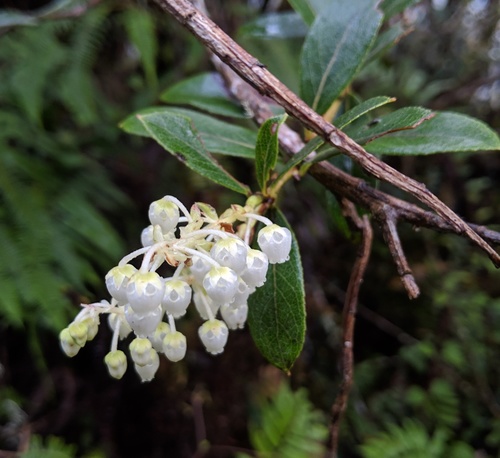
iNaturalist· cc-by-nc
(c) Greg Bellion, some rights reserved (CC BY-NC)
Summary
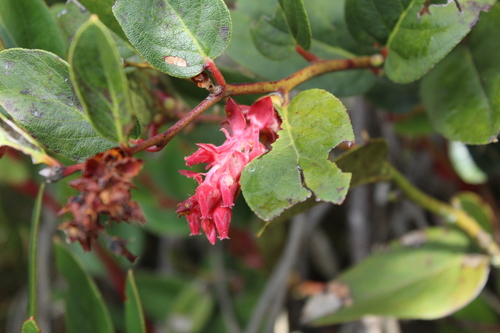
Source: WikipediaGaultheria appressa, the waxberry or white waxberry, is a shrub in the family Ericaceae. The species is endemic to Australia. It has an erect or spreading habit, growing to between 0.5 and 2 metres (1.6 and 6.6 ft) high, and has reddish brown hairs on its stems. Leaves are 3 to 8 cm (1.2 to 3.1 in) long and 1 to 3 cm (0.39 to 1.18 in) wide with small teeth along the edges. Flowers appear in groups of three to eleven in racemes in late spring to summer. The sepals become fleshy, white and enlarged during fruit formation. The fruits are between 7 and 10 millimetres (0.28 and 0.39 in) in diameter. The species occurs in woodland, forest, subalpine scrub and rainforest margins in New South Wales and Victoria. In the Greater Sydney region it is recorded in areas with an altitude of between 800 and 1,000 metres (2,600 and 3,300 ft) and with an annual rainfall of 1,000 mm (39 in).
Description
A small shrub. It can be erect or spreading. It grows 0.6-2.5 m high and spreads 1-2.5 m wide. It has brown flattened hairs. The leaves are 3-6 cm long by 0.5-1.2 cm wide. They are oblong or sword shaped. They are dark green and shiny. The flowers are like tubes. They are 0.6 cm long and white. The fruit is a dry capsule with a succulent white calyx around it.
Edible Uses
The fruit can be eaten raw or cooked, though it is somewhat bitter. Each fruit measures about 7–10mm across.
Medicinal Uses
None known.
Distribution
It suits temperate and subtropical zones. It grows as undergrowth in mountain forests. It can grow on a range of soils except alkaline soils. It needs well drained soils. It can tolerate frosts.
Where It Grows
Australia*,
Cultivation
Prefers a moist but not boggy humus rich soil in sun or semi-shade. A peat and moisture loving species, it requires a lime-free soil. This species is of unknown cold-tolerance in Britain, though it is hardy to -7°c in Australian gardens. This cannot be translated directly to British gardens however, due to our cooler summers and longer, colder and wetter winters. It should be worthwhile trying it out in a sheltered position in the milder areas of the country. This species is closely related to G. hispida. Plants in this genus are notably resistant to honey fungus.
Propagation
Seed requires cold stratification — pre-chill for 4–10 weeks, then surface sow in lime-free compost in a shady part of the greenhouse, keeping the compost moist. Germination usually occurs within 1–2 months at 20°C, but seedlings are prone to damping off. Water carefully, ensure good ventilation, and consider watering with a garlic infusion to reduce damping off. Prick out seedlings into individual pots at about 25mm tall and grow on in light shade in the greenhouse for at least the first winter. Plant out in late spring or early summer. Protect from spring frosts for the first few years outdoors, as seedlings are susceptible. Leaves remain very small for the first few years. Cuttings of half-ripe wood, 3–6cm long, taken July/August in a shaded frame; roots form in late summer or spring, with a good success rate. Divide in spring just before new growth begins — larger clumps can go straight to permanent positions, though smaller clumps are best potted up in a cold frame until rooting well, then planted out in spring. Layering is also possible.
Other Uses
None known.
Notes
There are about 170 Gaultheria species.
Synonyms
References (7)
- Bodkin, F., 1991, Encyclopedia Botanica. Cornstalk publishing, p 488
- Cribb, A.B. & J.W., 1976, Wild Food in Australia, Fontana. p 36
- Elliot, W.R., & Jones, D.L., 1992, Encyclopedia of Australian Plants suitable for cultivation. Vol 4. Lothian. p 349
- Low, T., 1991, Wild Food Plants of Australia. Australian Nature FieldGuide, Angus & Robertson. p 70
- Morley, B.D., & Toelken, H.R., (Eds), 1983, Flowering Plants in Australia. Rigby. p 110
Show all 7 references Hide references
- Nicholson, N & H., 1996, Australian Rainforest Plants 3, Terania Rainforest Publishing. NSW. p 32
- Williams, J.B., Harden, G.J., and McDonald, W.J.F., 1984, Trees and shrubs in rainforests of New South Wales and Southern Queensland. Univ. of New England, Armidale. p 73