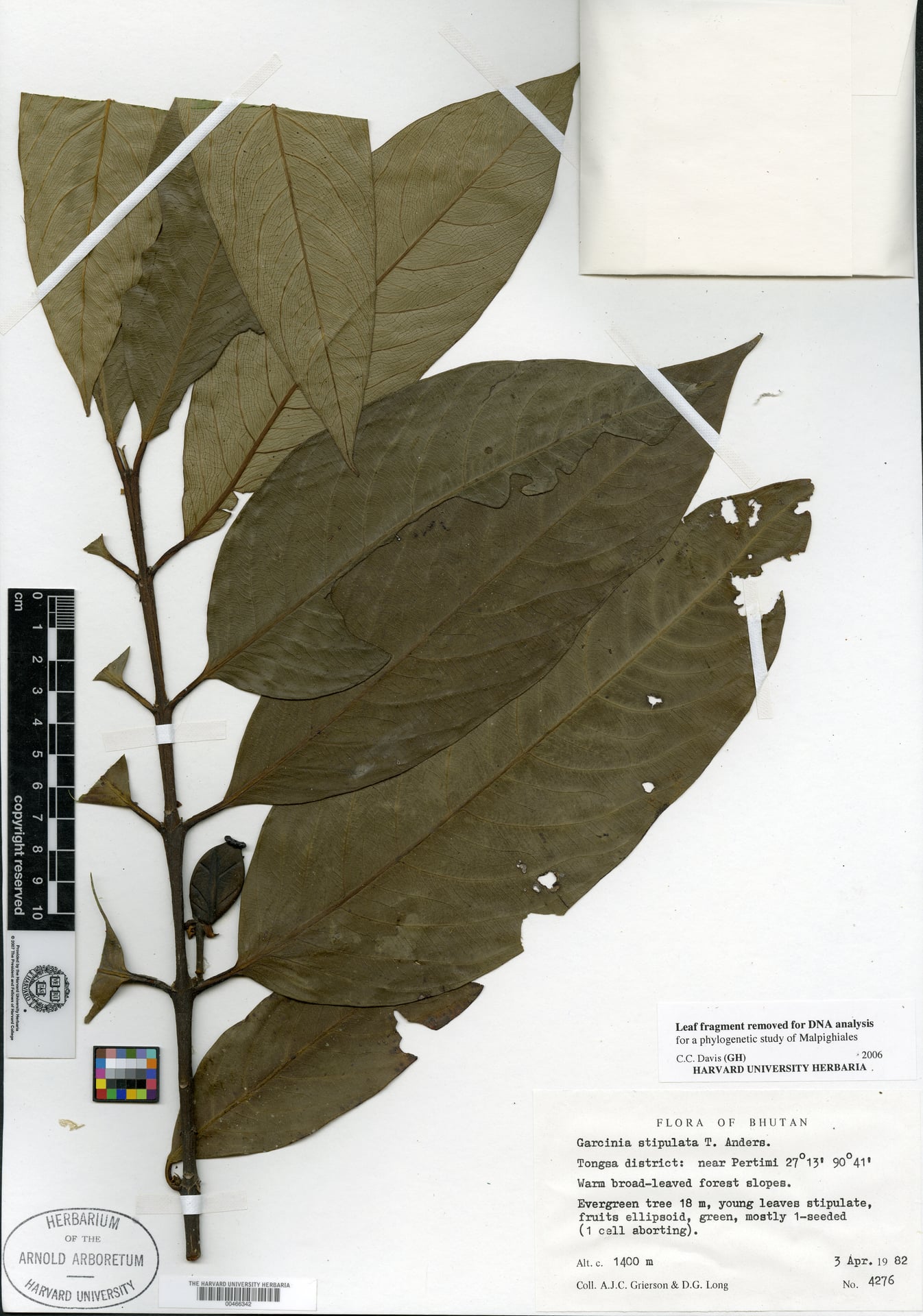
Garcinia oblongifolia
Champ. ex Benth.
South China mangosteen
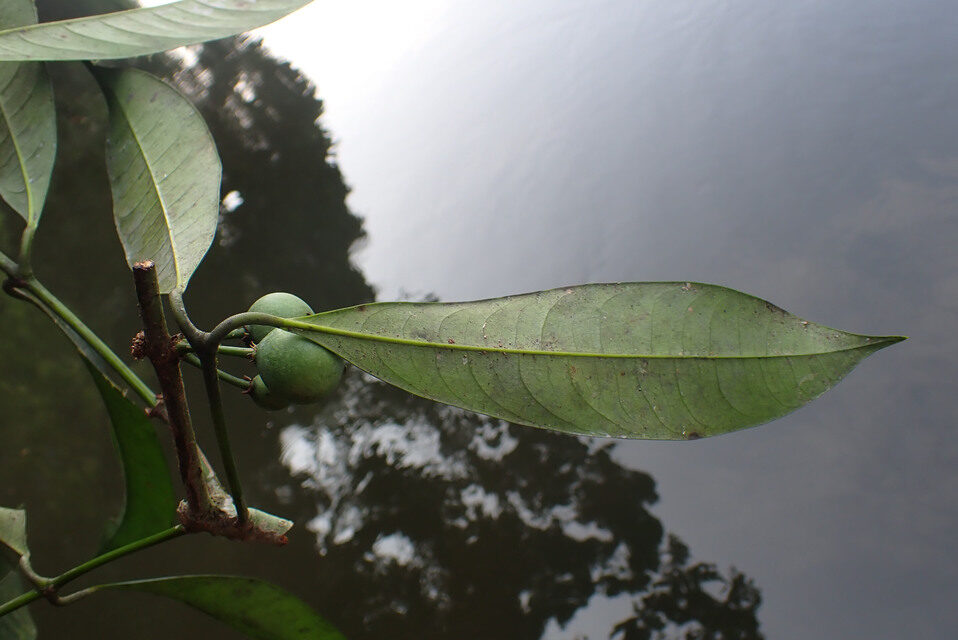
iNaturalist· cc-by-nc
(c) Alan Kwok (King Lun), Ada Tai (Ah Heung) / 阿達蘭 AdAlan, some rights reserved (CC BY-NC), uploaded by Alan Kwok (King Lun), Ada Tai (Ah Heung) / 阿達蘭 AdAlan
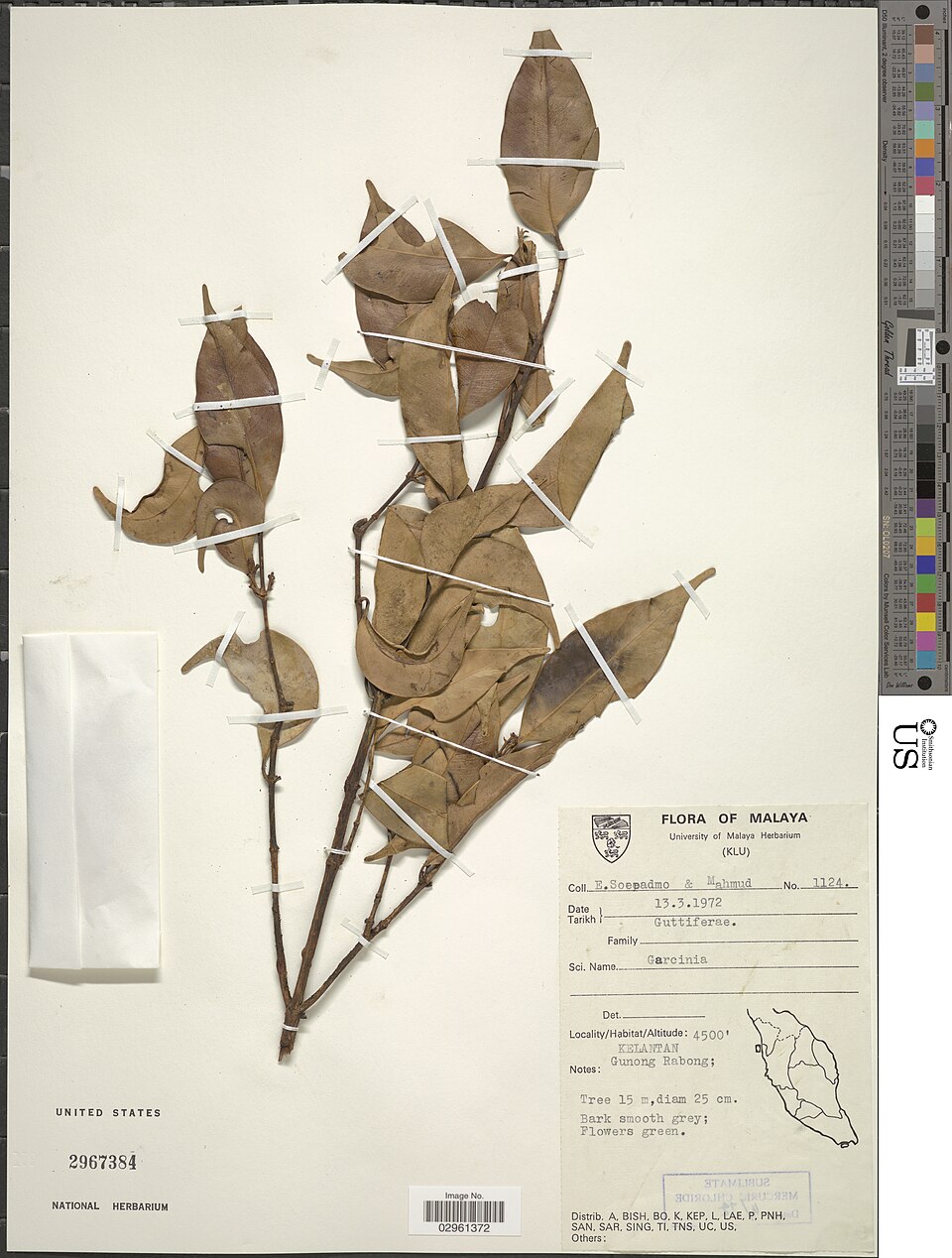
iNaturalist· cc-by-nc
(c) biobank-lantauhk, some rights reserved (CC BY-NC), uploaded by biobank-lantauhk
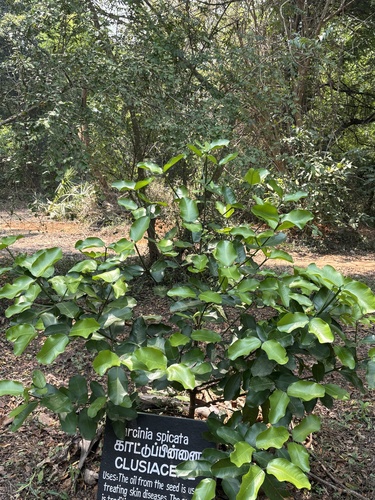
iNaturalist· cc-by-nc
(c) H.T.Cheng, some rights reserved (CC BY-NC), uploaded by H.T.Cheng
Description
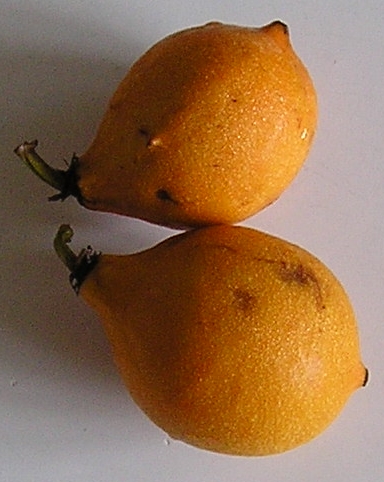
A tree. It grows 5 to 15 m tall. The trunk can be 15-40 cm across. The trunk is straight and round. The leaves are opposite and oblong. They are 5-10 cm long and 2-3 cm wide. The flowers are small and yellow. The fruit is a flattened round shape. They are 4.5 cm across. The pulp is sweet.
Edible Uses
The fruit is eaten fresh. The leaves are also edible.
Traditional Uses
The fruit is eaten.
This uses section is brief — help expand it
Medicinal Uses
No medicinal uses mentioned.
Distribution
A tropical plant. It grows in dense or sparse forests on plains, hills, or valleys between 200-400(-1200 m) altitude in China.
Where It Grows
Asia, China, Indochina, SE Asia, Vietnam,
Cultivation
A dioecious species, both male and female forms usually need to be grown if fruit and seed are required. At least some dioecious Garcinia species, however, are able to produce fertile seed even in the absence of fertilization (asexual reproduction). Such seeds would be expected to be genetically identical to the parent
Propagation
Seed - we have no specific information on this species, but the seed of most members of the genus can be slow to germinate, even if sown fresh, often taking 6 months or more.
Other Uses
The seeds yield ca. 60% oil (seed pulp up to 70% oil). The oil is used as a lubricant and for manufacturing soap. The bark contains 3 - 8% tannin. The timber is used for making furniture and woodcuts.
Production
In China plants flower in April to May and fruit October to December.
Notes
There are about 300 Garcinia species.
Synonyms
Also Known As
Bua, Bua la-trondai, Bua rung, Ling nan shan zhu zi, Txiv kas
References (10)
- Altschul, S.V.R., 1973, Drugs and Foods from Little-known Plants. Notes in Harvard University Herbaria. Harvard Univ. Press. Massachusetts. no. 2870
- Forest Inventory and Planning Institute, 1996, Vietnam Forest Trees. Agriculture Publishing House p 99
- Hooker's J. Bot. Kew Gard. Misc. 3:311. 1851
- Hu, Shiu-ying, 2005, Food Plants of China. The Chinese University Press. p 560
- Li Xi-wen & Li Jie; Peter F. Stevens, Clusiaceae, Flora of China, Vol 13 p 45 and Flora of China. www.eFloras.org
Show all 10 references Hide references
- Pham-Hoang Ho, 1999, An Illustrated Flora of Vietnam. Nha Xuat Ban Tre. p 455
- Reis, S. V. and Lipp, F. L., 1982, New Plant Sources for Drugs and Foods from the New York Botanical Garden herbarium. Harvard. p 186
- Sang, D. T., & Mizoue, K. O. N., 2012, Use of Edible Forest Plants among Indigenous Ethnic Minorities in Cat Tien Biosphere Reserve, Vietnam. Asian Journal of Biodiversity Vol. 3 (1), p 23-49
- Van Sam, H. et al, 2008, Uses and Conservation of Plant Species in a National Park. A case study of Ben En, Vietnam. Economic Botany 62:574-593
- Whitney, C. W., et al, 2014, Conservation and Ethnobotanical Knowledge of a Hmong Community in Long Lan, Luang Prabang, Lao People’s Democratic Republic. Ethnobotany Research and Applications 12:643-658