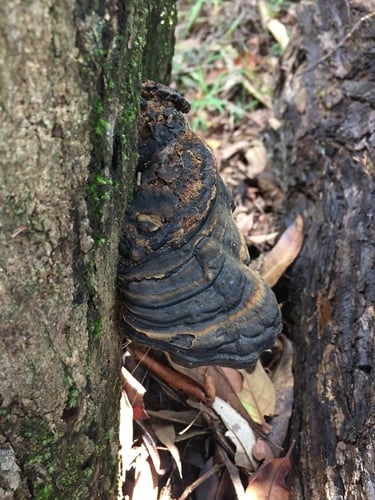
Ganoderma lucidum
(Leysser ex Fr.) Karsten
Reishi mushroom, Lacquered bracket fungus
iNaturalist· cc-by
(c) Elena_Sherehora, some rights reserved (CC BY), uploaded by Elena_Sherehora
iNaturalist· cc-by-nc
(c) Serych, some rights reserved (CC BY-NC)
iNaturalist· cc-by-nc
(c) Serych, some rights reserved (CC BY-NC)
Summary
Source: WikipediaGanoderma lucidum, commonly known as the reishi, varnished conk, lacquered bracket, or ling chih, is a red-colored species of Ganoderma with a limited distribution in Europe and parts of China, where it grows on decaying hardwood trees.
Description
An umbrella shaped mushroom. The upper surface is shiny. It has many wave like wrinkles and is yellow with red near the edges. Underneath it is pale brown or white. The stalk is hard and dark brown.
Edible Uses
The species is inedible and rock-hard when dried, but is used to make a bitter-tasting tea, purported to have health effects by some cultures, although there is no conclusive scientific evidence for such effects. It has safety concerns and moderate interactions with certain medications and dietary supplements. Due to the poor quality of clinical research, there is no good evidence for the use of G. lucidum in treating cardiovascular diseases in people with type 2 diabetes or any other medical condition.
Traditional Uses
The fruiting bodies are eaten. They are sun-dried and used in syrups and powders. A confection is made from this mushroom.
This uses section is brief — help expand it
Distribution
A tropical plant. It grows as the base of oak and other deciduous trees. In Yunnan.
Where It Grows
Africa, Armenia, Asia, Caucasus, China, East Africa, Europe, Indochina, Iran, Italy, Laos, Malaysia, Mediterranean, Middle East, Myanmar, SE Asia, Tanzania, Thailand, Vietnam,
Cultivation
Plants can be grown from spores.
Other Information
It is a cultivated plant used as a tonic herb. It is available dried in Chinese stores in Australia. (As Ganoderma japonica). It is sold in local markets.
Notes
It is used in medicine.
Synonyms
Also Known As
Cendawan lingzhi, Kulat lang, Laqapat, abetasunk, Ling chih, Lingzhi, Mannen-take
References (14)
- Boa, E. R., 2004, Wild edible fungi and their importance to people. FAO Non Wood Forest Products Booklet 17
- Bremness, L., 1994, Herbs. Collins Eyewitness Handbooks. Harper Collins. p 289
- Brown, D., 2002, The Royal Horticultural Society encyclopedia of Herbs and their uses. DK Books. p 220
- Chai, P.P.K., 2000, Development of the Lanjak Entimau Wild life sanctuary. Final report. ITTO and Sarawak Forestry. p 24
- Chin, H. F., 1999, Malaysian Vegetables in Colour. Tropical Press. p 106
Show all 14 references Hide references
- Facciola, S., 1998, Cornucopia 2: a Source Book of Edible Plants. Kampong Publications, p 253
- Hall, I. R., et al, 2003, Edible and Poisonous Mushrooms of the World. Timber Press. p 311
- Gryzenhout, M., 2010, Mushrooms of South Africa. Pocket Guide. Struik. p 84
- Hani Medicine of Xishuangbanna, 1999, p 27
- Hu, Shiu-ying, 2005, Food Plants of China. The Chinese University Press. p 268
- Kaufmann, B. et al, 1999, The Great Encyclopedia of Mushrooms. Konemann. p 215
- Kaye, G.C., 1986, Wild and Exotic Mushroom Cultivation in North America
- Kunshan, Shi, Non-wood forest products in Asia. FAO Corporate Document Repository
- www.plantnames.unimelb.edu.au (Listed as inedible. )