Fritillaria thunbergii
Miq.
Zhe Bei Mu
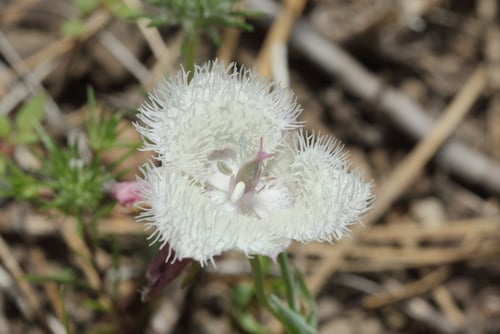
iNaturalist· cc-by-nc
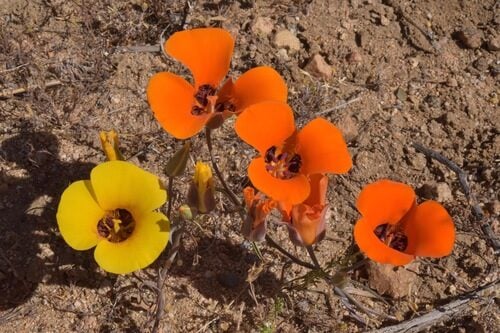
(c) 江国彬, some rights reserved (CC BY-NC), uploaded by 江国彬
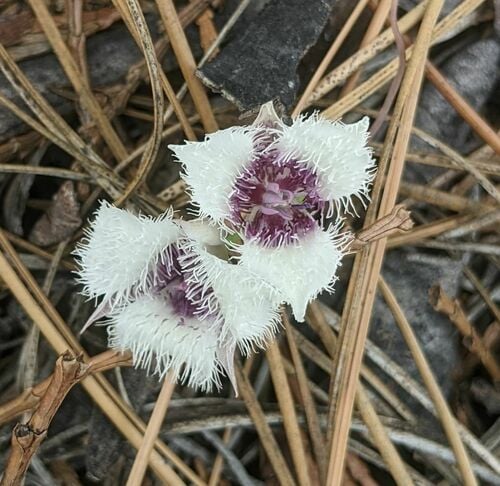
iNaturalist· cc-by-nc
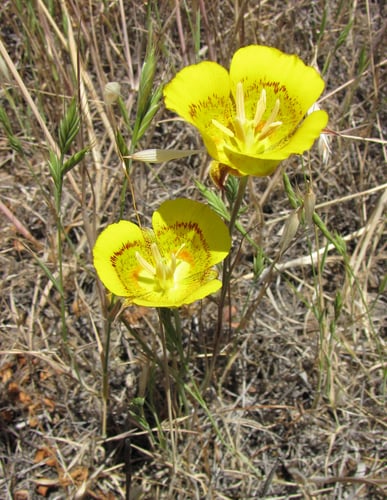
(c) onidiras-iNaturalist, some rights reserved (CC BY-NC), uploaded by onidiras-iNaturalist
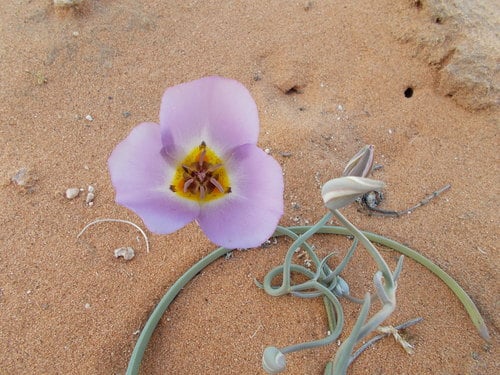
iNaturalist· cc-by-nc
(c) qingping, some rights reserved (CC BY-NC)
Summary
Source: WikipediaFritillaria thunbergii is a flowering plant species in the lily family Liliaceae. It is native to Kazakhstan and in Xinjiang Province of western China, though cultivated in other places and naturalized in Japan and in other parts of China. Fritillaria thunbergii produces bulbs up to 30 mm in diameter. The stem is up to 80 cm tall. The flowers are pale yellow, sometimes with a purple tinge or purple markings. The specific epithet thunbergii honors the Swedish naturalist Carl Peter Thunberg, who collected many plants in Japan in the 18th century. formerly included Fritillaria thunbergii var. puqiensis (G.D.Yu & G.Y.Chen) P.K.Hsiao & S.C.Yu, now called Fritillaria monantha Migo
Description
A bulb plant. The bulb has 2 or 3 scales. It is oval and 1-3 cm across. The stem is 15-80 cm high. There are 12-20 leaves which are alternate or in rings. The leaf blade is long and narrow. It is 7-11 cm long by 1-2.5 cm wide. There are 1-6 flowers in the flower arrangement. The flowers are nodding. They are yellow sometimes tinged with purple. The fruit is a capsule with broad wings. The wings are 6-8 mm wide.
Edible Uses
The bulb, up to 3cm in diameter, can be fried or candied. Young plants and buds are also edible when cooked.
Traditional Uses
Caution: It is dangerous in large amounts. It is mostly used in medicine. The young plants and flower buds are used as potherbs. The bulbs are fried and eaten.
Medicinal Uses
The bulbs are antidote, antitussive, astringent, expectorant, galactogogue, and purgative. They contain fritimine, which diminishes excitability of respiratory centres, paralyses voluntary movement, and counters the effects of opium. The bulbs are thought to act specifically on tumours and swellings of the throat, neck, and chest, and are used in the treatment of thyroid gland nodules, scrofula, abscesses, boils, and breast cancer. They are also used internally for coughs, bronchitis, pneumonia, feverish illnesses, and abscesses. The bulbs have a folk history of use against breast and lung cancer in China. This remedy should only be used under the supervision of a qualified practitioner, as excessive doses can cause breathing difficulties and heart failure. Bulbs are harvested in winter while dormant and dried for later use.
Distribution
It is a temperate plant. It grows in bamboo forests and shady moist places from near sea level to 600 m in China.
Where It Grows
Asia, Australia, China, Japan, Kazakhstan, Korea, Tibet,
Cultivation
Best grown in a moist peaty soil in the open garden. Easily grown in a moderately fertile soil in sun or semi-shade. Succeeds in drier soils and is drought tolerant when established. The dormant bulbs are fairly hardy and will withstand soil temperatures down to at least -5°c. The scaly bulbs are best planted on their sides or surrounded in sand to prevent water collecting in their hollow crowns. This species is cultivated as a medicinal plant in Europe and Asia. Plants take 3 - 5 years to flower from seed.
Propagation
Seed is best sown as soon as ripe in a cold frame, where it should germinate in spring. Protect from frost. Stored seed should be sown as soon as possible and may take a year or more to germinate. Sow thinly to avoid the need to prick out seedlings. After germination, give occasional liquid feeds to prevent mineral deficiency. When plants die down at the end of their second growing season, divide the small bulbs and plant 2–3 per 8cm deep pot. Grow on for at least another year in light shade in the greenhouse before planting out while dormant. Divide offsets in August — larger bulbs can go directly into permanent positions, while smaller ones are best potted and grown on in a cold frame for a year before autumn planting. Propagation by bulb scales is also possible.
Other Uses
None known.
Notes
There are about 100 Fritillaria species.
Synonyms
References (7)
- Ann. Mus. Bot. Lugduno-Batavum 3:157. 1867
- Arora, R. K., 2014, Diversity in Underutilized Plant Species - An Asia-Pacific Perspective. Bioversity International. p 103
- Brown, D., 2002, The Royal Horticultural Society encyclopedia of Herbs and their uses. DK Books. p 217
- Chen Xinqi, Liang Songyun, Xu Jiemei, Tamura M.N., Liliaceae. Flora of China. p 59
- Hibbert, M., 2002, The Aussie Plant Finder 2002, Florilegium. p 104
Show all 7 references Hide references
- Kew Plants of the World Online
- Plants for a Future database, The Field, Penpol, Lostwithiel, Cornwall, PL22 0NG, UK. http://www.scs.leeds.ac.uk/pfaf/