Alangium platanifolium
(Siebold & Zucc.) Harms.
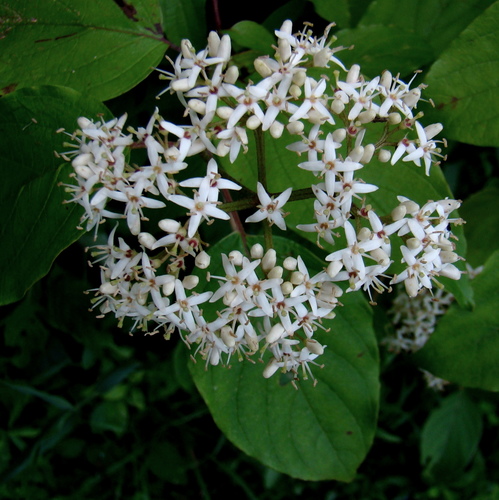
iNaturalist· cc-by-nc-nd
(c) Paul B., some rights reserved (CC BY-NC-ND), uploaded by Paul B.
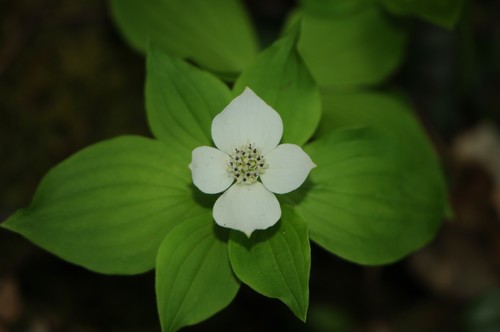
iNaturalist· cc-by-nc
(c) Moses J. Michelsohn, some rights reserved (CC BY-NC)
Summary
Source: WikipediaAlangium platanifolium is a species of Alangium found in China, Japan, and Taiwan at elevations below 2000 meters.
Description
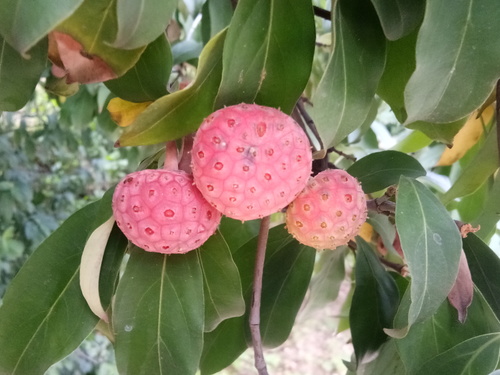
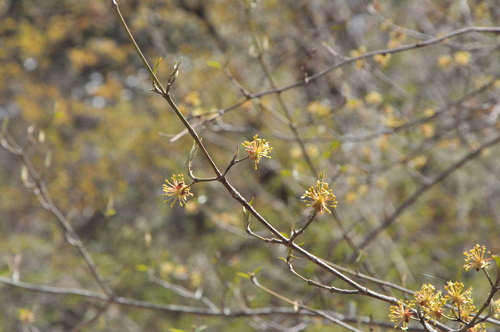
A shrub which loses its leaves. It grows to 3-4.5 m high and spreads to 2 m across. It has a crooked, low branching habit. It has leaves like the plane tree. They have 3-5 shallow lobes. The leaves are about 10 cm wide. The stalks are red. The flowers are white and hang down. The petals curl back as the flowers open. The fruit are purple to black.
Edible Uses
Young leaves are edible when cooked.
Traditional Uses
The young leaves are eaten cooked.
This uses section is brief — help expand it
Medicinal Uses
The root is used in the treatment of rheumatism and other bone diseases.
Distribution
It grows naturally in woodlands between 1200-2100 metres in Western China. It grows in any moderately fertile well drained soil. It requires full sunlight and a sheltered position. It does best in an acid soil. It suits hardiness zones 8-10. Mt Cootha Botanical Gardens.
Where It Grows
Asia, Australia, China, Japan, Korea,
Cultivation
Plants can be grown from seed or cuttings.
Propagation
No specific germination details are available for this species. Sowing seed in a greenhouse in spring is suggested. Prick seedlings into individual pots once large enough to handle and grow them on under glass through at least their first winter. Plant out in early summer with some cold protection recommended for the first winter outdoors. Half-ripe cuttings can be taken in July/August in sand in a frame. User experience suggests that seeds collected in late summer, stored in a cool dark place, and stratified from November through January — with temperatures around 2°C in November and January and approximately -12°C in December — will begin to germinate in as little as three weeks. No special treatment was found to be necessary beyond cleaning, soaking in water before and after stratification, and sowing in moist soil.
Other Uses
The leaves and root bark function as an insecticide. One report also mentions the leaves and stem bark in this role.
Notes
There are 17-20 Alangium species.
Synonyms
Also Known As
Ppeonnamu
References (8)
- Cundall, P., (ed.), 2004, Gardening Australia: flora: the gardener's bible. ABC Books. p 121
- H. G. A. Engler & K. A. E. Prantl, Nat. Pflanzenfam. 3(8):261. 1898
- Etherington, K., & Imwold, D., (Eds), 2001, Botanica's Trees & Shrubs. The illustrated A-Z of over 8500 trees and shrubs. Random House, Australia. p 83
- Hwang, HS, et al, 2014, Distribution characteristics of plant in the Ungseokbong Mountain, Gyeongsangnam-do, Korea. Journal of Asia-Pacific Biodiversity. 7(2014) e164-e178 (As Alangium platanifolium var. trilobum)
- Ong, H. G., et al, 2015, Ethnobotany of the wild edible plants gathered in Ulleung Island, South Korea. Genet Resourc Crop Evol. Springer (As Alangium platanifolium var. trilobum)
Show all 8 references Hide references
- Plants for a Future database, The Field, Penpol, Lostwithiel, Cornwall, PL22 0NG, UK. http://www.scs.leeds.ac.uk/pfaf/
- Ryan, S., 2008, Dicksonia. Rare Plants Manual. Hyland House. p 6
- Woo, Y., et al, 2017, Antioxidant Potential of Selected Korean Edible Plant Extracts. Hindawi BioMed Research International Volume 2017, Article ID 7695606