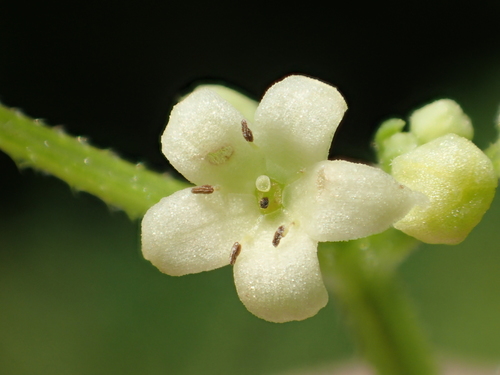
Aidia racemosa
(Cav.) D.D. Tirvengadum
Archer cherry
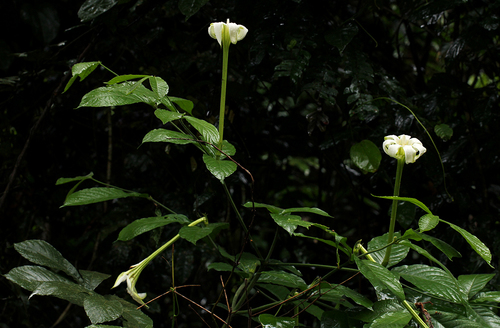
iNaturalist· cc-by-nc
(c) Ian Cowan, some rights reserved (CC BY-NC), uploaded by Ian Cowan
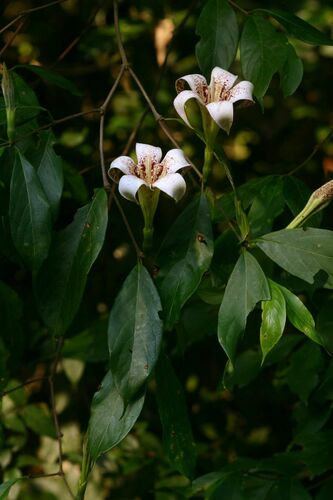
iNaturalist· cc-by-nc
(c) Russell Cumming, some rights reserved (CC BY-NC), uploaded by Russell Cumming
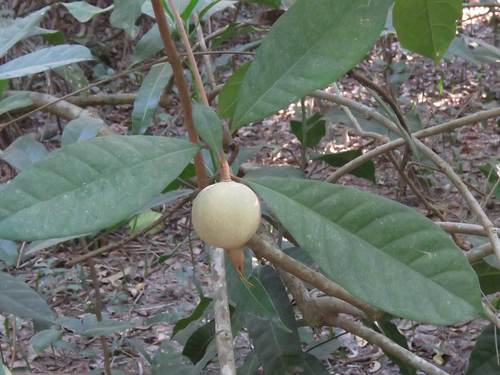
iNaturalist· cc-by-nc
(c) ryanthughes, some rights reserved (CC BY-NC)
Summary
Source: WikipediaAidia racemosa is a tree in the Rubiaceae family, native from Thailand east to the Pacific islands and south to Australia.
Description
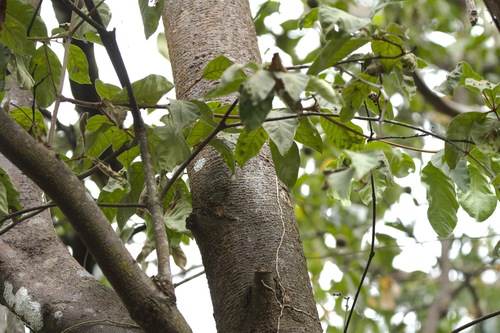
A shrub or tree. It grows up to 15 m tall. The bark is light grey. The leafy twigs are smooth. The leaves are oval and 9-17 cm long by 3-5.5 cm wide. They are thin and leathery. They have 5-8 pairs of secondary veins. The base of the leaf is rounded and the tip is pointed. The leaf stalk is 1-2 cm long. The flower stalk is branched and has up to 50 flowers. The flowers are white. They have a jasmine scent. The fruit is a berry which is red when ripe. It is 5-15 mm long by 4-10 mm across. Fruit are in clusters in the axils of leaves. There are several tiny seeds.
Edible Uses
The ripe red fruit are eaten; they naturally fall to the ground when ripe and are collected.
Traditional Uses
The fruit are eaten when ripe. They fall to the ground when ripe and are collected off the ground.
This uses section is brief — help expand it
Distribution
It is a tropical plant. It grows in coastal swamps and dry monsoon forest. It also occurs in lowland and upland rainforest.
Where It Grows
Asia, Australia, China, East Timor, Indochina, Indonesia, Malaysia, Micronesia, Pacific, Palau, Papua New Guinea, PNG, Philippines, Philippines, Samoa, SE Asia, Thailand, Timor-Leste, Tonga,
Cultivation
It can be grown from fresh seed or cuttings.
Propagation
Seed - germinates in 1 - 2 months. Cuttings.
Production
It is fast growing. In Australia flowers are December to February and fruit from April to July.
Other Information
It is not known if it is used for food in Papua New Guinea.
Notes
There are 25-50 Aidia species.
Synonyms
Also Known As
Kerumes
References (15)
- Anon., 2003, Native Plants for the Fitzroy basin. Society for Growing Australian Plants Inc. (Rockhampton Branch)
- Cooper W & Cooper W T, 1994, Fruits of the Rain Forest. RD Press p 26
- Cooper, W. and Cooper, W., 2004, Fruits of the Australian Tropical Rainforest. Nokomis Editions, Victoria, Australia. p 433
- Cowie, I, 2006, A Survey of Flora and vegetation of the proposed Jaco-Tutuala-Lore National Park. Timor-Lests (East Timor) www.territorystories.nt/gov.au p 52
- Jackes, B.R., 2001, Plants of the Tropics. Rainforest to Heath. An Identification Guide. James Cook University. p 77
Show all 15 references Hide references
- Jones D, L, 1986, Ornamental Rainforest Plants in Australia, Reed Books, p 87
- Kitalong, A. H., DeMeo, R. A., & Holm, T., 2013, A Field Guide to the Native Trees of Palau. 2nd edition. USDA p 28
- Melzer, R. & Plumb, J., 2011, Plants of Capricornia. Belgamba, Rockhampton. p 292
- Nicholson, N & H., 1994, Australian Rainforest Plants 4, Terania Rainforest Publishing. NSW. p 7
- Paczkowska, G . & Chapman, A.R., 2000, The Western Australian Flora. A Descriptive Catalogue. Western Australian Herbarium. p 513
- Townsend, K., 1994, Across the Top. Gardening with Australian Plants in the tropics. Society for Growing Australian Plants, Townsville Branch Inc. p 73
- Vigilante, T., et al, 2013, Island country: Aboriginal connections, values and knowledge of the Western Kimberley islands in the context of an island biological survey. Records of the Western Australian Museum Supplement 81: 145-182
- Wheeler, J.R.(ed.), 1992, Flora of the Kimberley Region. CALM, Western Australian Herbarium, p 906
- Whistler, W.A., 2004, Rainforest Trees of Samoa. Isle Botanica Honolulu, Hawaii. p 134
- Yunupinu Banjgul, Laklak Yunupinu-Marika, et al. 1995, Rirratjinu Ethnobotany: Aboriginal Plant Use from Yirrkala, Arnhem Land, Australia. Northern Territory Botanical Bulletin No 21. Parks and Wildlife Commission of the Northern Territory. p 17.