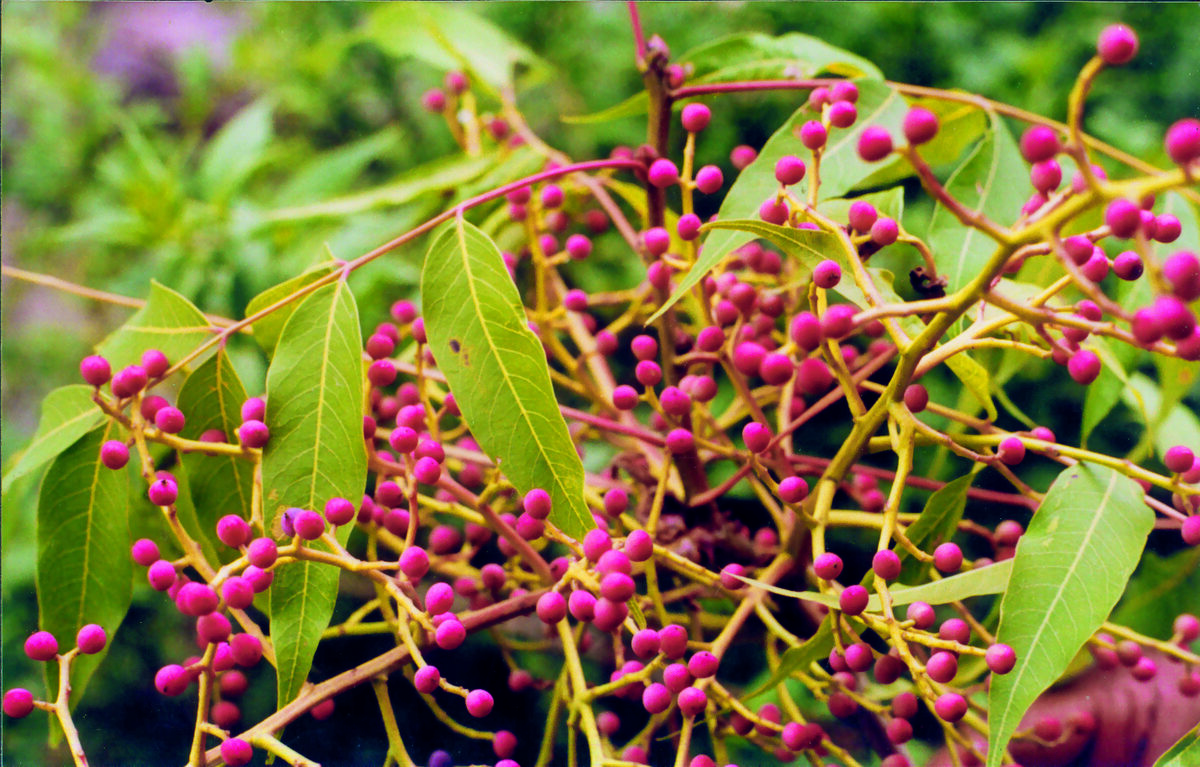
Pistacia atlantica cabulica - (Stocks.)Rech.f.
(Stocks.)Rech.f.
gbif· cc-by
Meise Botanic Garden
gbif· cc-by-sa
GBIF
gbif· cc-by-sa
GBIF
Description
Pistacia atlantica cabulica is a deciduous Tree. The species is dioecious (individual flowers are either male or female, but only one sex is to be found on any one plant so both male and female plants must be grown if seed is required). . The plant is not self-fertile. Suitable for: light (sandy) and medium (loamy) soils and prefers well-drained soil. Suitable pH: mildly acid, neutral and basic (mildly alkaline) soils. It cannot grow in the shade. It prefers dry or moist soil and can tolerate drought.
Edible Uses
Fruit. One report says that it is much prized, but gives no more details.
Distribution
W. Asia to Afghanistan.
Where It Grows
Coming Soon
Cultivation
We have very little information on this species and do not know if it will be hardy in Britain. The following notes are based on the general needs of the genus. Requires a sunny position in a deep well-drained light soil. Succeeds in dry soils. Any pruning that needs to be done is best carried out in the spring. Plants are prone to fungal root rots. Dioecious, male and female plants must be grown if seed is required.
Propagation
Pre-soak the seed for 16 hours in alkalized water, or for 3 - 4 days in warm water, and sow late winter in a cold frame or greenhouse. Two months cold stratification may speed up germination, so it might be better to sow the seed in early winter. The germination is variable and can be slow. Prick out the seedlings into individual pots when they are large enough to handle and grow on the plants for at least their first winter in a greenhouse. Plant out into their permanent positions in early summer and consider giving some protection from winter cold for their first year or two outdoors. Cuttings of half-ripe wood from juvenile trees, July in a frame. Layering.
Other Uses
Wood. Wood - very hard, dark, finely grained.