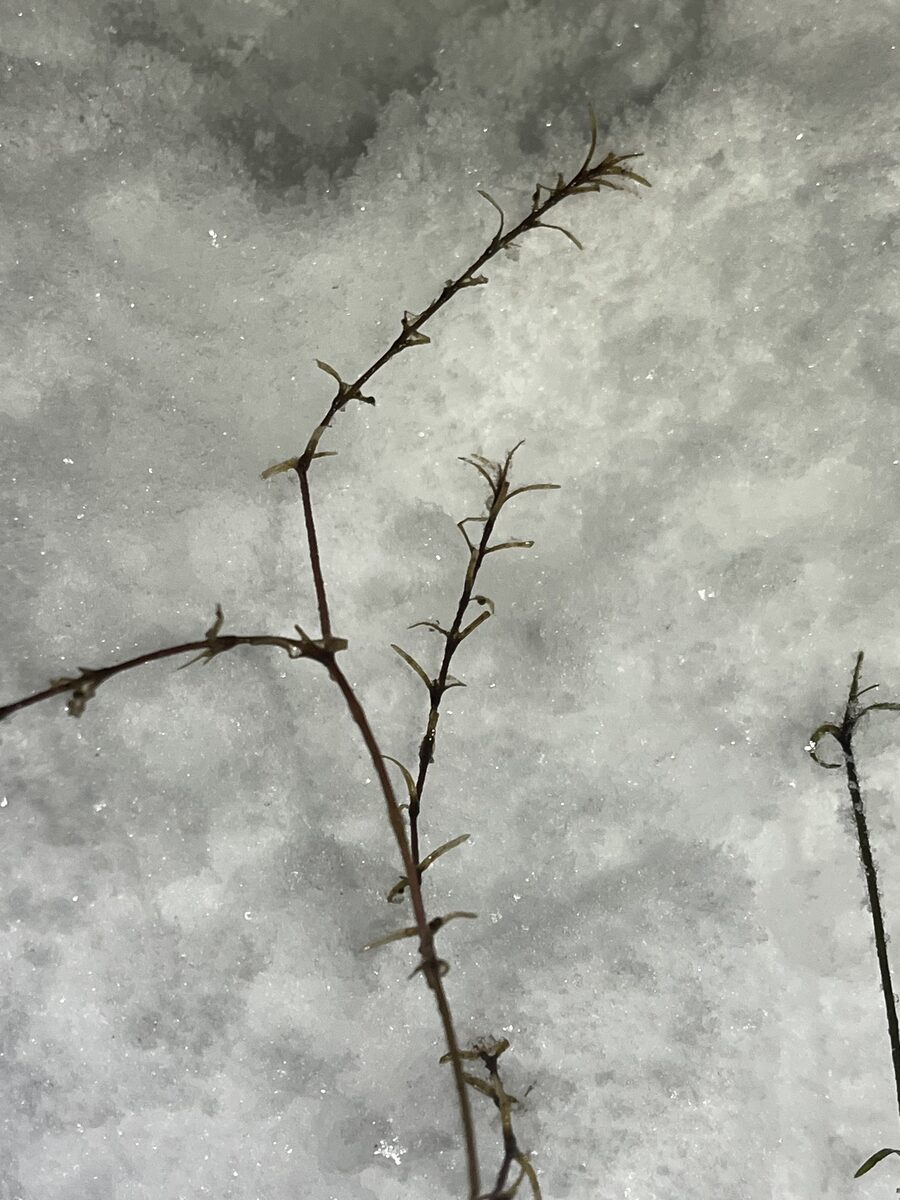
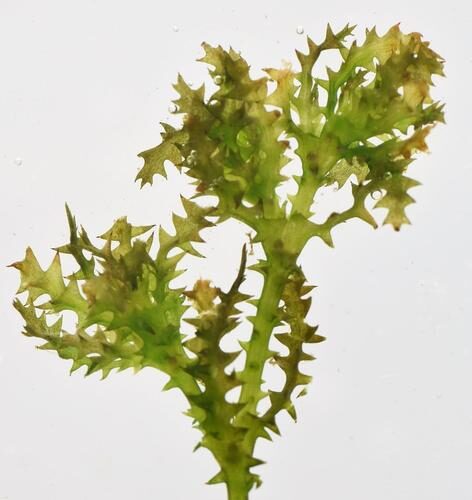
Najas graminea
Delile.
Ricefield waternymph
wikimedia· cc-by
Mattioli (via Wikimedia Commons)
wikimedia· cc-by-sa
Show_ryu (via Wikimedia Commons)
Description
Najas graminea is a ANNUAL growing to 0.2 m (0ft 8in). See above for USDA hardiness. It is hardy to UK zone 8. It is in flower from July to September, and the seeds ripen from July to September. The species is monoecious (individual flowers are either male or female, but both sexes can be found on the same plant) and is pollinated by Water. Suitable for: light (sandy), medium (loamy) and heavy (clay) soils. Suitable pH: mildly acid, neutral and basic (mildly alkaline) soils. It can grow in semi-shade (light woodland) or no shade. It can grow in water.
Edible Uses
Two reports say that the plant is edible but give no more details. The reports probably refer to the leaves.
Distribution
S. Europe to E. Asia. Naturalized in Britain.
Where It Grows
TEMPERATE ASIA: Afghanistan, Iran, Lebanon, Syria, Turkmenistan, Japan (Honshu, Kyushu, Shikoku) TROPICAL ASIA: India, Papua New Guinea, Myanmar, Indonesia, Philippines AUSTRALASIA: Australia (Western Australia (north), Northern Territory (north)) AFRICA: Algeria, Egypt, Sudan, Chad, Yemen (Arkhabil Suqutrá), Kenya, Tanzania, Central African Republic, Cameroon, Democratic Republic of the Congo, Gambia, Mali, Senegal, Botswana, South Africa (Transvaal)
Cultivation
A water plant, succeeding in shallow fresh or brackish water. This is one of the few genera of plants where fertilization takes place under the surface of the water.
Propagation
Seed - we have no information on this species but suggest sowing the seed in situ as soon as it is ripe if this is possible. Otherwise store the seed in water in a cool place and sow in situ in the spring.