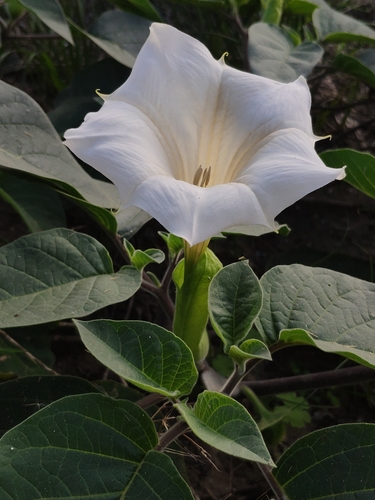
Lycium andersonii
Gray.
Wolfberry, Water jacket
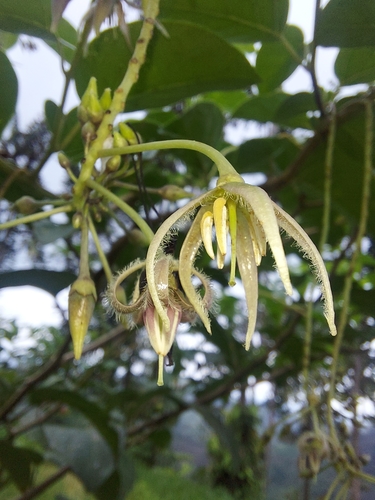
iNaturalist· cc-by-nc-nd
(c) Mojave Wildflowers, some rights reserved (CC BY-NC-ND)
iNaturalist· cc-by-nc
(c) Alex Bairstow, some rights reserved (CC BY-NC), uploaded by Alex Bairstow
iNaturalist· cc-by-nc
(c) Fred Melgert / Carla Hoegen, some rights reserved (CC BY-NC), uploaded by Fred Melgert / Carla Hoegen
Description
Lycium andersonii is a deciduous Shrub at a medium rate. The species is hermaphrodite (has both male and female organs) and is pollinated by Bees. The plant is self-fertile. It is noted for attracting wildlife. Suitable for: light (sandy), medium (loamy) and heavy (clay) soils, prefers well-drained soil and can grow in nutritionally poor soil. Suitable pH: mildly acid, neutral and basic (mildly alkaline) soils. It cannot grow in the shade. It prefers dry or moist soil. The plant can tolerate maritime exposure.
Edible Uses
Fruit - raw or cooked. It can also be dried and used whole as a flavouring in soups or ground into a powder and used as a mush or mixed with cereal flours. Only the fully ripe fruits should be eaten.
Medicinal Uses
Cancer. The fruit of many members of this genus is a very rich source of vitamins and minerals, especially in vitamins A, C and E, flavanoids and other bio-active compounds. It is also a fairly good source of essential fatty acids, which is fairly unusual for a fruit. It is being investigated as a food that is capable of reducing the incidence of cancer and also as a means of halting or reversing the growth of cancers.
Known Hazards
Although no records of toxicity have been seen for this species, it does belong to a family that contains many poisonous plants. Some caution should be applied, especially towards leaves or unripe fruits, though ripe fruits are almost certainly edible.
Distribution
South-western N. America.
Where It Grows
NORTHERN AMERICA: United States (New Mexico (west), Arizona, California, Nevada (south), Utah), Mexico (Baja California (Norte), Baja California Sur, Sinaloa, Sonora)
Cultivation
We have very little information on this species and do not know if it will be hardy in Britain. The following notes are based on the general needs of the genus. Does not require a rich soil, flowering and fruiting better in a well-drained soil of moderate quality. Succeeds in impoverished soils. Requires a sunny position. Tolerates maritime exposure. Many Lycium species, including Goji berries, are self-fertile, meaning they can produce fruit from their flowers. Goji berries are usually harvested in late summer to early autumn, when the berries are fully ripe and have turned bright red. Lycium species generally flower in late spring to early summer, producing small, tubular flowers that can be purple or white. Lycium species are moderately fast-growing plants, often reaching a height of about 1 to 3 meters (3 to 10 feet) within a couple of years, depending on growing conditions.
Propagation
Seed - sow early spring in a greenhouse. Germination is usually good and fairly quick. Prick out the seedlings into individual pots when they are large enough to handle and grow them on in the greenhouse for their first winter. Plant out in late spring or early summer. Pinch out the shoot tips of the young plants in order to encourage bushy growth. Cuttings of half-ripe wood, 5 - 10cm with a heel if possible, July/August in individual pots in a frame. Good percentage. Cuttings of mature wood of the current season's growth, autumn to late winter in a cold frame. High percentage. Division of suckers in late winter. Very easy, the suckers can be planted out direct into their permanent positions. Layering.
Other Uses
Soil stabilization Agroforestry uses: Goji can be used in agroforestry systems as a hedgerow or windbreak due to its dense growth. It also contributes to soil health and attracts beneficial insects. Plants have an extensive root system and can be planted to stabilize banks.