Eulophia hereroensis
Schltr.
iNaturalist· cc0
no rights reserved
iNaturalist· cc0
no rights reserved
iNaturalist· cc0
no rights reserved
Description
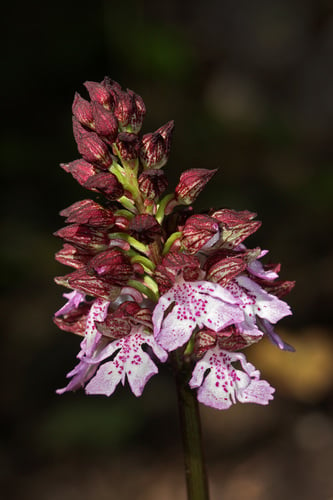
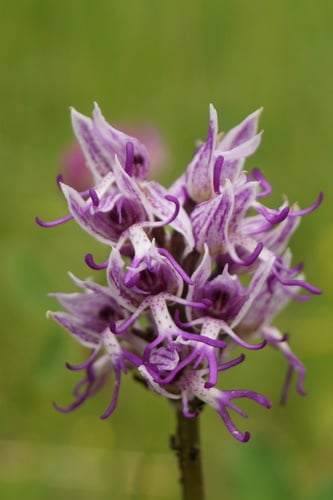
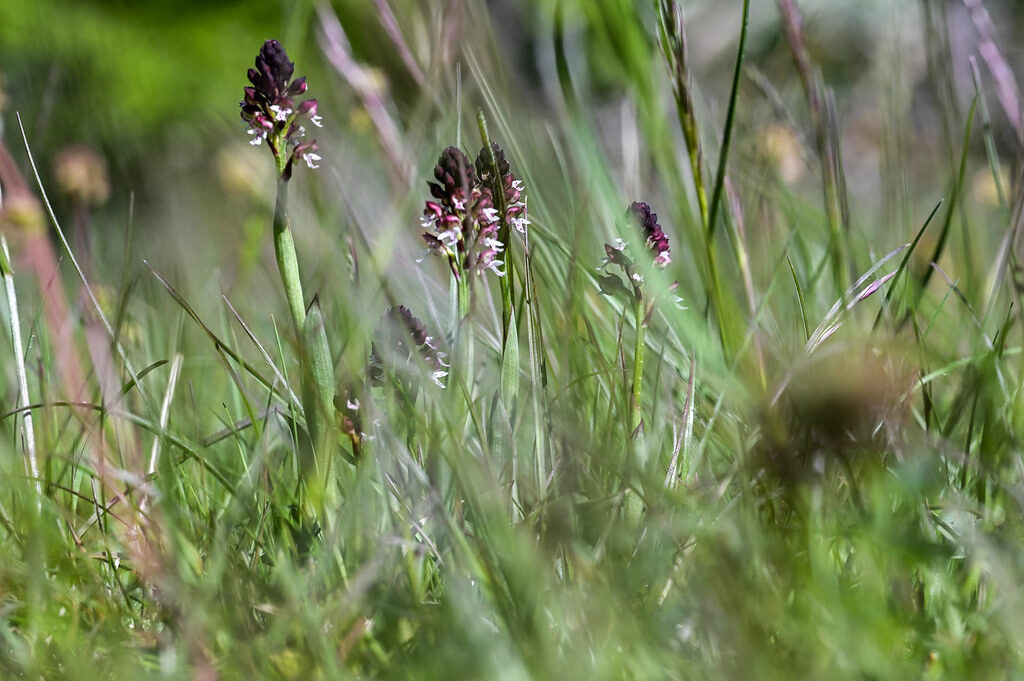
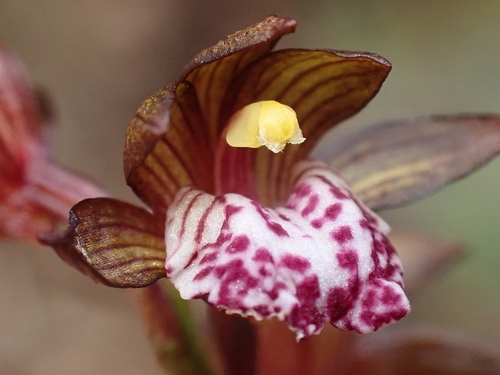
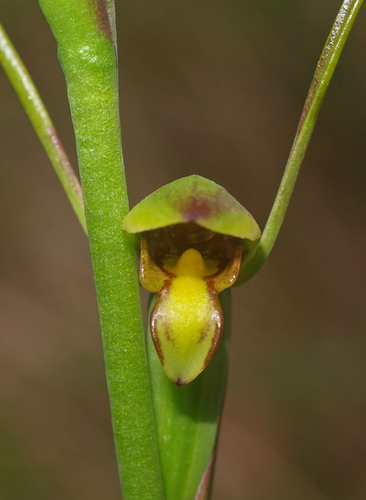
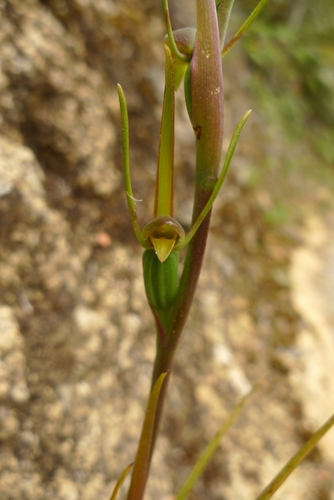
A terrestrial orchid. It is a herb with a bulb or corm. It can grow 25-55 cm high. The false bulbs can form a chain above or below the ground. There can be 7 leaves. They form a fan. They are 12-30 cm long and 1-2 cm wide. The flowering stem is 30-50 cm tall. There are several loose flowers. They are green and yellow with some purple and red marks.
Edible Uses
The stems are eaten raw, in other food dishes, roasted, crushed, and stored. The root bulbs are used as a vegetable and in soups, though they can be bitter and are often mixed with other plants.
Traditional Uses
The stems are eaten raw and in other food dishes. They are also roast and crush them. They can be stored. The root bulbs are used as a vegetable and in soups. They can be bitter so are mixed with other plants.
Medicinal Uses
None mentioned.
Distribution
It is a subtropical plant. It grows in hot arid areas with a marked dry period. It can be on rocky, sandy or loamy soils including areas that are seasonally waterlogged. It grows between 715-1,700 m above sea level. It can grow in arid places.
Where It Grows
Africa, Angola, Botswana, Central Africa, East Africa, Mozambique, Namibia, South Africa, Southern Africa, Zimbabwe,
Cultivation
Usually found in quite deep shade in the wild.
Notes
There are about 250 Eulophia species.
Nutrition
| Part | Moisture | kJ | kcal | Protein | Vit A | Vit C | Iron | Zinc |
|---|---|---|---|---|---|---|---|---|
| Bulb | 92.6 | 105 | 25 | 0.6 | — | 2 | 0.4 | 0.2 |
Synonyms
Also Known As
Guts'iku, Kauguna, Mufondo, Mutondo, Tuo
References (8)
- Fox, F. W. & Young, M. E. N., 1982, Food from the Veld. Delta Books. p 284
- Lee, 1979,
- Peters, C. R., O'Brien, E. M., and Drummond, R.B., 1992, Edible Wild plants of Sub-saharan Africa. Kew. p 36
- Royal Botanic Gardens, Kew (1999). Survey of Economic Plants for Arid and Semi-Arid Lands (SEPASAL) database. Published on the Internet; http://www.rbgkew.org.uk/ceb/sepasal/internet [Accessed 5th May 2011]
- Tanaka, 1980,
Show all 8 references Hide references
- Wehmeyer, A. S, 1986, Edible Wild Plants of Southern Africa. Data on the Nutrient Contents of over 300 species
- Welcome, A. K. & Van Wyk, B.-E., 2019, An inventory and analysis of the food plants of southern Africa. South African Journal of Botany 122 (2019) 136–179
- World Checklist of Useful Plant Species 2020. Royal Botanic Gardens, Kew