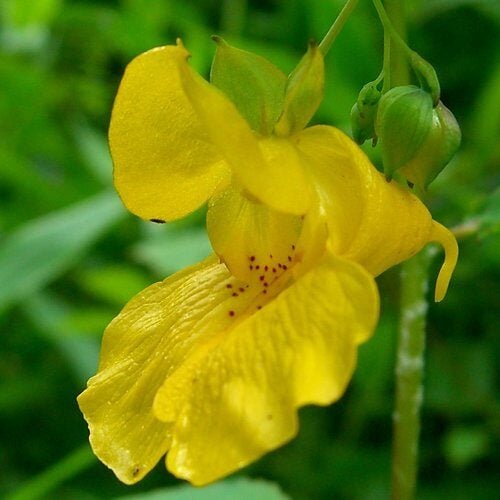
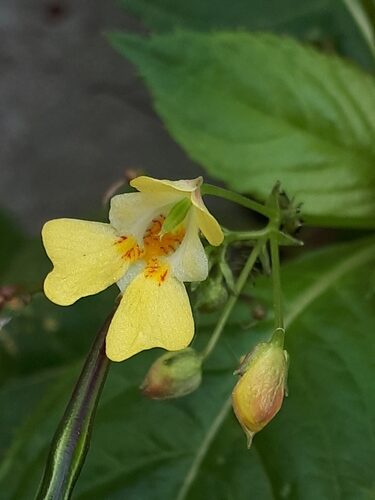
Impatiens tingens
Edgew.
gbif· cc-by
Royal Botanic Gardens, Kew
gbif· cc-by
Royal Botanic Gardens, Kew
gbif· cc-by
Royal Botanic Gardens, Kew
Description
Impatiens tingens is a ANNUAL growing to 0.6 m (2ft). The species is hermaphrodite (has both male and female organs) and is pollinated by Insects. Suitable for: light (sandy), medium (loamy) and heavy (clay) soils and can grow in heavy clay soil. Suitable pH: mildly acid, neutral and basic (mildly alkaline) soils. It can grow in semi-shade (light woodland) or no shade. It prefers moist soil.
Edible Uses
Seed. No further details are given but the seeds are difficult to harvest in quantity, mainly because of their exploding seed capsules which scatter the ripe seed at the slightest touch.
Known Hazards
Regular ingestion of large quantities of these plants can be dangerous due to their high mineral content. This report, which seems nonsensical, might refer to calcium oxalate. This mineral is found in I. capensis and so is probably also in other members of the genus. It can be harmful raw but is destroyed by thoroughly cooking or drying the plant. People with a tendency to rheumatism, arthritis, gout, kidney stones and hyperacidity should take especial caution if including this plant in their diet.
Distribution
E. Asia - Himalayas from Simla to Sikkim at elevations from 1,500 - 3,000 metres.
Where It Grows
Coming Soon
Cultivation
We have very little information on this species and do not know it it will be hardy in Britain, though judging by its native range it should succeed outdoors in many parts of the country. This species is quite possibly no more than a synonym of I. racemosa. The following notes are based on the general needs of the genus. Succeeds in any reasonably good soil. Grows well in heavy clay soils. Prefers a moist well-drained humus rich soil in a cool site. This plant has seed capsules that spring open forcibly as the seed ripens to eject the seed a considerable distance. The capsules are sensitive to touch even before the seed is ripe, making seed collection difficult but fun.
Propagation
Seed - sow spring in a greenhouse. When they are large enough to handle, prick the seedlings out into individual pots and plant them out in the summer.