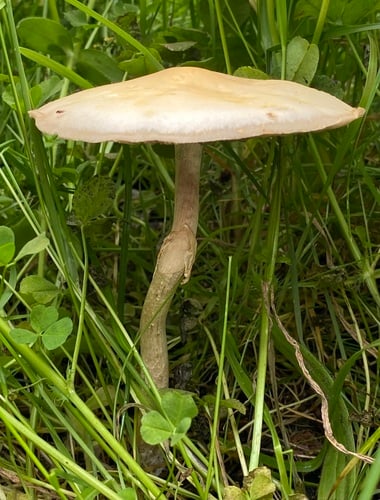
Agrocybe aegerita
(Brig.) Sing.
Poplar mushroom
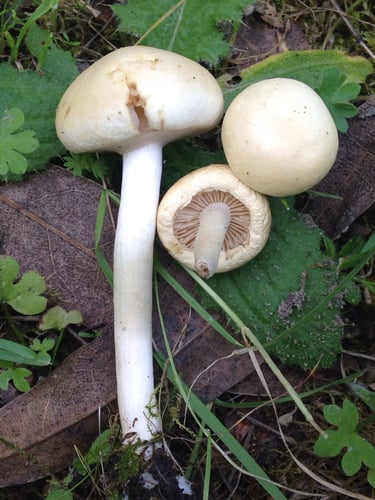
iNaturalist· cc-by-nc
(c) mpearlstein, some rights reserved (CC BY-NC)
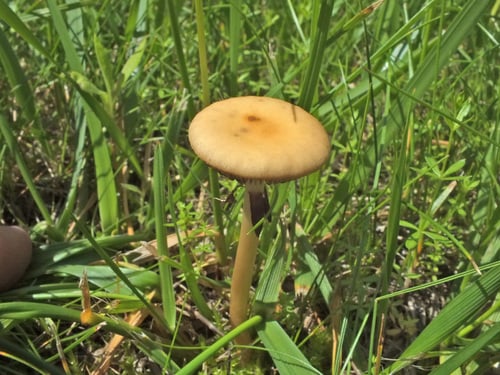
iNaturalist· cc-by-nc
(c) mpearlstein, some rights reserved (CC BY-NC)
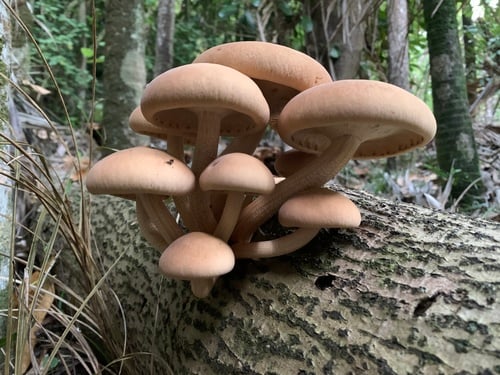
iNaturalist· cc-by-nc
(c) mpearlstein, some rights reserved (CC BY-NC)
Description
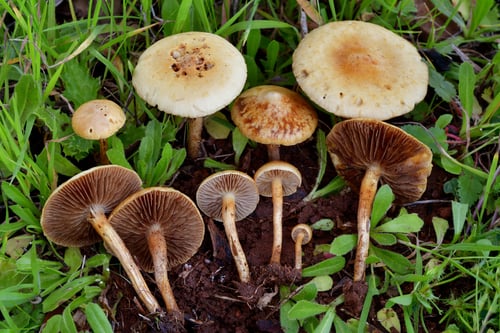
A small to medium-sized mushroom with yellowish-brown fruiting caps, found in both temperate and tropical regions and commonly cultivated on poplar logs.
Edible Uses
The fruiting bodies are used in stews.
Traditional Uses
The fruiting bodies are used in stews.
This uses section is brief — help expand it
Medicinal Uses
The mushroom is edible but resembles some deadly species. It is a typical ingredient found in both Southern European and Chinese cuisine. In East Asia, it is used fresh and rehydrated in various dishes, including stir fry, soup, stew, and hot pot. It is cultivated in Korea, Japan, China, and Australia. In traditional Chinese medicine, it is often used as a diuretic. Along with Mycetinis alliaceus and Chondrostereum purpureum, it is suitable for counteracting olive-mill wastewater plant toxicity.
Distribution
It is a temperate and tropical plant.
Where It Grows
Australia, Central America, China, Europe, Guatemala, Italy, Japan, Korea, Mediterranean, North America, Spain, USA,
Cultivation
It is cultured on poplar logs.
Other Information
It is a cultivated food plant.
Synonyms
Also Known As
Brown swordbelt, Pioppino, Poplar Agrocybe
References (8)
- Cocchi, L. et al, 2006, Heavy metals in edible mushrooms in Italy. Food Chemistry 98: 277-284
- Facciola, S., 1998, Cornucopia 2: a Source Book of Edible Plants. Kampong Publications, p 250
- Kaufmann, B. et al, 1999, The Great Encyclopedia of Mushrooms. Konemann. p 150
- Kaye, G.C., 1986, Wild and Exotic Mushroom Cultivation in North America
- Lo. K. M., 2005, Antioxidant activity of extracts from the fruiting bodies of Agrocybe aegerita var. alba. Food Chemistry 89 (2005) 533–539
Show all 8 references Hide references
- Pace, G., 1998, Mushrooms of the world. Firefly books. p 64
- Pieroni, A., 1999, Gathered wild food plants in the Upper Valley of the Serchio River (Garfagnana), Central Italy. Economic Botany 53(3) pp 327-341
- Uphof,