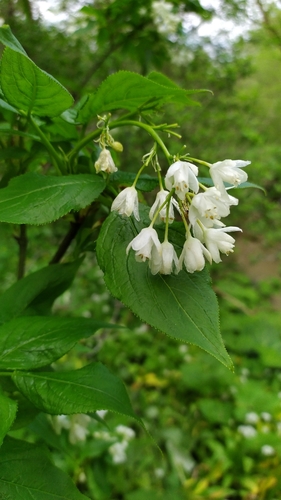
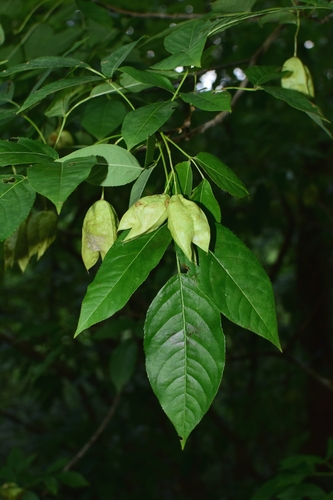
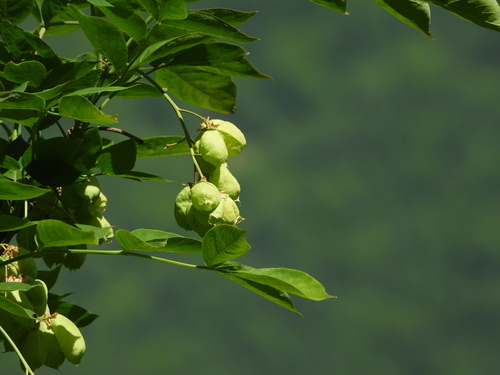
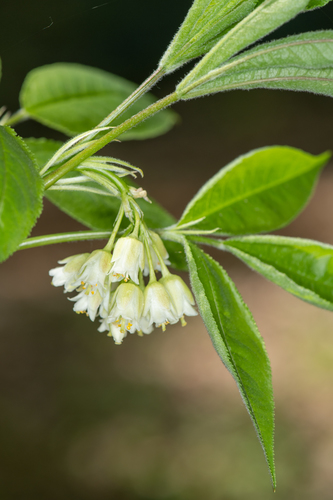
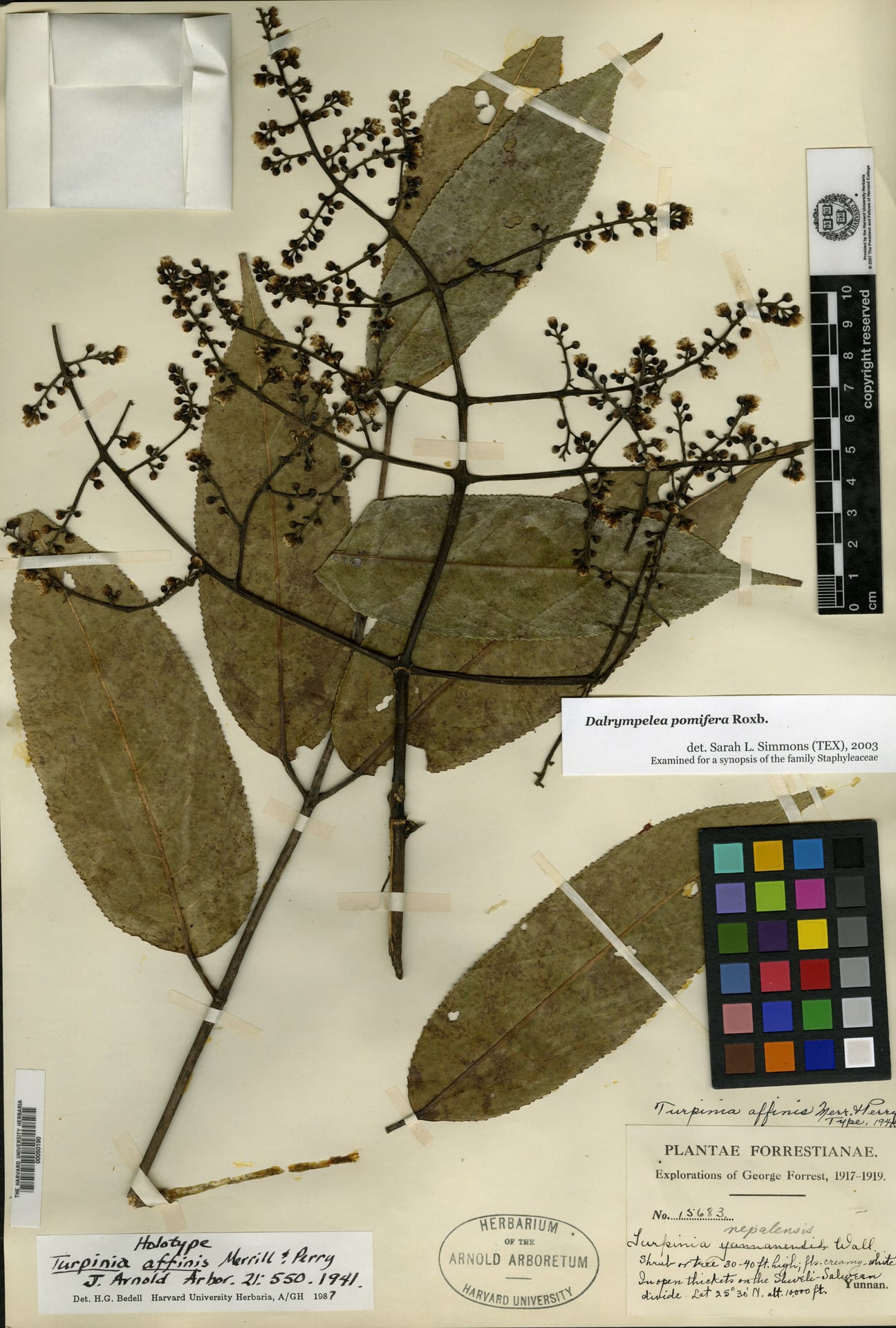
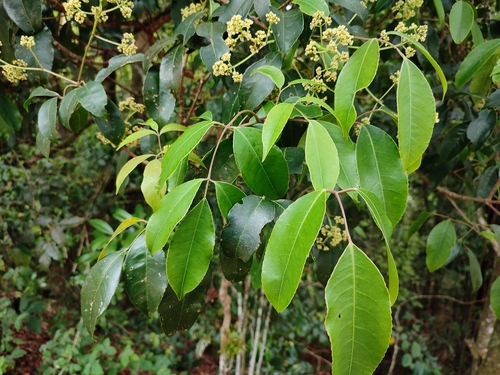
Euscaphis japonica - (Thunb.)Kanitz.
(Thunb.)Kanitz.
gbif· cc0
Conveyor Belt
gbif· cc-by-nc-sa
GBIF
gbif· cc-by-nc
Delaware State University, Claude E. Phillips Herbarium (DOV-)
Description
Euscaphis japonica is a deciduous Shrub growing to 3.5 m (11ft 6in). It is in flower in May, and the seeds ripen from September to October. The species is hermaphrodite (has both male and female organs). Suitable for: light (sandy), medium (loamy) and heavy (clay) soils. Suitable pH: mildly acid, neutral and basic (mildly alkaline) soils. It can grow in semi-shade (light woodland) or no shade. It prefers moist soil.
Edible Uses
Young budlings. No further details are given.
Medicinal Uses
Miscellany. The fruit is used as a drug. No further details.
Distribution
E. Asia - China, Japan.
Where It Grows
TEMPERATE ASIA: China, Japan, Korea, South TROPICAL ASIA: Vietnam
Cultivation
Succeeds in ordinary soil. This species is not very hardy in Britain, though it succeeds outdoors in the mildest areas of the country.
Propagation
Seed - we have no details for this species. We obtained stored seed in the spring and sowed it immediately. It took 12 months to germinate (only 1 seed germinating) and so possibly requires some cold stratification. Pot up the seedlings as soon as they are large enough to handle and grow them on in the greenhouse for at least their first winter. Plant out in the spring or early summer after the last expected frosts and give some winter protection for their first year or two outdoors. Cuttings.
Other Uses
Miscellany. None known