Corymbia gummifera
(Gaertn.) K.D.Hill & L.A.S.Johnson
Red Bloodwood
iNaturalist· cc-by-nc
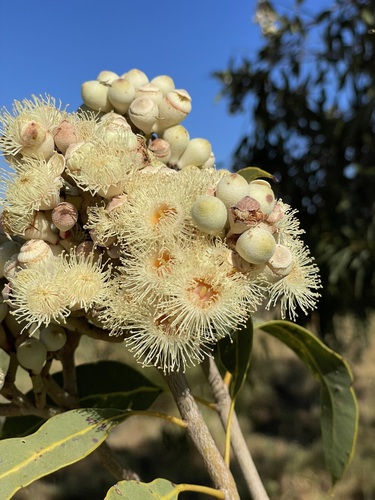
(c) Dean Nicolle, some rights reserved (CC BY-NC), uploaded by Dean Nicolle
iNaturalist· cc-by-nc
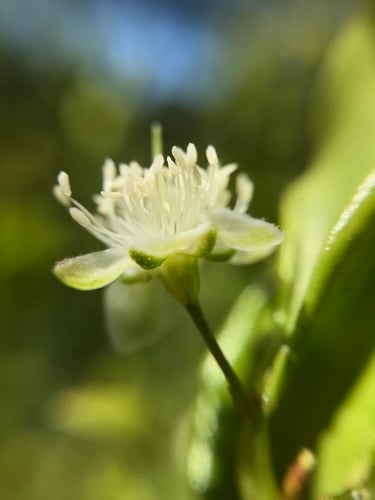
(c) Dean Nicolle, some rights reserved (CC BY-NC), uploaded by Dean Nicolle
iNaturalist· cc-by-nc
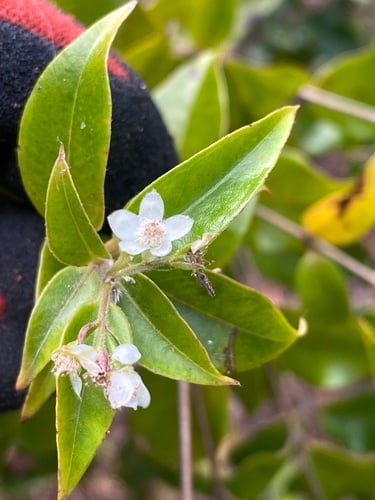
(c) Dean Nicolle, some rights reserved (CC BY-NC), uploaded by Dean Nicolle
Summary
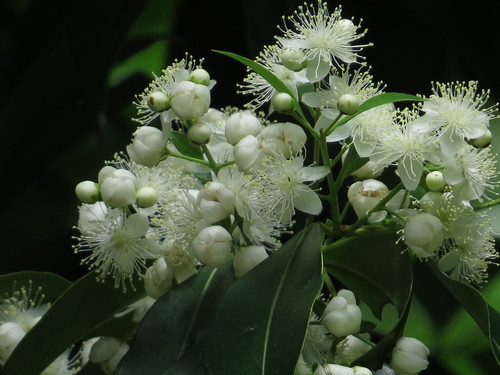
Source: WikipediaCorymbia gummifera, commonly known as red bloodwood, is a species of tree, rarely a mallee, that is endemic to eastern Australia. It has rough, tessellated bark on the trunk and branches, lance-shaped adult leaves, flower buds in groups of seven, creamy white flowers and urn-shaped fruit.
Description
A medium to tall tree. It grows 10-25 m high. It spreads 8-15 m wide. The branches are often crooked. The bark is brown and cracked into squares. The leaves are light green. The flowers are cream.
Edible Uses
The nectar from the flowers is sucked directly or mixed with water to make a drink.
Traditional Uses
The nectar is sucked from the flowers. It can also be mixed with water to make a drink.
This uses section is brief — help expand it
Medicinal Uses
Corymbia leaves are a traditional Aboriginal herbal remedy. The essential oil found in the leaves is a powerful antiseptic and is used all over the world for relieving coughs and colds, sore throats and other infections. The essential oil is a common ingredient in many over-the-counter cold remedies. An essential oil obtained from the leaves is antiseptic, astringent and parasiticide. It is used in the treatment of various skin complaints. The essential oil obtained from various species of eucalyptus is a very powerful antiseptic, especially when it is old, because ozone is formed in it on exposure to air. It has a decided disinfectant action, destroying the lower forms of life. The oil can be used externally, applied to cuts, skin infections etc, it can also be inhaled for treating blocked nasal passages, it can be gargled for sore throat and can also be taken internally for a wide range of complaints. Some caution is advised, however, because like all essential oils, it can have a deleterious effect on the body in larger doses. A kino resin is exuded from the tree. It can also be obtained from the tree by making incisions in the trunk. This resin contains tannin and is powerfully astringent, it is used internally in the treatment of diarrhoea and bladder inflammation. Applied externally, it is used to treat cuts and sores, including those associated with venereal diseases.
Distribution
It grows in warm temperate regions but can grow in the subtropics. It needs well drained soil. It can grow in dry soils and in full sun or light shade. It can grow in coastal locations.
Where It Grows
Africa, Asia, Australia*, India, Kenya, Tanzania,
Cultivation
Corymbia gummifera is found mainly in the warm temperate to subtropical zones of eastern Australia, where it can be found at elevations up to 500 metres. It has also been successfully cultivated in many tropical climates. It grows in a region where the summers are hot and moist and the winters are mild but can be dry or moist. There can be a dry season of up to 3 months. Mean annual rainfall is within the range 750 - 2,000mm; mean maximum temperature of the hottest month is 29 - 30°c; mean minimum temperature of the coldest month is 5°c, and there are generally up to 15 frosts a year. Prefers a sunny position in a moderately fertile well-drained moisture retentive circum-neutral soil. Tolerates poor and dry soils, especially those low in mineral elements. A drought resistant plant once established, it also tolerates saline soils. One report suggests that it might be quite wind tolerant, even on the coast. The plant develops a lignotuber - this is a woody tuber that starts to develop near the base of seedlings and can become massive in the mature plants of some species. It possesses embedded vegetative buds, allowing the plant to regenerate following crown destruction, for example by fire. Whilst most Corymbia species, grown in small numbers outside their native range, can be an attractive and useful addition to the landscape, certain species (including this one) are more problematic. When grown in monocultures, especially outside their native range, they can become an environmental disaster. They are voracious, especially in their use of water; they are allelopathic, inhibiting the growth of the native flora; they reduce habitats for native fauna; and encourage the worst possible attitudes to land use and conservation. Plants are shallow-rooting and, especially in windy areas, should be planted out into their permanent positions when small to ensure that they do not suffer from wind-rock. They strongly resent root disturbance and should be container grown before planting out into their permanent position.
Propagation
Seed - surface sow in a seedtray in a sunny position and do not allow the compost to dry out. Species that come from high altitudes appreciate 6 - 8 weeks cold stratification at 2°c. Germination rates vary, but usually average 30 - 50%. Rapid and complete germination is achieved under moist, warm conditions (25 - 30°c is optimal in the laboratory) in the presence of light. The seeds of this species are relatively large for a eucalypt and can be sown directly without pre-treatment into containers filled with a sterilized freely draining mixture of loam and sand and covered with a light sprinkling of fine sand. Pot up the seedlings into individual pots as soon as the second set of seed leaves has developed, if left longer than this they might not move well. Seedlings are planted out in the field when they reach a height of about 25 cm, 10 - 12 weeks after sowing. This should coincide with the onset of the rainy season in tropical countries. The seed has a long viability.
Other Uses
An essential oil obtained from the leaves has medicinal uses. Total quantity of the oil, and its composition, can vary widely from plant to plant, but we have reports that the fresh leaves contain around 0.1 - 0.4% essential oil. The main components include pinene (up to 32% in some forms), bicyclogermacrene (up to 34%), globulol (up to 14%), caryophyllene (6%), torquatone (6%). A bright red kino resin exudes from the bark[1096. Kino resins are rich in tannins and are very astringent. Soluble in water, they can be used medicinally; in tanning; as well as for preserving and dyeing natural fibres. When boiled in an iron pot they produce a thick, dark liquid that can be used as an ink. The resin oozes naturally from wounds in the trunk and can be tapped by making incisions in the bark. At first it is a thick liquid, but soon hardens upon exposure to the air and sun, typically drying to an amber-like material that consists of dark red angular fragments, rarely larger than a pea. Freshly exuded kino is more effective than kino that has been on the tree for a long while, since the soluble portion can be more or less washed out and the action of the sun can alter their chemical composition. The red wood is strong, hard, very durable in the soil and resistant to termite attack. Frequent gum pockets and rings are a defect, resulting in the wood being used mainly for poles, piles, posts, railway sleepers, mining constructions and hardboard production. The wood is used for fuel and for charcoal making. This tree might be suitable as a windbreak near the coast. The flowers are rich in nectar and are a good bee crop.
Notes
There are at least 500 Eucalyptus species mostly originally in Australia.
Synonyms
References (12)
- Caton, J.M. & Hardwick, R. J., 2016, Field Guide to Useful Native Plants from Temperate Australia. Harbour Publishing House. p 246
- Cribb, A.B. & J.W., 1976, Wild Food in Australia, Fontana. p 182 and p 187 (As Eucalyptus corymbosa)
- Cronin, L., 1989, The Concise Australian Flora. Reed. p 183
- Facciola, S., 1998, Cornucopia 2: a Source Book of Edible Plants. Kampong Publications, p 141
- Hibbert, M., 2002, The Aussie Plant Finder 2002, Florilegium. p 97
Show all 12 references Hide references
- Lazarides, M. & Hince, B., 1993, Handbook of Economic Plants of Australia, CSIRO. p 102
- Lord, E.E., & Willis, J.H., 1999, Shrubs and Trees for Australian gardens. Lothian. p 28
- Molyneux, B. and Forrester, S., 1997, The Austraflora A-Z of Australian Plants. Reed. p 86
- Ryan, M. (Ed.), 2003, Wild Plants of Greater Brisbane. Queensland Museum. p 132
- Spec. bot. New Holland 1:43. 1795 (As Eucalyptus corymbosa)
- Telopea 6:233. 1995 - (As (Gaertn.) K. D. Hill & L. A. S. Johnson)
- World Checklist of Useful Plant Species 2020. Royal Botanic Gardens, Kew