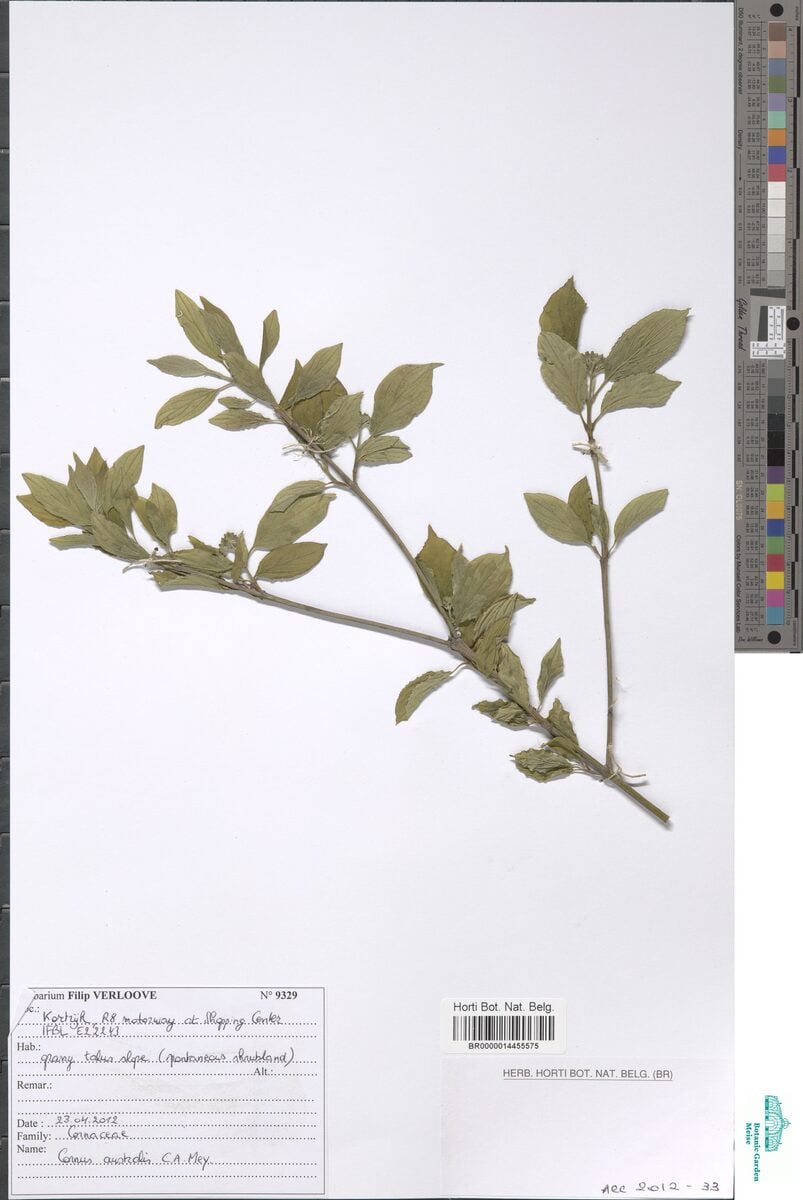
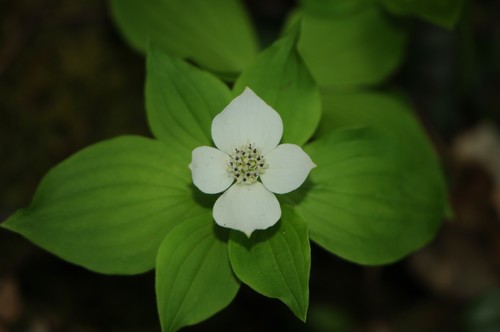
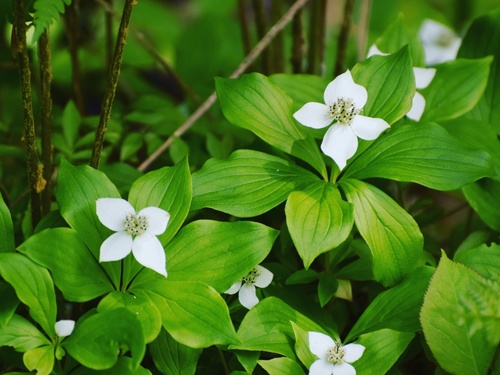
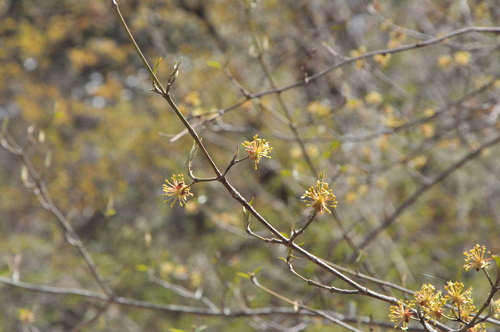
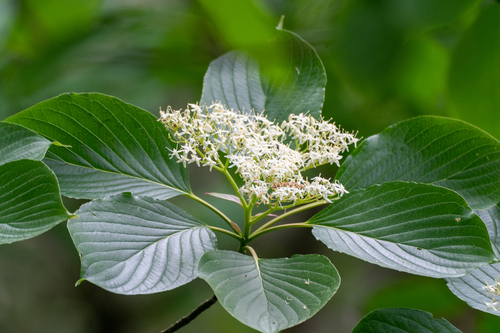
Cornus quinquenervis
Franch.
iNaturalist· cc-by
(c) Andrew Conboy, some rights reserved (CC BY), uploaded by Andrew Conboy
iNaturalist· cc-by
(c) Andrew Conboy, some rights reserved (CC BY), uploaded by Andrew Conboy
Description
Cornus quinquenervis is a deciduous Shrub growing to 3 m (9ft 10in). See above for USDA hardiness. It is hardy to UK zone 5. It is in flower from July to August, and the seeds ripen from October to November. The species is hermaphrodite (has both male and female organs) and is pollinated by Insects. Suitable for: light (sandy), medium (loamy) and heavy (clay) soils and can grow in heavy clay soil. Suitable pH: mildly acid, neutral and basic (mildly alkaline) soils. It can grow in semi-shade (light woodland) or no shade. It prefers moist soil.
Edible Uses
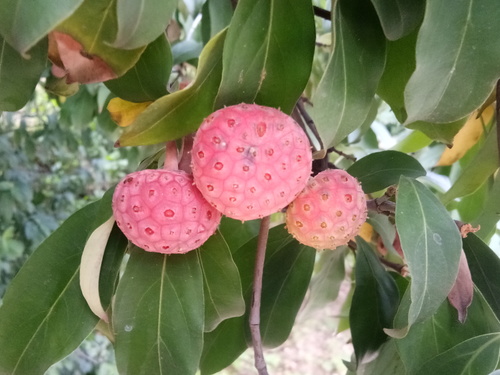
A specimen of this species seen growing at Kew in September 1994 was carrying a few red fruits about 30mm long and 12mm wide - these were not fully ripe and were slightly astringent but they showed some potential. There must be some doubt about the validity of the name of the Kew plant since the botanical description of the plant says that the fruits are black, globose and 6mm in diameter.
Distribution
E. Asia - China.
Where It Grows
TEMPERATE ASIA: China (Fujian Sheng, Gansu Sheng (south), Guangdong Sheng, Guangxi Zhuangzu Zizhiqu, Guizhou Sheng, Hubei Sheng, Hunan Sheng, Jiangsu Sheng, Shaanxi Sheng, Sichuan Sheng, Yunnan Sheng)
Cultivation
An easily grown plant, it succeeds in any soil of good or moderate fertility, ranging from acid to shallow chalk. Grows well in heavy clay soils. Succeeds in full sun or light shade. Plants in this genus are notably resistant to honey fungus.
Propagation
Seed - best sown as soon as it is ripe in a cold frame or in an outdoors seedbed if there is sufficient seed. The seed must be separated from the fruit flesh since this contains germination inhibitors. Stored seed should be cold stratified for 3 - 4 months and sown as early as possible in the year. Scarification may also help as may a period of warm stratification before the cold stratification. Germination, especially of stored seed, can be very slow, taking 18 months or more. Prick out the seedlings of cold-frame sown seeds into individual pots as soon as they are large enough to handle and grow the plants on for their first winter in a greenhouse, planting out in the spring after the last expected frosts. Cuttings of half-ripe side shoots, July/August in a frame. Cuttings of mature wood of the current year's growth, taken with a heel if possible, autumn in a cold frame. High percentage. Layering of new growth in June/July. Takes 9 months.