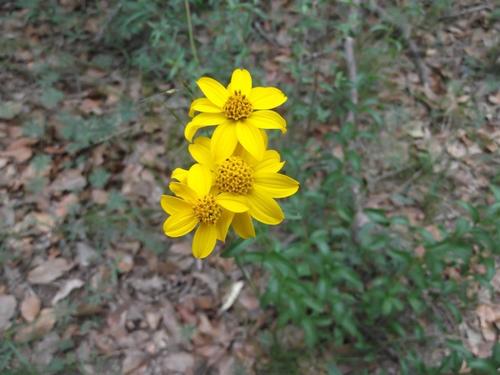
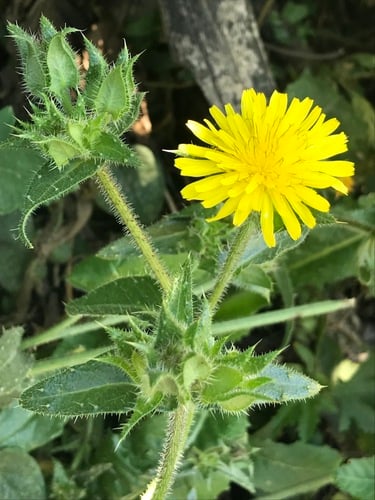
Erechtites valerianifolius
(Link ex Spreng.) DC.
Brazilian fire-weed
iNaturalist· cc-by-nc
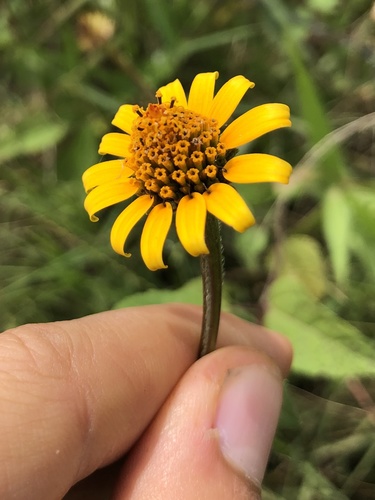
(c) 戴勝, some rights reserved (CC BY-NC), uploaded by 戴勝
iNaturalist· cc-by-nc-sa
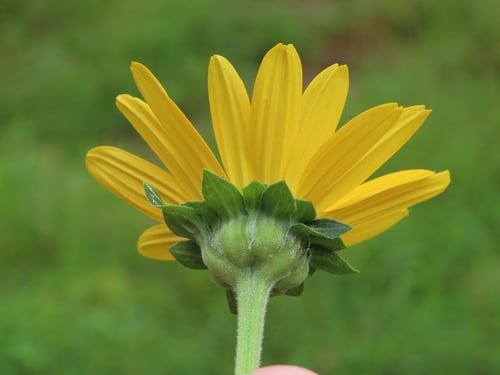
(c) Smithsonian Institution, National Museum of Natural History, Department of Botany, some rights reserved (CC BY-NC-SA)
iNaturalist· cc-by-nc-sa
(c) Smithsonian Institution, National Museum of Natural History, Department of Botany, some rights reserved (CC BY-NC-SA)
Summary
Source: WikipediaErechtites valerianifolius, common name tropical burnweed is a New World species of plants in the sunflower family. It is native to Mexico, Central America, South America, and the West Indies. It is also naturalized as a weed in much of the tropical Old World.
Description
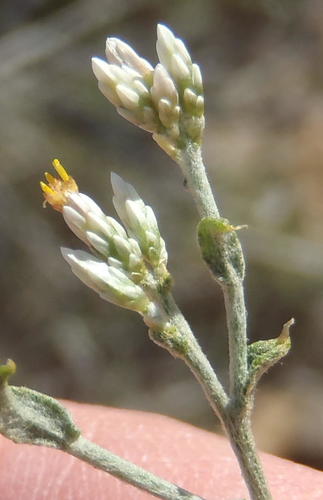
A tall annual herb. It grows up to 1-2 m tall and is much branched. The top of the stalk wilts and bends over. The stem is soft. The lower leaves have leaf stalks. The leaves are toothed around the edge. The leaves are 5-25 cm long by 2-8 cm wide. They are also divided. The leaves get smaller higher up the plant. Flower are pink-red and they become white fuzz.
Edible Uses
Young leaves before flowering are eaten as a potherb, prepared fresh, boiled, fried, or pickled with water changes to remove the smell. Young flowers are eaten raw or steamed and served with rice.
Traditional Uses
The young leaves before flowering are eaten as a potherb. They are eaten fresh, boiled, fried and pickled. The water is changed to remove the smell. The young flowers are eaten. They are eaten raw or steamed and eaten with rice.
Distribution
A tropical plant. It grows in the tropics and subtropics. In Papua New Guinea it occurs above 900 m altitude. In Argentina it grows from sea level to 1,000 m above sea level.
Where It Grows
American Samoa, Argentina, Asia, Australia, Brazil, Brunei, Caribbean, Central America, China, Dominica, Dominican Republic, Fiji, Guiana, Guyana, Hawaii, Indochina, Indonesia, Marquesas, New Zealand, Northeastern India, Pacific, Papua New Guinea, PNG, Paraguay, Rotuma, SE Asia, South America, Taiwan, Tonga, Tropical America, Uruguay, Vanuatu, Venezuela, Vietnam, West Indies,
Cultivation
A native of tropical America, it is now widespread as a weed from Mexico to Argentina, it is also adventive as an aggressive weed in tropical Asia, the Pacific Islands, and northern Australia.
Other Information
In Papua New Guinea it was introduced by the Japanese and the leaves eaten.
Notes
It is classed as a weed in some places. Erechtites valerianifolius and Erechtites valerianifolia are both considered accepted names in The Plant List
Synonyms
Also Known As
Bon kapahi, Caricoba, Federal fireweed, Hangoran ure ure, Hoang that, Ogen, Rau tau bay la xe, Sintrong
References (30)
- Borrell, O.W., 1989, An Annotated Checklist of the Flora of Kairiru Island, New Guinea. Marcellin College, Victoria Australia. p 63, 181
- Burkill, I.H., 1966, A Dictionary of the Economic Products of the Malay Peninsula. Ministry of Agriculture and Cooperatives, Kuala Lumpur, Malaysia. Vol 1 (A-H) p 949
- Cabalion, P. and Morat, P., 1983, Introduction le vegetation, la flore et aux noms vernaculaires de l'ile de Pentcoste (Vanuatu), In: Journal d'agriculture traditionnelle et de botanique appliquee JATBA Vol. 30, 3-4 (As (Wolf) DC.)
- Cooper, W. and Cooper, W., 2004, Fruits of the Australian Tropical Rainforest. Nokomis Editions, Victoria, Australia. p 81
- Cribb, A.B. & J.W., 1976, Wild Food in Australia, Fontana. p 136
Show all 30 references Hide references
- Facciola, S., 1998, Cornucopia 2: a Source Book of Edible Plants. Kampong Publications, p 38
- Flora of Australia Volume 49, Oceanic Islands 1, Australian Government Publishing Service, Canberra. (1994) p 396
- Franklin, J., Keppel, G., & Whistler, W., 2008, The vegetation and flora of Lakeba, Nayau and Aiwa Islands, Central Lau Group, Fiji. Micronesica 40(1/2): 169–225, 2008
- Henty, E.E., & Pritchard, G.S., 1973, Weeds of New Guinea and their control. Botany Bulletin No 7, Division of Botany, Lae, PNG. p 76
- Heyne, K., 1927, p 1444
- Hu, Shiu-ying, 2005, Food Plants of China. The Chinese University Press. p 730
- INFOODSUpdatedFGU-list.xls
- Kermath, B. M., et al, 2014, Food Plants in the Americas: A survey of the domesticated, cultivated and wild plants used for Human food in North, Central and South America and the Caribbean. On line draft. p 339
- Kinupp, V. F., 2007, Plantas alimenticias nao-convencionais da regiao metropolitana de Porto Alegre, RS, Brazil p 66
- Kinupp, V. F. & Bergman, I., 2008, Protein and minerals of native species, potential vegetables and fruits. Cienc.Tecnol. Aliment. Vol. 28 No. 4 Campinas Oct/Dec.
- Lembogi Biologi Nasional, 1980, Sayur-sayuran. Balai Pustaka, Jakarta. p 100
- Lazarides, M. & Hince, B., 1993, Handbook of Economic Plants of Australia, CSIRO. p 92
- Low, T., 1991, Wild Herbs of Australia and New Zealand. Angus & Robertson. p 94
- Martin, F.W. & Ruberte, R.M., 1979, Edible Leaves of the Tropics. Antillian College Press, Mayaguez, Puerto Rico. p 185
- Ochse, J.J. et al, 1931, Vegetables of the Dutch East Indies. Asher reprint. p 133
- Patiri, B. & Borah, A., 2007, Wild Edible Plants of Assam. Geethaki Publishers. p 73
- Pegu, R., et al, 2013, Ethnobotanical study of Wild Edible Plants in Poba Reserved Forest, Assam, India. Research Journal of Agriculture and Forestry Sciences 1(3):1-10
- Priyadi, H., et al, Five hundred plant species in Gunung Halimun Salak National Park West Java. A checklist including Sundanese names, distribution and use. CIFOR, FFPRI, SLU p 156
- Prodr. 6:295. 1838 "valerianaefolia"
- Sarma, H., et al, 2010, Updated Estimates of Wild Edible and Threatened Plants of Assam: A Meta-analysis. International Journal of Botany 6(4): 414-423
- Siemonsma, J. S. and Piluek, K. (Eds), 1994, Plant Resources of South-East Asia No. 8 Vegetables. Prosea Foundation, Bogor, Indonesia, p 173
- Tanaka, Y. & Van Ke, N., 2007, Edible Wild Plants of Vietnam: The bountiful garden. Orchid books. p 45 (As Erechtites valerianifolia (Wolf.) DC.)
- Terra, G.J.A., 1973, Tropical Vegetables. Communication 54e Royal Tropical Institute, Amsterdam, p 45
- World Checklist of Useful Plant Species 2020. Royal Botanic Gardens, Kew
- Yuncker, T.G., 1959, Plants of Tonga, Bernice P. Bishop Museum, Hawaii, Bulletin 220. p 269