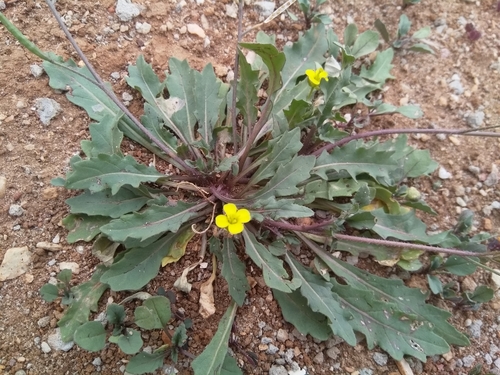
Camelina microcarpa
Andrz. ex DC.
Littlepod Falseflax
iNaturalist· cc-by-nc
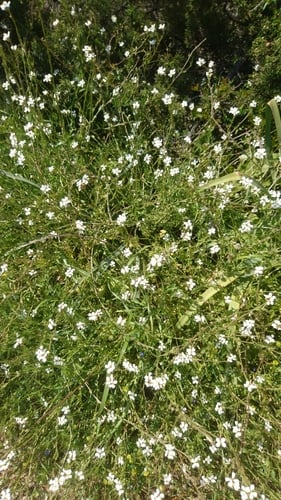
(c) Svetlana Nesterova, some rights reserved (CC BY-NC), uploaded by Svetlana Nesterova
iNaturalist· cc-by-nc
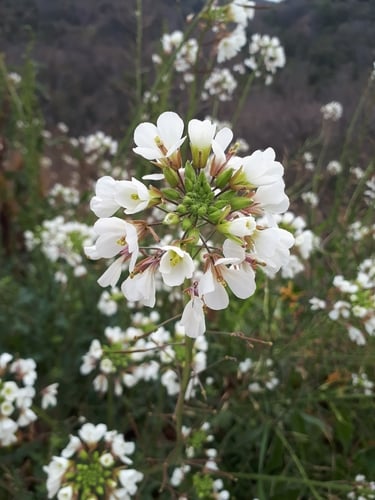
(c) Degtyarev Nikolai Ivanovich, some rights reserved (CC BY-NC), uploaded by Degtyarev Nikolai Ivanovich
iNaturalist· cc-by-nc
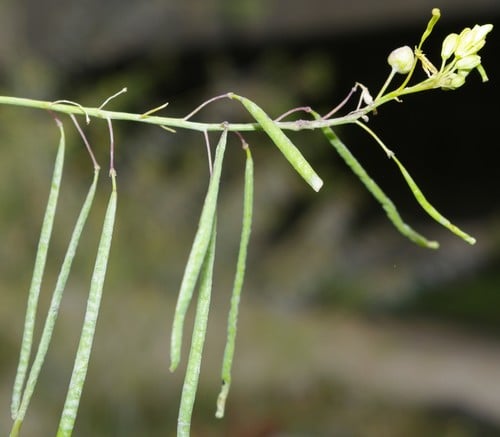
(c) Svetlana Nesterova, some rights reserved (CC BY-NC), uploaded by Svetlana Nesterova
Description
Camelina microcarpa is a ANNUAL growing to 0.6 m (2ft) by 0.2 m (0ft 8in) at a fast rate. See above for USDA hardiness. It is hardy to UK zone 4. The flowers are pollinated by Bees, Insects. It is noted for attracting wildlife. Suitable for: light (sandy), medium (loamy) and heavy (clay) soils, prefers well-drained soil and can grow in nutritionally poor soil. Suitable pH: mildly acid, neutral and basic (mildly alkaline) soils. It cannot grow in the shade. It prefers moist soil and can tolerate drought.
Edible Uses
Edible portions include seeds and seed oil. Seeds are nutritious, high in oils, and suitable for grinding or pressing. Other plant parts have no major food value. Pollination is primarily by small bees and flies, with occasional wind contribution. Edible Uses & Rating: The seeds are edible raw or cooked, and the oil pressed from the seeds is the primary food use. Like its domesticated relative Camelina sativa, littlepod falseflax seeds are high in oils with valuable essential fatty acids, including omega-rich components. Historically, the seeds have been ground into flour mixes, used to enrich bread, or pressed for oil. While not widely used by Native Americans, the Apache did grind the seeds as a supplemental bread ingredient. Modern analysis suggests littlepod falseflax likely shares nutritional traits with gold of pleasure, whose seeds contain 38–43% oil, making this plant a potentially significant wild-source oilseed. Edibility rating is moderate to high for the seeds and oil, but low for other plant parts. Taste, Processing & Kitchen Notes: Seeds have a mild, nutty, slightly pungent mustard-like aroma. Their small size means large quantities must be harvested for meaningful yield, but mature pods release seeds readily when dried and threshed. Seeds can be lightly toasted to enhance flavour before grinding into a coarse flour suitable for adding to porridges or flatbreads. Oil extraction requires pressing or grinding followed by gentle heating and skimming. The oil is pleasant, nutritious, and comparable to mild mustard oils, though less sharp. The plant’s foliage has no significant culinary value due to hairiness and bitterness. Seasonality (Phenology): Flowering occurs mainly from April through June in the Southwest, depending on moisture and elevation. Seedpods develop rapidly afterward and mature by late spring or early summer. As an annual dependent on seed production, the plant completes its life cycle quickly, often with seeds ready before the heat of midsummer. Safety & Cautions (Food Use): Seeds and oil are safe and historically consumed. Like many mustard-family species, seeds contain small amounts of glucosinolates, but in non-hazardous concentrations. Proper cleaning and drying are recommended before grinding or pressing. No toxic portions of the plant are documented beyond typical Brassicaceae considerations. Harvest & Processing Workflow: Harvest begins when pods turn light tan and dry. Entire seed stalks can be clipped, dried in a bag or tarp, and gently threshed to release seeds. Winnowing removes chaff. Seeds may be toasted lightly before grinding, or pressed for oil. Because of small seed size, efficient processing works best on large, dense patches rather than isolated individuals. Look-Alikes & Confusion Risks: Beginner foragers may confuse littlepod falseflax with small-flowered mustards such as Arabidopsis, Lepidium, or Draba. The key distinguishing feature is the plump, rounded, obovoid pods with a short style-beak—not flattened or winged like many other genera. The stellate-hirsute hairs and clasping upper leaves also help confirm identification. Traditional / Indigenous Use Summary: Among the Apache, seeds were occasionally ground into flour for bread, though not used extensively. This rapid adoption reflects the flexibility of Indigenous diets in incorporating newly naturalized species. No medicinal uses are prominently recorded.
Known Hazards
Seeds and oil are safe and historically consumed. Like many mustard-family species, seeds contain small amounts of glucosinolates, but in non-hazardous concentrations. Proper cleaning and drying are recommended before grinding or pressing. No toxic portions of the plant are documented beyond typical Brassicaceae considerations.
Distribution
Widespread across Eurasia, and naturalized across the northern United States, western Canada, and parts of the Southwest—especially the northern half, including New Mexico, Colorado, Utah, Nevada, and northern Arizona.
Where It Grows
US. USA. Albania, Algeria, Altay, Austria, Belarus, Bulgaria, Buryatiya, Central European Russia, China North-Central, Chita, Czechia-Slovakia, Denmark, East European Russia, Finland, France, Germany, Greece, Hungary, Inner Mongolia, Iran, Irkutsk, Italy, Kazakhstan, Kirgizstan, Krasnoyarsk, Krym, Lebanon-Syria, Libya, Manchuria, Mongolia, Morocco, North Caucasus, NW. Balkan Pen., Poland, Portugal, Romania, South European Russia, Spain, Sweden, Switzerland, Tadzhikistan, Transcaucasus, Tunisia, Turkmenistan, Tuva, Türkiye, Ukraine, Uzbekistan, West Siberia, Xinjiang, Yakutiya
Cultivation
Littlepod falseflax is a humble yet historically significant wild oilseed with clear connections to long-standing Eurasian agriculture. Its seeds and oil offer meaningful food value, and its presence across disturbed sites makes it an opportunistic resource for foragers. While modest in stature and flavour, it remains a noteworthy plant for its nutritional potential, ecological tolerance, and deep agricultural lineage. Identification & Habit: Littlepod falseflax is an upright annual herb typically 20–90 cm tall, with rough, bristly, and sometimes stellate hairs covering stems and leaves. It forms a single or moderately branched stalk rising from a slender root system. Basal leaves are oblanceolate with smooth or slightly toothed margins, while upper leaves are oblanceolate to narrowly triangular or linear, sessile, and often clasping the stem. Inflorescences are terminal racemes of small yellow or white four-petaled flowers typical of the mustard family. Fruits are distinctive: short (4–6 mm), plump, obovoid seedpods with a small beak formed by the persistent style. The pods are weakly compressed and contain numerous seeds arranged in two rows per chamber. The plant’s overall habit resembles a delicate, fine-textured mustard with dense seed production. Growing Conditions: Littlepod falseflax thrives in disturbed soils, field margins, roadsides, fallow fields, and dry temperate grasslands. It prefers full sun, open exposure, and moderately well-drained soils ranging from sandy to clay loams. It is common at mid-elevations and responds well to cool-season moisture. Hardiness is consistent with annual temperate species, roughly aligning with USDA Zones 3–9 in areas where it can complete its cycle before summer drought. Habitat & Range: Native to Europe and Asia, littlepod falseflax has followed human agricultural activity for millennia. Today it is widespread across Eurasia, and naturalized across the northern United States, western Canada, and parts of the Southwest—especially the northern half, including New Mexico, Colorado, Utah, Nevada, and northern Arizona. It is most common in disturbed, semi-moist sites within dry temperate landscapes. Size & Landscape Performance: Plants reach 20–90 cm tall, usually slender and airy in form. While it is an interesting historical oilseed, it is not widely cultivated ornamentally. In xeric landscapes, it behaves as a short-lived annual and does not persist aggressively. It blends unobtrusively with grasses and early-season forbs. Cultivation (Horticulture): Although rarely grown intentionally in modern horticulture, littlepod falseflax behaves similarly to Camelina sativa and can be cultivated as an oilseed crop on a small scale. It germinates readily in cool soils and is tolerant of low fertility, drought, and light frost. Overwatering or rich conditions may cause spindly, lodging-prone growth. For gardeners experimenting with historical oil plants, it offers an easy-to-grow, low-input option. Pests & Problems: This species is generally resilient. It may attract flea beetles and aphids, as with many Brassicaceae, but damage is rarely severe in wild populations. Drought does not significantly harm it once established, though early-season moisture is crucial for germination. Cultivar / Selection Notes: There are no named cultivars. Wild populations show some variability in pod size, hairiness, and branching habit. Some lines may be ancestral to the domesticated Camelina sativa, but the connection is unresolved.
Propagation
Propagation is exclusively by seed. Seeds germinate in cool spring weather or overwinter after natural dispersal. Fall sowing in mild climates yields early spring rosettes. No vegetative propagation occurs due to its annual nature.
Other Uses
Ecology & Wildlife: As a small-flowered mustard, Camelina microcarpa attracts a range of pollinators, including small solitary bees, syrphid flies, bee flies, and occasionally honeybees. Some pollen transfer is facilitated by wind, but insect pollination is dominant. Seeds may be consumed by small granivorous birds or insects but are not a major wildlife food source. The plant contributes modestly to early-season pollinator networks.