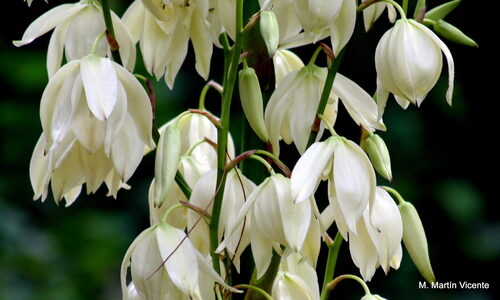
Agave utahensis eborispina - (Hester.)Breitung.
(Hester.)Breitung.
Century Plant
gbif· cc-by-nc
tannerrhall
gbif· cc-by-nc
tannerrhall
gbif· cc-by-nc
tannerrhall
Description
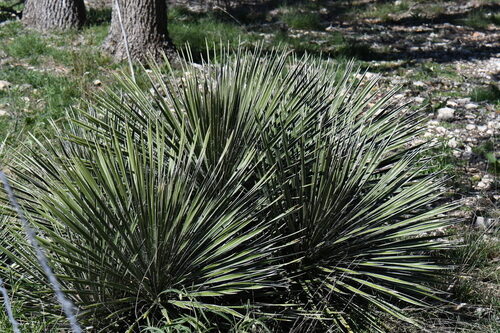
Agave utahensis eborispina is an evergreen Perennial growing to 4 m (13ft) by 2 m (6ft). See above for USDA hardiness. It is hardy to UK zone 9 and is not frost tender. It is in leaf all year. The species is hermaphrodite (has both male and female organs) and is pollinated by Moths, bats. Suitable for: light (sandy) and medium (loamy) soils and prefers well-drained soil. Suitable pH: mildly acid, neutral and basic (mildly alkaline) soils. It cannot grow in the shade. It prefers dry or moist soil and can tolerate drought.
Edible Uses
Drink. The heart of the plant is very rich in saccharine matter and can be eaten when baked. Sweet and delicious, but rather fibrous. It is partly below ground. Can be dried for future use or soaked in water to produce a flavourful beverage. Seed - ground into a flour. Flower stalk - roasted. Root - cooked. Sap from the cut flowering stems is used as a syrup. The sap can also be tapped by boring a hole into the middle of the plant at the base of the flowering stem. It can be fermented into 'Mescal', a very potent alcoholic drink.
Medicinal Uses
Antiseptic Diuretic Laxative Miscellany. The sap is antiseptic, diuretic and laxative.
Known Hazards
The plants have a very sharp and tough spine at the tip of each leaf. They need to be carefully sited in the garden.
Distribution
South-western N. America
Where It Grows
Coming Soon
Cultivation
Requires a very well-drained soil and a sunny position. Plants are only hardy on the south coast of England, where they succeed from Torbay westwards. A monocarpic species, the plant lives for a number of years without flowering but dies once it does flower. However, it normally produces plenty of suckers during its life and these take about 10 - 15 years in a warm climate, considerably longer in colder ones, before flowering. This plant is widely used by the native people in its wild habitat, it has a wide range of uses. Members of this genus are rarely if ever troubled by browsing deer.
Propagation
Seed - surface sow in a light position, April in a warm greenhouse. The seed usually germinates in 1 - 3 months at 20°c. Prick out the seedlings into individual pots of well-drained soil when they are large enough to handle and grow them on in a sunny position in the greenhouse until they are at least 20cm tall. Plant out in late spring or early summer, after the last expected frosts, and give some protection from the cold for at least their first few winters. Offsets can be potted up at any time they are available. Keep in a warm greenhouse until they are well established.
Other Uses
Brush Fibre Miscellany Needles Paper Pins Soap Thatching. The leaves contain saponins and an extract of them can be used as a soap. It is best obtained by chopping up the leaves and then simmering them in water - do not boil for too long or this will start to break down the saponins. A very strong fibre obtained from the leaves is used for making rope, coarse fabrics etc. To make hair brushes and brushes for cleaning, the dried matter of a dead and rotten leaf was knocked free from the fibres, which were then bent in two. the upper end of this brush was wrapped with a cord and the bent portion was covered with a cloth. The loose fibres were cut to the right length and hardened by burning the ends. A paper can also be made from the fibre in the leaves. The thorns on the leaves are used as pins and needles. The dried flowering stems are used as a waterproof thatch and as a razor strop.