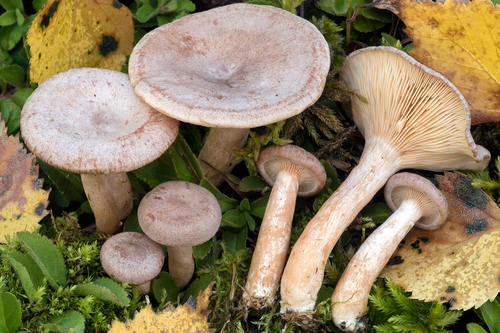
Lactifluus pinguis
(Van de Putte & Verbeken) Van de Putte
gbif· cc0
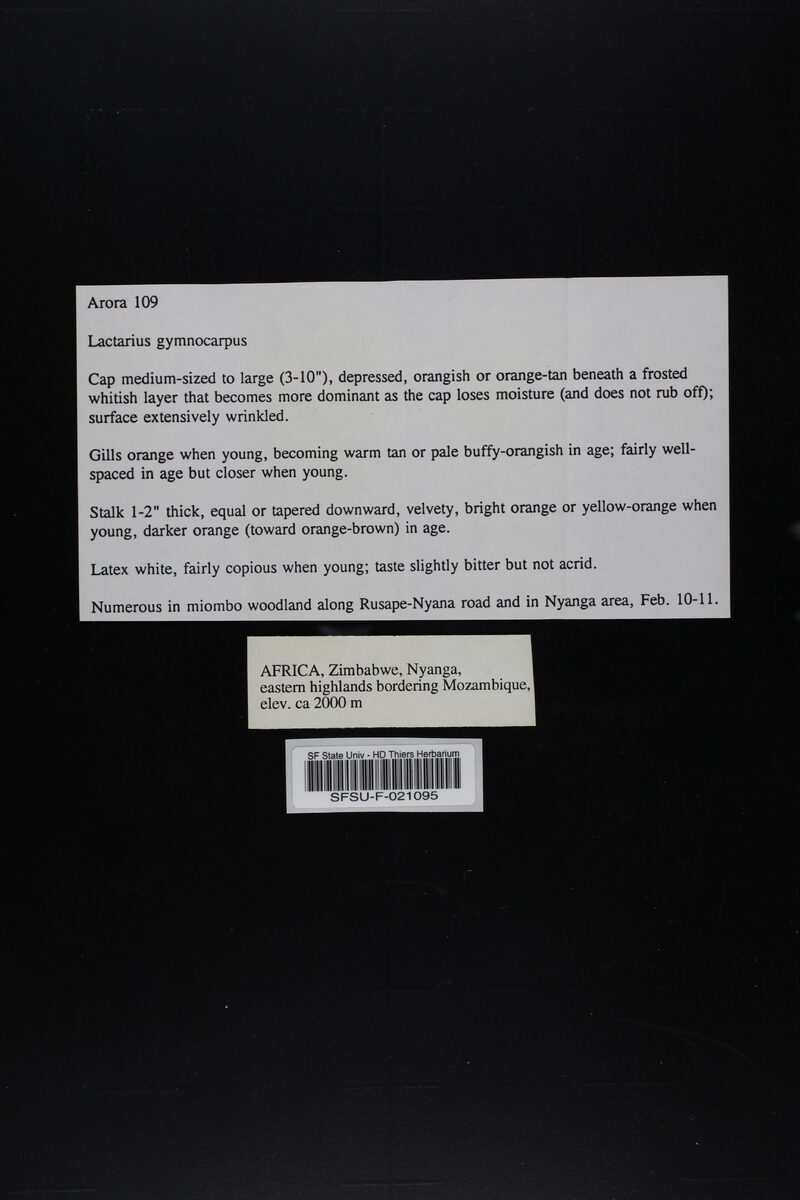
San Francisco State University, Harry D. Thiers Herbarium (SFSU-)
gbif· cc0
San Francisco State University, Harry D. Thiers Herbarium (SFSU-)
Description
A mushroom in the Russulaceae family found in tropical regions and sold in local markets.
This description is brief — help expand it
Edible Uses
Despite the unappealing fishy scent that develops after the mushroom is picked, Lactifluus volemus is edible and recommended for culinary usage, though, typical of milk caps, it has a slightly granular texture that some may find unappetizing. The odor disappears during cooking. The latex only has a mild taste. The species is considered good for novice mushroom hunters to eat, and is best prepared by slow cooking to prevent it from becoming too hard; specimens that have been rehydrated after having been dried will require longer cooking times to eliminate the grainy texture. The mushroom has also been suggested for use in casseroles and thick sauces. Pan frying is not a recommended cooking technique, due to the large amounts of latex it exudes. The species has been found to be a good source of protein and carbohydrates. L. volemus is one of several species of milk caps sold in rural markets in Yunnan Province, China, and it is among the most popular wild edible mushrooms collected for consumption and sale in Nepal. In their 2009 book on milk caps of North America, Bessette and colleagues consider the mushroom "the best-known and most popular edible milk mushroom" in the eastern U.S. Two elderly people developed a transient pancreatitis after consuming L. volemus in central Anatolia in Turkey. Both had eaten the mushroom, which they knew as Tirmit, many times before. The condition resolved spontaneously.
Distribution
It is a tropical plant.
Where It Grows
Asia, Laos, SE Asia,
Other Information
It is sold in local markets.
Also Known As
Het hat
References (1)
- Luczaj, L., et al, 2021, Wild food plants and fungi sold in the markets of Luang Prabang, Lao PDR. Journal of Ethnobiology and Ethnomedicine (2021) 17:6