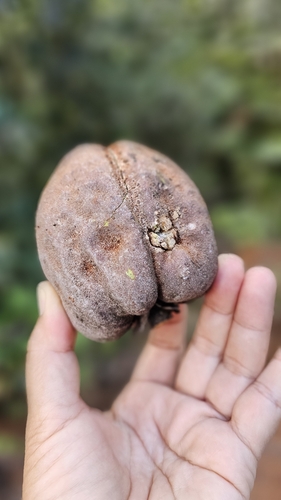
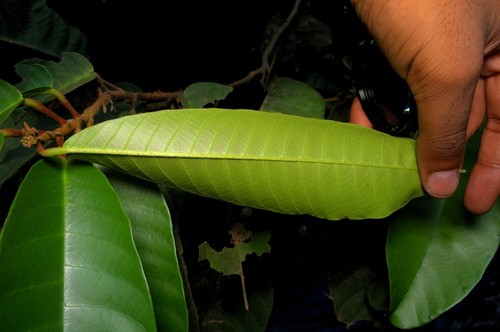
Vatica rassak
(Korth.) Blume
Resak
iNaturalist· cc-by-nc-sa
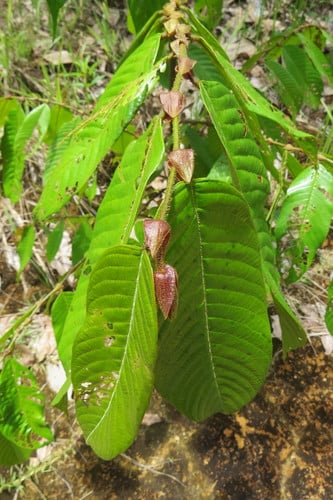
(c) 106611639464075912591, some rights reserved (CC BY-NC-SA), uploaded by 106611639464075912591
iNaturalist· cc-by-nc
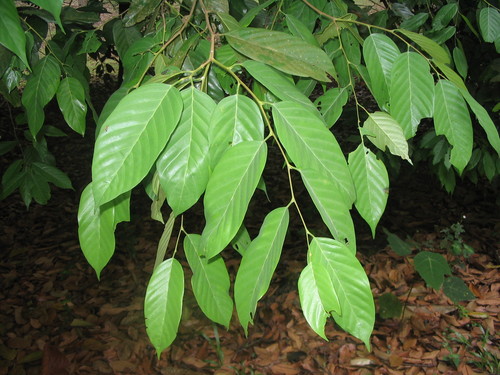
(c) big-simonchan, some rights reserved (CC BY-NC)
iNaturalist· cc-by-nc
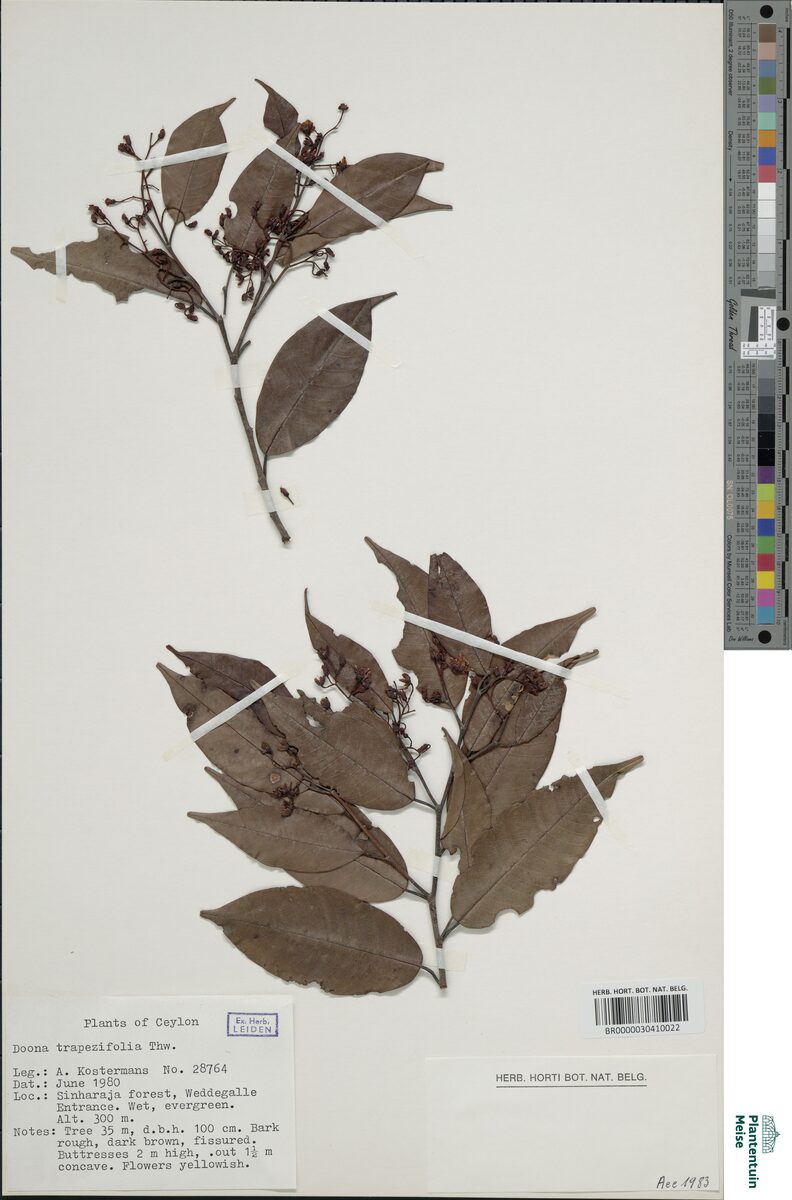
(c) big-simonchan, some rights reserved (CC BY-NC)
Summary
Source: WikipediaVatica rassak is a tree in the family Dipterocarpaceae, native to Maritime Southeast Asia. The specific epithet rassak is from resak, the species' Malay common name.
Description
A tree. It grows 30 m tall. The trunk s 20-70 cm across. The leaves are simple and alternate. They are 10-30 cm long by 5-10 cm wide. The fruit are oblong capsules 4-5 cm long by 2-3 cm wide. There is one round seed 1 cm across.
Known Hazards
The resin is poisonous.
Distribution
It is a tropical plant. It grows up to 400 m above sea level.
Where It Grows
Asia, Indonesia, Papua New Guinea, PNG, Philippines, SE Asia,
Cultivation
A plant of moist tropical lowlands.
Other Uses
A resin known as 'Damar Hiroe' is obtained from the dead stems. It has a high melting point. A resin known as 'Rose Dammar' is obtained from the plant. Dammar is a hard resin, obtained from various trees of Southeast Asia. Traditionally, it is used for purposes such as caulking boats and baskets, as an adhesive, a medicine, as a fuel for torches and sometimes in foods. Dammar has many commercial applications, though many of these uses are less important nowadays due to the advent of synthetic materials. Commercially, it is an ingredient of inks, lacquers, oil paints, varnishes etc, and is used as a glazing agent in foods. Harvesting of the resin commences when the bole is around 25cm in diameter (approx 20 years old). Triangular cuts (becoming circular with age) are arranged in vertical rows around the trunk. The cuts are several centimetres wide at first, but become enlarged at every tapping and eventually become holes of 15 - 20cm in depth and width. The average number of holes for a tree about 30 metres tall and 60 - 80cm in diameter is 9 - 11 in each of 4 - 5 vertical rows. For the higher holes, the tapper climbs the tree supported by a rattan belt and using the lower holes as footholds. The exuded resin is allowed to dry on the tree before it is collected. The frequency with which the tree is visited to refreshen the cut varies from once a week to once a month, depending on how far the tree is from the village. Tapping can continue for 30 years. The wood is hard, somewhat durable. It is used locally for house posts and other minor construction. We have no more information on the wood of this species. However, the following is a general description of the wood for members of this genus;- The heartwood is yellowish when fresh, turning light to deep red-brown upon exposure; it is generally not sharply demarcated from the lighter coloured sapwood. The texture is rather fine and even; the grain straight or shallowly interlocked; not lustrous; there is no distinctive taste or odour when dry. The heartwood, particularly that of the denser species, is rated as durable to very durable; with a good resistance to termites. It is generally reported to air season slowly, but with some warp and checking. Philippine species are reported to dry well with little degrade. The wood is said to be difficult to saw because of clogging due to gummy resins, otherwise it machines well to a smooth finish; turns well. The wood is used for purposes such as turnery, heavy construction, mining timbers, railroad crossties, boat construction; it is also suggested for flooring, interior joinery, and cabinetwork.
Notes
The resin is poisonous. The resin is used to glaze foods.
Also Known As
Resak tebong, Tawi-tawi narig
References (1)
- World Checklist of Useful Plant Species 2020. Royal Botanic Gardens, Kew