Ocotea bullata
(Burch.) Baill.
Stinkwood, Cape laurel, African acorn
iNaturalist· cc-by-sa
(c) Tony Rebelo, some rights reserved (CC BY-SA), uploaded by Tony Rebelo
iNaturalist· cc-by
(c) Christiaan Viljoen, some rights reserved (CC BY)
iNaturalist· cc-by-nc
(c) Richard Gill, some rights reserved (CC BY-NC), uploaded by Richard Gill
Summary
Source: WikipediaOcotea bullata, (stinkwood or black stinkwood, Afrikaans: Stinkhout, Xhosa: Umhlungulu, Zulu: Umnukane) is a species of flowering tree native to South Africa. It produces very fine and valuable timber which was formerly much sought after to make furniture. Due to over-exploitation it is now a protected species. Other names for it are Cape Walnut, Cape laurel, and laurel wood. The name "stinkwood" comes from a strong smell that is released when it is fresh felled.
Description
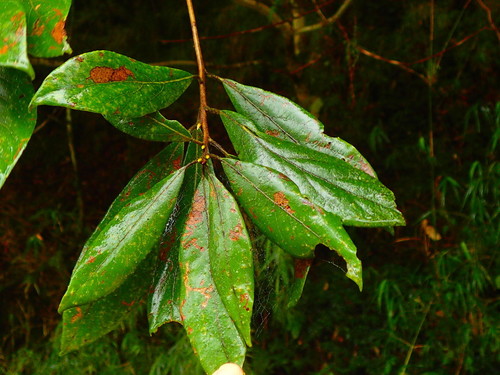
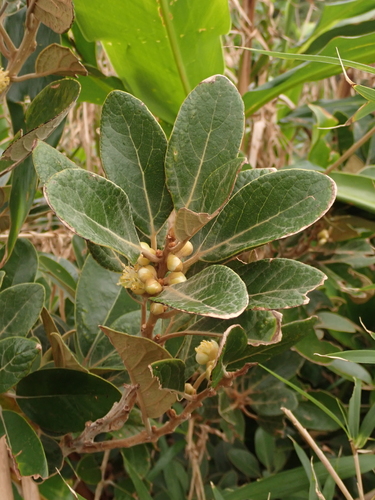
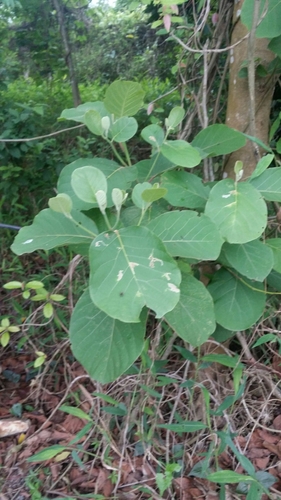
A large tree. It grows 30 m tall. The leaves are dark green and shiny. They have blisters or bubbles on the upper surface. The edges of the leaves are wavy. The fruit are in cups.
Edible Uses
The bark is used to make tea.
Medicinal Uses
The tree yields a beautiful timber much prized by cabinet-makers. The wood is dark walnut or reddish brown to black with a yellow sap-wood, and the grain extremely fine, close, dense and smooth. It is said to be as durable as teak. The tree is badly overexploited and the wood is no longer available commercially. It is one of the most popular plants traded for traditional medicine in South Africa, mainly for its perceived effectiveness in treating urinary diseases.
Distribution
It is a subtropical plant. It grows in mountain forests.
Where It Grows
Africa, South Africa, Southern Africa,
Cultivation
A plant of subtropical and tropical areas, where it is found at elevations from near sea level to 1,435 metres. Thrives in a deep soil. Prefers a shady forest situation. This is a fairly fast growing tree if happy with its position, but stinkwoods are reported to be 'fussy' and do not transplant easily.
Propagation
Seed - The seed in the wild is parasitized and the regeneration potential is reduced. The seed must be picked, cleaned and sown immediately. The seed takes up to 30 days to germinate. The plant is propagated from cuttings, but it has a low rooting success.
Other Uses
The bark is a source of tannins. The wood varies in colour from light cream, through brown to almost black. It is hard, finely textured, fairly heavy, takes a fine polish. Highly esteemed as timber for house-building and for the manufacture of wagons and furniture. It is one of the best timbers in the region, though it smells disagreeable when freshly cut. Stinkwood is one of the most highly valued furniture woods, with many beautiful pieces made. It is also used for doors, windows, wagon parts and gun stocks.
Notes
Authority as (Burch.) E. Meyer in Drege in WFOL.Africa,
Synonyms
References (1)
- World Checklist of Useful Plant Species 2020. Royal Botanic Gardens, Kew