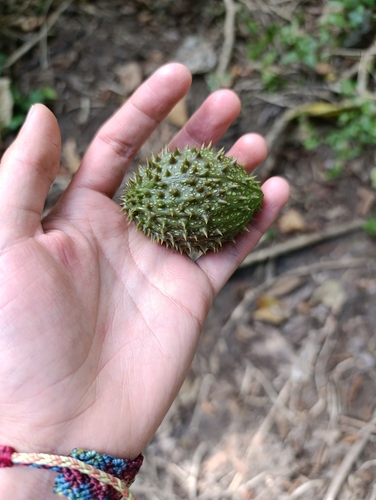
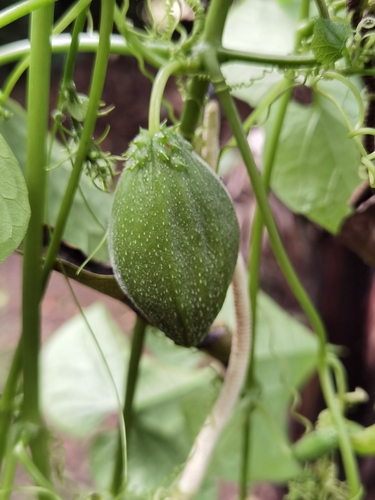
Cucumis melo
L.
Melon, Canteloupe, Honey-dew
wikimedia· cc-by-sa
The original uploader was Bobak at English Wikipedia. (via Wikimedia Commons)
wikimedia· cc-by-sa
Flickr user _e.t (via Wikimedia Commons)
wikimedia· cc0
Sangfroid (via Wikimedia Commons)
iNaturalist· cc-by-nc
(c) MP Zhou, some rights reserved (CC BY-NC)
iNaturalist· cc-by-nc
(c) MP Zhou, some rights reserved (CC BY-NC)
iNaturalist· cc-by-nc
(c) sehnature, some rights reserved (CC BY-NC)
Summary
Source: WikipediaCucumis melo, also known as melon, is a species of Cucumis that has been developed into many cultivated varieties. The fruit is a pepo. The flesh is either sweet or bland, with or without an aroma, and the rind can be smooth (such as honeydew), ribbed (such as European cantaloupe), wrinkled (such as Casaba melon), or netted (such as American cantaloupe). The species is sometimes referred to as muskmelon. However, there is no consensus about the usage of this term, as it can also be used as a specific name for the musky netted-rind American cantaloupe, or as a generic name for any sweet-flesh variety such the inodorous smooth-rind honeydew melon. The origin of melons is not known. Research has revealed that seeds and rootstocks were among the goods traded along the caravan routes of the Ancient World. Some botanists consider melons native to the Levant and Egypt, while others place their origin in Iran, India or Central Asia. Still others support an African origin; in modern times, wild melons can still be found in some African countries.
Description
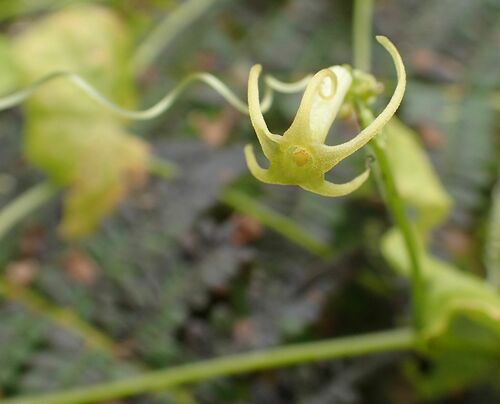
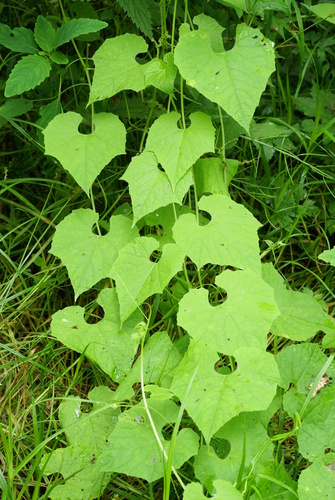
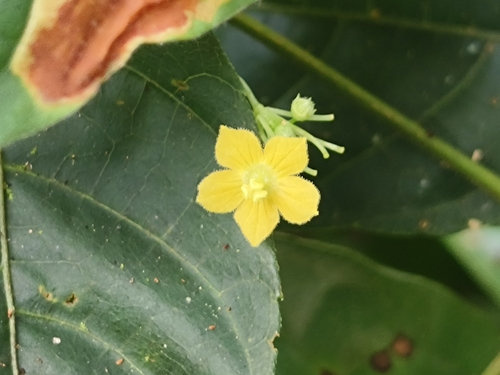
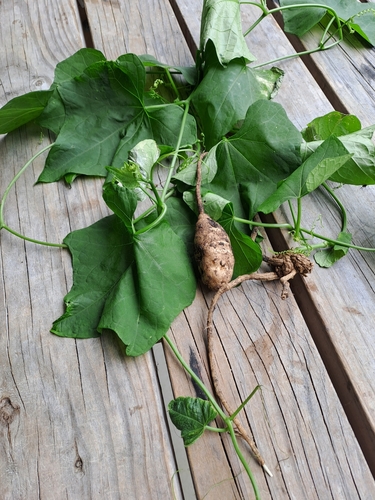
A pumpkin family plant. It is an annual climber with tendrils. It grows to 0.5 m high and spreads to 1.5 m across. The stems are soft and hairy and often angled. The leaves have lobes and often a wavy or toothed edge. They are on long leaf stalks. The leaves are often hairy underneath. The tendrils are not branched. The flowers are yellow and funnel shaped with expanded lobes. The male flowers occur in clusters and are produced before the female flowers. The fruit is round, mostly with a rough or streaky skin. It is green or yellow inside. The fruit is edible. Different kinds of melons occur. Some have a hard warty scaly skin. Others have a network of fine ridges over the surface.
Edible Uses
The fruit is eaten raw. It is very watery but has a delicate, refreshing flavour and is rich in vitamins B and C. The flesh can also be dried, ground into a powder, and used alongside cereals when making bread, biscuits, and similar foods. Fruit size varies considerably between cultivars but reaches up to 10cm long and 7cm wide. Seeds can be eaten raw; they are rich in oil with a nutty flavour, though small size and a fibrous coat make them fiddly to prepare. The seed contains between 12.5% and 39.1% oil, and an edible oil is extracted from it.
Traditional Uses
The ripe fruit are eaten raw. They are also dried, candied and made into jams, jellies and preserves. The seeds are sometimes eaten. They are roasted. The seeds are blended with fruit juice to form a drink. Sometimes the immature fruit are cooked as a vegetable. The seeds contain an edible light oil. The young leaves are eaten as a potherb.
Medicinal Uses
The fruit can be used externally as a cooling cleanser or moisturiser for the skin, and as a first aid treatment for burns and abrasions. The flowers are expectorant and emetic. The fruit itself is stomachic. The seed is antitussive, digestive, febrifuge, and vermifuge; when used as a vermifuge, the whole seed including the seed coat is ground into a fine flour, made into an emulsion with water, and eaten, after which a purge must be taken to expel tapeworms or other parasites. The root is diuretic and emetic.
Known Hazards
The sprouting seed produces a toxic substance in its embryo.
Distribution
A tropical plant. It is not suited to places with high rainfall. They suit hot dry places with a fertile well drained soil. It needs a sheltered sunny position. It is drought and frost tender. A temperature range of 24-28°C is best but much higher temperatures is tolerated. Mostly they are grown below 500 m altitude in the tropics. In PNG it has been recorded up to 2,100 m above sea level. A pH of 6-6.7 is best. Acid soils are not suitable. It can grow in deserts and arid places. It suits hardiness zones 9-12.
Where It Grows
Afghanistan, Africa, Amazon, American Samoa, Angola, Arabia, Aruba, Asia, Australia, Balkans, Bangladesh, Benin, Botswana, Brazil, British Indian Ocean Terr., BIOT, Burkina Faso, Burundi, Cambodia, Cameroon, Cape Verde, Caucasus, Central Africa, Central African Republic, CAR, Central Asia, Chad, Chile, China, Colombia, Comoros, Congo, Cook Islands, Costa Rica, Côte d'Ivoire, Cuba, Dominican Republic, East Africa, East Timor, Ecuador, Egypt, Equatorial-Guinea, Eritrea, Eswatini, Ethiopia, Europe, Fiji, France, Gabon, Gambia, Georgia, Ghana, Greece, Guam, Guiana, Guianas, Guinea, Guinée, Guinea-Bissau, Guyana, Haiti, Hawaii, Himalayas, India, Indochina, Indonesia, Iran, Iraq, Israel, Italy, Ivory Coast, Japan, Kenya, Korea, Kyrgyzstan, Laos, Liberia, Macedonia, Madagascar, Malawi, Malaysia, Maldives, Mali, Mauritania, Mauritius, Mediterranean, Mexico, Middle East, Morocco, Mozambique, Myanmar, Namibia, Nepal, Niger, Nigeria, North Africa, North America, Northeastern India, Pacific, Pakistan, Papua New Guinea, PNG, Peru, Philippines, Portugal, Reunion, Romania, Rwanda, Sahel, Samoa, SE Asia, Senegal, Serbia, Seychelles, Sierra Leone, Sikkim, Somalia, South Africa, Southern Africa, Spain, South Africa, Southern Africa, South America, South Korea, Sri Lanka, Sudan, Suriname, Swaziland, Syria, Tajikistan, Tanzania, Tasmania, Thailand, Timor-Leste, Togo, Torres Strait, Tunisia, Turkey, Türkiye, Tuvalu, Uganda, Ukraine, Uruguay, USA, Uzbekistan, Vanuatu, West Africa, West Indies, Zambia, Zimbabwe,
Cultivation
Requires a rich, well-drained moisture retentive soil and a warm, very sunny position. A frost-tender annual plant, the melon is widely cultivated in gardens and commercially, especially in warmer climates than Britain, for its edible fruit. Some varieties may succeed outdoors in Britain in hot summers but in general it is best to grow melons under protection in this country. This is a very variable species that has long been cultivated for its edible fruit. As a result, a number of distinct forms have arisen and there are many named varieties within each of these forms. These forms have been classified by botanists into groups as detailed below. Each of these groups has been given a separate entry in the database. C. melo agrestis. A wild form of the melon. It is not usually grown for its fruit but is of potential value in breeding programmes. C. melo cantalupensis. The cantaloupe or netted melons. C. melo chito. The orange melon. This form occasionally escapes from cultivation and is naturalized in some tropical and sub-tropical areas. C. melo conomon. The pickling or sweet melon. This form is also of value in breeding programmes for disease resistance. C. melo flexuosus. The serpent melon. C. melo inodorus. The honeydew melon. C. melo momordica. The snap melon. This form is also of value in breeding programmes for pest and disease resistance. Grows well with corn and sunflowers but dislikes potatoes. The weeds fat hen and sow thistle improve the growth and cropping of melons.
Propagation
Sow seed in early to mid spring in a greenhouse in rich soil; germination should occur within 2 weeks. Sow 2 or 3 seeds per pot and thin to the strongest plant. Grow on quickly and plant out after the last expected frosts, providing cloche or frame protection for at least the first few weeks if growing outdoors.
Other Uses
An oil is obtained from the seed. No other uses are known.
Production
Plants are ready 3-4 months after planting. Yields of 20 kg per10 sq m is average.
Other Information
Only occasionally seen in Papua New Guinea. They are common in Africa both wild and cultivated. It is cultivated in many countries.
Notes
There are about 25 Cucumis species.
Nutrition
| Part | Moisture | kJ | kcal | Protein | Vit A | Vit C | Iron | Zinc |
|---|---|---|---|---|---|---|---|---|
| Seed | 7 | 2319 | 555 | 15.8 | — | — | — | — |
| Leaves | 85 | 172 | 41 | 4.2 | 72 | — | — | — |
| Fruit | 93 | 109 | 26 | 0.5 | 300 | 30 | 0.4 | 0.2 |
Synonyms
Also Known As
Akobokobo, Akolil, Andawk, Atimon, 'Atiu, Bangi, Blewah, Bluwak, Boromi, Budamakaya, Chibar, Chibbarh, Chibhar, Chiratu, Chukkangai, Gagalum, Itimon, Kaachri, Kachri, Karal, Karitu, Kayimbe, Kharbuja, Kharbujadosa, Kharmuj, Kipap, Kothimdu, Luwinbe, Madhupaka, Meble, Milon, Mitero, Mpombe, Mulampazham, Musk-melon, Nesvi, Putzakova, Sane, Semangka londo, Syrian cucumber, Taena-thai, Teeng laay, Thakwa-hmwe, Thoithe suri, Thumattikai, Trasak srow, Ulkuta, Wunbut
References (104)
- Ambasta, S.P. (Ed.), 2000, The Useful Plants of India. CSIR India. p 148 and p 149 (As Cucumis pubescens)
- Anderson, E. F., 1993, Plants and people of the Golden Triangle. Dioscorides Press. p 208
- Arellanes, Y., et al, 2013, Influence of traditional markets on plant management in the Tehuacan Valley. Journal of Ethnobiology and Ethnomedicine 9:38
- Asfaw, Z. and Tadesse, M., 2001, Prospects for Sustainable Use and Development of Wild Food Plants in Ethiopia. Economic Botany, Vol. 55, No. 1, pp. 47-62
- Balkrishna, A., et al, 2022, Indigenous Uses of Plants among Forest-dependent Communities of Seijosa, Arunachal Pradesh. International Journal of Economic Plants 2022, 9(1):064-080
Show all 104 references Hide references
- Barrau, J., 1976, Subsistence Agriculture in Melanesia. Bernice P. Bishop Museu, Bulletin 219 Honolulu Hawaii. Kraus reprint. p 56
- Beckstrom-Sternberg, Stephen M., and James A. Duke. "The Foodplant Database." http://probe.nalusda.gov:8300/cgi-bin/browse/foodplantdb.(ACEDB version 4.0 - data version July 1994)
- Bernholt, H. et al, 2009, Plant species richness and diversity in urban and peri-urban gardens of Niamey, Niger. Agroforestry Systems 77:159-179
- Bianchini, F., Corbetta, F., and Pistoia, M., 1975, Fruits of the Earth. Cassell. p 140
- Bodkin, F., 1991, Encyclopedia Botanica. Cornstalk publishing, p 305
- Bonney, N., 2012, Edible Wild Native Plants for Southern Australia. p 110
- Brouk, B., 1975, Plants Consumed by Man. Academic Press, London. p 186
- Burkill, H. M., 1985, The useful plants of west tropical Africa, Vol. 1. Kew.
- Burkill, I.H., 1966, A Dictionary of the Economic Products of the Malay Peninsula. Ministry of Agriculture and Cooperatives, Kuala Lumpur, Malaysia. Vol 1 (A-H) p 707
- Bussman, R. W., et al, 2021, Unity in diversity—food plants and fungi of Sakartvelo (Republic of Georgia), Caucasus. Journal of Ethnobiology and Ethnomedicine (2021) 17:72 p 8
- Cobley, L.S. (rev. Steele, W.M.) 2nd Ed., 1976, An Introduction to the Botany of Tropical Crops. Longmans. p 138
- Crawford, I. M., 1982, Traditional Aboriginal Plant Resources in the Kalumburu Area: Aspects in Ethno-economics. Records of the Western Australian Museum Supplement No. 15
- Cribb, A.B. & J.W., 1976, Wild Food in Australia, Fontana. p 64 (As Cucumis pubescens)
- Cundall, P., (ed.), 2004, Gardening Australia: flora: the gardener's bible. ABC Books. p 440
- D'Ambrosio, U., & Puri, R. K., 2016, Foodways in transition: food plants, diet and local perceptions of change in a Costa Rican Ngäbe community. Journal of Ethnobiology and Ethnomedicine (2016) 12:3 p 22
- Duarte, M. C., et al, 2022, Diversity of Useful Plants in Cabo Verde Islands: A Biogeographic and Conservation Perspective. Plants 2022, 11, 1313 p 10
- Ethnobotany of Karbis. Chapter 4 in p 104
- Facciola, S., 1998, Cornucopia 2: a Source Book of Edible Plants. Kampong Publications, p 85
- FAO, 1988, Traditional Food Plants, FAO Food and Nutrition Paper 42. FAO Rome p 228
- Flowerdew, B., 2000, Complete Fruit Book. Kyle Cathie Ltd., London. p 118
- Food Composition Tables for the Near East. http://www/fao.org/docrep No. 311 (As Cucumis chate)
- Fowler, D. G., 2007, Zambian Plants: Their Vernacular Names and Uses. Kew. p 22
- French, B.R., 1986, Food Plants of Papua New Guinea, A Compendium. Asia Pacific Science Foundation p 104
- French, B.R., 2010, Food Plants of Solomon Islands. A Compendium. Food Plants International Inc. p 136
- Garde, M., et al, 2003, A Preliminary List of Kundedjnjenghmi Plant Names. Northern Land Council. (Arnhem Land, Australia)
- Gautam, R. S., et al, 2020, Wild Edible Fruits of Nepal. Int. J. Appl. Sci. Biotechnol. Vol 8(3): 289-304
- Gautam, R. S., et al, 2022, Ethnobotanical Review of Wild Edible Plants of Nepal. Journal of Natural History Museum Volume 32, 2021-22 p 110
- Ghosh, C. & Das A. P., 2011, Some useful and poisonous tea garden weeds from the Darjiling District of West Bengal, India. Pleione 5(1): 91 - 114
- Goode, P., 1989, Edible Plants of Uganda. FAO p 36
- Grubben, G. J. H. and Denton, O. A. (eds), 2004, Plant Resources of Tropical Africa 2. Vegetables. PROTA, Wageningen, Netherlands. p 243
- Habitat Management Profile – Saibai Island. Appendix C p 115
- Harris, F. M. A. and Salisu Mohammed, 2003, Relying on nature: Wild Foods in Northern Nigeria. AMBIO Vol. 32 No. 1, p 27
- Henty, E.E., 1980, Harmful Plants in Papua New Guinea. Botany Bulletin No 12. Division Botany, Lae, Papua New Guinea. p 43, Pl.13
- Hu, Shiu-ying, 2005, Food Plants of China. The Chinese University Press. p 695
- INFOODS:FAO/INFOODS Databases
- Jahan, S. et al, 2011, Nutritional Profile of Some Tropical Fruits in Bangladesh: Specially Anti-Oxidant Vitamins and Minerals. Bangladesh Journal of Medical Science Vol. 10 No. 2
- Japanese International Research Centre for Agricultural Science www.jircas.affrc.go.jp/project/value_addition/Vegetables
- Jardin, C., 1970, List of Foods Used In Africa, FAO Nutrition Information Document Series No 2.p 72, 131
- Jha, P. K., et al, 1996, Plant genetic resources of Nepal: A guide for plant breeders of agricultural, horticultural and forestry crops. Euphytica 87:189-210
- John, L., & Stevenson, V., 1979, The Complete Book of Fruit. Angus & Robertson p 191
- Khan, D. & Shaukat, S.S., 2006, The Fruits of Pakistan: Diversity, Distribution, Trends of Production and Use. Int. J. Biol. Biotech., 3(3):463-499
- Lembaga Biologi Nasional, 1977, Buah-Buahan, Balai Pustaka, Jakarta. p 24
- Long, C., 2005, Swaziland's Flora - siSwati names and Uses http://www.sntc.org.sz/flora/
- Low, T., 1991, Wild Food Plants of Australia. Australian Nature FieldGuide, Angus & Robertson. p 161
- Lyle, S., 2006, Discovering fruit and nuts. Land Links. p 165
- Macmillan, H.F. (Revised Barlow, H.S., et al) 1991, Tropical Planting and Gardening. Sixth edition. Malayan Nature Society. Kuala Lumpur. p 279
- Majeed, M., et al, 2021, Gathered Wild Food Plants among Diverse Religious Groups in Jhelum District, Punjab, Pakistan. Foods 2021, 10, 594.
- Manju, S., and Sundriyal, R. C., 2001, Wild Edible Plants of the Sikkim Humalaya: Nutritive Values of Selected Species. Economic Botany 55(3): 377-390
- Medhi, P. & Borthakur, S. K., 2012, Phytoresources from North Cachur Hills of Assam -3: Edible plants sold at Hflong market. Indian Journal or Natural Products and Resources. 3(1) pp 84-109
- Menninger, E.A., 1977, Edible Nuts of the World. Horticultural Books. Florida p 105
- Murtem, G. & Chaudhrey, P., 2016, An ethnobotanical note on wild edible plants of Upper Eastern Himalaya, India. Brazilian Journal of Biological Sciences, 2016, v. 3, no. 5, p. 63-81
- Mutie, F. M., et al, 2023, Important Medicinal and Food Taxa (Orders and Families) in Kenya, Based on Three Quantitative Approaches. Plants 2023, 12, 1145
- Norrington, L., & Campbell, C., 2001, Tropical Food Gardens. Bloomings Books. p 48
- Ochse, J.J. et al, 1931, Vegetables of the Dutch East Indies. Asher reprint. p 190
- Omawale, 1973, Guyana's edible plants. Guyana University, Georgetown p 31
- Paczkowska, G. & Chapman, A.R., 2000, The Western Australian Flora. A Descriptive Catalogue. Western Australian Herbarium. p 221
- Parham, B. E. V., 1972, Plants of Samoa. New Zealand Department of Scientific and Industrial Research. Information Series. No. 85 p 17
- Paz, F. S., et al, 2021, Edible Fruit Plant Species in the Amazon Forest Rely Mostly on Bees and Beetles as Pollinators. Journal of Economic Entomology, XX(XX), 2021, 1–13
- Phon, P., 2000, Plants used in Cambodia. © Pauline Dy Phon, Phnom Penh, Cambodia. p 182
- Plants for a Future database, The Field, Penpol, Lostwithiel, Cornwall, PL22 0NG, UK. http://www.scs.leeds.ac.uk/pfaf/
- Plants of Haiti Smithsonian Institute http://botany.si.edu/antilles/West Indies
- Purseglove, J.W., 1968, Tropical Crops Dicotyledons, Longmans. p 110
- Rashid, H. E., 1977, Geography of Bangladesh. Westview. p 346
- Roa, J. A. G. & Boada, D. S. G., 2018, Fundación para el Fortalecimiento de la Fruticultura y Plantas Alimenticias no Convencionales en Colombia.
- Royal Botanic Gardens, Kew (1999). Survey of Economic Plants for Arid and Semi-Arid Lands (SEPASAL) database. Published on the Internet; http://www.rbgkew.org.uk/ceb/sepasal/internet [Accessed 16th April 2011]
- Rubaihayo, E. B., Conservation and use of traditional vegetables in Uganda. Bioversity International.
- Ruiters-Welcome, A. K., 2019, Food plants of southern Africa. Ph.D. thesis. Univ. of Johannesburg p 49
- Segura, S., et al, 2018, The edible fruit species in Mexico. Genet Resour Crop Evol (2018) 65:1767–1793
- Shah, G.L., 1984, Some economically important plant of Salsette Island near Bombay. J. Econ. Tax. Bot. Vol. 5 No. 4 pp 753-765 (As Cucumis callosus)
- Sharma, B.B., 2005, Growing fruits and vegetables. Publications Division. Ministry of Information and broadcasting. India. p 174
- Siemonsma, J. S. and Piluek, K. (Eds), 1994, Plant Resources of South-East Asia No. 8 Vegetables. Prosea Foundation, Bogor, Indonesia, p 153
- Singh, D. et al, 2014, Local wild plants from the Thar Desert for improved health and food security. in Promotion of Underutilized Indigenous Food Resources for Food Security and Nutrition in Asia and Pacific. FAO. Bangkok p 147 (As Cucumis callosus)
- Small, E., 2009, Top 100 Food Plants. The world's most important culinary crops. NRC Research Press. p 347
- Smith, K., 1998. Growing Uncommon Fruits and Vegetables. New Holland. p 13
- Smith, N. M., 1991, Ethnobotanical Field Notes from the Northern Territory, Australia, J. Adelaide Bot. Gard. 14(1): 1-65
- Smith, Nicholas et al. 1993, Ngarinyman Ethnobotany: Aboriginal Plant Use from the Victoria River Area Northern Australia. Northern Territory Botanical Bulletin No 16. Parks and Wildlife Commission of the Northern Territory. p 18
- Sp. pl. 1:1011. 1753
- Teron, R. & Borthakur, S. K., 2016, Edible Medicines: An Exploration of Medicinal Plants in Dietary Practices of Karbi Tribal Population of Assam, Northeast India. In Mondal, N. & Sen, J.(Ed.) Nutrition and Health among tribal populations of India. p 150
- Terra, G.J.A., 1973, Tropical Vegetables. Communication 54e Royal Tropical Institute, Amsterdam, p 42
- Thaman, R. R, 2016, The flora of Tuvalu. Atoll Research Bulletin No. 611. Smithsonian Institute p 80
- Tindall, H.D., & Williams, J.T., 1977, Tropical Vegetables and their Genetic Resources, International Board for Plant Genetic Resources, Rome, p 43
- Tindall, H.D., 1983, Vegetables in the tropics. Macmillan p. 156
- Topp, J. M. W., 1988, An Annotated Check List of the Flora of Diego Garcia, British Ocean Territory. Atoll Research Bulletin No. 313
- Torre, de la, L., et al, 2008, Enciclopedia de las Plantas Útiles del Ecuador. Herbario QCA. Pontificia Universidad Católica del Ecuador. p 298
- USDA, ARS, National Genetic Resources Program. Germplasm Resources Information Network - (GRIN). [Online Database] National Germplasm Resources Laboratory, Beltsville, Maryland. Available: www.ars-grin.gov/cgi-bin/npgs/html/econ.pl (10 April 2000)
- Vael, L., 2015, Ethnobotanical study of the plant use in the natural landscape of two mestizo communities in the Ucayali region of the Peruvian Amazon. Universiteit Gent.
- van der Vossen, H.A.M., El Tahir, I.M. & Oluoch, M.O., 2004. Cucumis melo L. [Internet] Record from Protabase. Grubben, G.J.H. & Denton, O.A. (Editors). PROTA (Plant Resources of Tropical Africa), Wageningen, Netherlands. < http://database.prota.org/search.htm>. Accessed 15 October 2009.
- Vasquez, R. and Gentry, A. H., 1989, Use and Misuse of Forest-harvested Fruits in the Iquitos Area. Conservation Biology 3(4): 350f
- Vigilante, T., et al, 2013, Island country: Aboriginal connections, values and knowledge of the Western Kimberley islands in the context of an island biological survey. Records of the Western Australian Museum Supplement 81: 145-182
- Walter, A. & Lebot, V., 2007, Gardens of Oceania. ACIAR Monograph No. 122. p 185
- Walters, T. W., 1989, Historical Overview on Domesticated Plants in China with Special Emphasis on the Cucurbitaceae. Economic Botany 43(3): 297-313
- Welcome, A. K. & Van Wyk, B.-E., 2019, An inventory and analysis of the food plants of southern Africa. South African Journal of Botany 122 (2019) 136–179
- Whitaker,T.W., & Bemis,W.P., 1979, Cucurbits, in Simmonds N.W.,(ed), Crop Plant Evolution. Longmans. London. p 64
- Wiersema, J. H. & Leon, B., 2013, World Economic Plants. A Standard Reference CRC Press. 2nd Ed. p 216
- Wightman, Glenn et al. 1992. Mudburra Ethnobotany: Aboriginal Plant Use from Kulumindini (Elliott) Northern Australia. Northern Territory Botanical Bulletin No 14. Parks and Wildlife Commission of the Northern Territory. p 12.
- Wightman, Glenn et al. 1994, Gurindji Ethnobotany: Aboriginal Plant Use from Daguragu Northern Australia. Northern Territory Botanical Bulletin No 18. Parks and Wildlife Commission of the Northern Territory. p 18, 19.
- Williamson, J., 2005, Useful Plants of Malawi. 3rd. Edition. Mdadzi Book Trust. p 85
- World Checklist of Useful Plant Species 2020. Royal Botanic Gardens, Kew
- Zeven, A. C. & de West, J. M. J., 1982, Dictionary of cultivated plants and their regions of diversity. Wageningen. p 35, 82, 89, 125