Crotalaria linifolia
L. f.
Narrow leaf Rattlepod
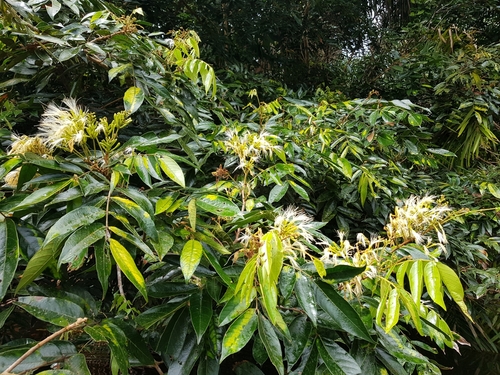
iNaturalist· cc-by
(c) Cheng-Tao Lin, some rights reserved (CC BY), uploaded by Cheng-Tao Lin
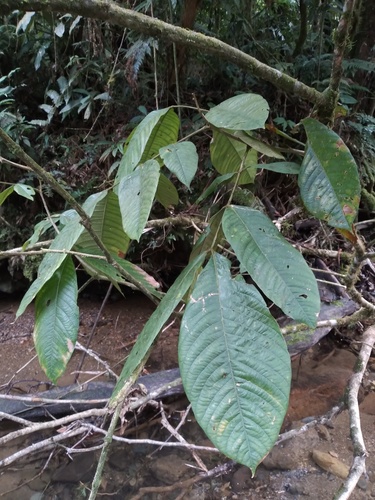
iNaturalist· cc-by
(c) Cheng-Te Hsu, some rights reserved (CC BY)
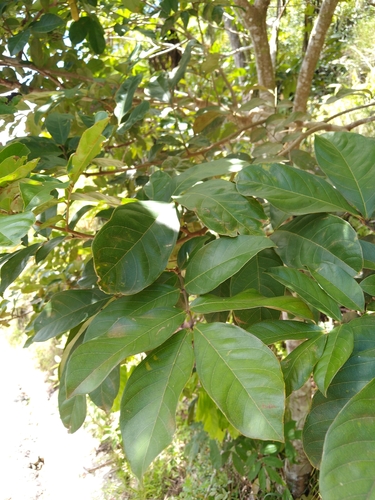
iNaturalist· cc-by
(c) Cheng-Te Hsu, some rights reserved (CC BY)
Description
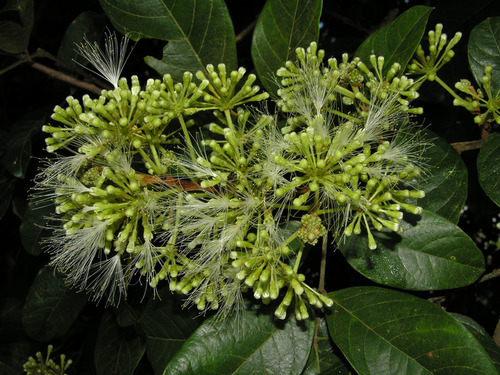
A herb. It grows 20-60 cm high and spreads 50 cm wide. It has a thick taproot. The branches have long hairs. The leaves are 2-5 cm long by 0.5-1 cm wide. The flower clusters are loose and at the ends of branches. The flowers are 1 cm long and yellow. The fruit is a pod 1 cm long.
Edible Uses
The young shoots are eaten as a leafy vegetable.
Traditional Uses
The young shoots are eaten.
This uses section is brief — help expand it
Distribution
It suits tropical areas. It grows from coastal to inland regions. In southern China it grows in sandy areas along sea shores and between 400-2,500 m above sea level.
Where It Grows
Asia, Australia, China, Indian, Japan, Myanmar, Pacific, Papua New Guinea, PNG, SE Asia, Sri Lanka, Taiwan, Tibet,
Cultivation
Plants are grown from seed.
Notes
There are about 550 Crotalaria species. They are mostly tropical.
Synonyms
Also Known As
Pike-san-gyi
References (6)
- Hide, R., et al, 1979, A checklist of some plants in the territory of the Sinasina Nimai (Simbai Province, Papua New Guinea), with notes on their uses. Department Anthropology, University of Aukland
- Lazarides, M. & Hince, B., 1993, Handbook of Economic Plants of Australia, CSIRO. p 68
- Petheram, R.J. and Kok, B., 2003, Plants of the Kimberley Region of Western Australia. UWA Press p 95
- Powell, J.M., Ethnobotany. In Paijmans, K., 1976, New Guinea Vegetation. Australian National University Press. p 109
- Suppl. pl. 322. 1782 ("1781")
Show all 6 references Hide references
- World Checklist of Useful Plant Species 2020. Royal Botanic Gardens, Kew