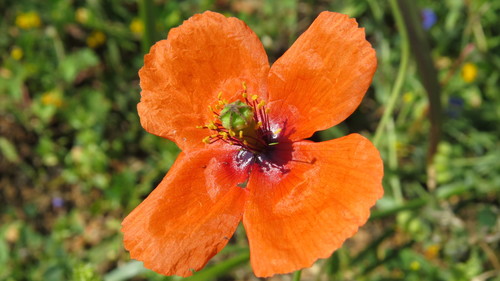
Corydalis pallida
(Thunb.)Pers.
iNaturalist· cc0
no rights reserved, uploaded by 葉子
iNaturalist· cc-by-nc
(c) Mizuki Shimoda, some rights reserved (CC BY-NC)
Summary
A biennial reaching 0.3 m (1 ft) tall with hermaphrodite flowers pollinated by bees. Grows in light sandy to medium loamy, well-drained soils across mildly acidic to mildly alkaline pH levels. Tolerates both semi-shaded woodland and full sun, preferring moist soil conditions.
Description
A biennial reaching 0.3 m (1 ft) tall with hermaphrodite flowers pollinated by bees. Grows in light sandy to medium loamy, well-drained soils across mildly acidic to mildly alkaline pH levels. Tolerates both semi-shaded woodland and full sun, preferring moist soil conditions.
Edible Uses
Young leaves are eaten cooked.
Medicinal Uses
None known
Known Hazards
None known
Distribution
It is a temperate plant.
Where It Grows
Asia, China, Japan, Korea,
Propagation
Seed is best sown as soon as it is ripe, as it rapidly loses viability if allowed to dry out. Surface sow and keep moist; germination usually occurs within 1–3 months at 15°C, though one source reports spring germination. For stored seed, two months of warm stratification followed by a cold period improves germination rates. Seedlings produce only one leaf in their first year and are very prone to damping off. As a biennial, this species generally germinates more readily than perennial relatives.
Other Uses
None known
Notes
There are about 300 Corydalis species.
References (2)
- Plants for a Future database, The Field, Penpol, Lostwithiel, Cornwall, PL22 0NG, UK. http://www.scs.leeds.ac.uk/pfaf/
- www.efloras.org Flora of China. Volume 7