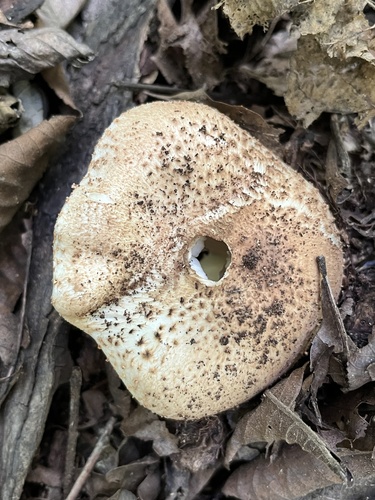
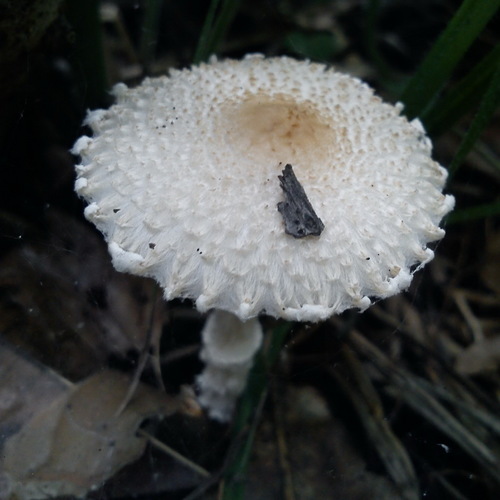
Volvaria speciosa
(Fr. ex Fr.) Singer
wikimedia· cc0
Wikimedia Commons - Bresadola, Giacomo
wikimedia· cc-by
Wikimedia Commons - Jean-Pol GRANDMONT
Description
A tropical mushroom in the Agaricaceae family.
This description is brief — help expand it
Edible Uses
Volvopluteus gloiocephalus is edible, although considered watery and poor in quality. It was once sold in markets in Perth, Australia. Mature fruit bodies, collected in sufficient quantity, can be used to prepare soup, or added to dishes where wild mushrooms are used, such as stews and casseroles. The mushrooms are best used fresh as they do not preserve well. Young specimens of V. gloiocephalus have white gills so it is possible to mistake them for an Amanita and vice versa. In the United States, there have been several cases of Asian immigrants collecting and eating death caps (Amanita phalloides), under the mistaken assumption that they were Volvariella. A Greek study determined the nutritional composition of fruit bodies: protein 1.49 g/100 g fresh weight (fw), 18.36 g/100 g dry weight (dw); fat 0.54 g/100 g fw, 6.65 g/100g dw; carbohydrates 5.33 g/100g fw, 65.64 g/100 g dw.
Distribution
It is a tropical plant.
Where It Grows
Africa, East Africa, Uganda,
Nutrition
| Part | Moisture | kJ | kcal | Protein | Vit A | Vit C | Iron | Zinc |
|---|---|---|---|---|---|---|---|---|
| Mushroom | 14 | — | 249 | 20 | — | — | — | — |
References (1)
- Nakalembe, I., et al, 2015, Comparative nutrient composition of selected wild edible mushrooms from two agro‐ecological zones, Uganda. SpringerPlus (2015)4:433