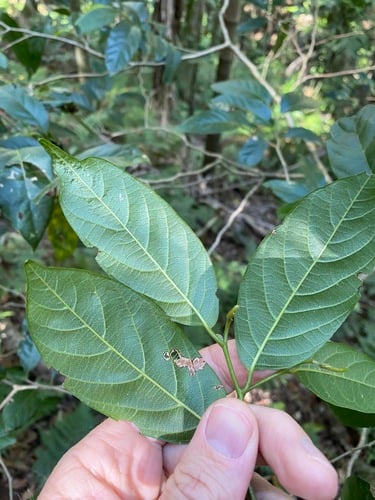
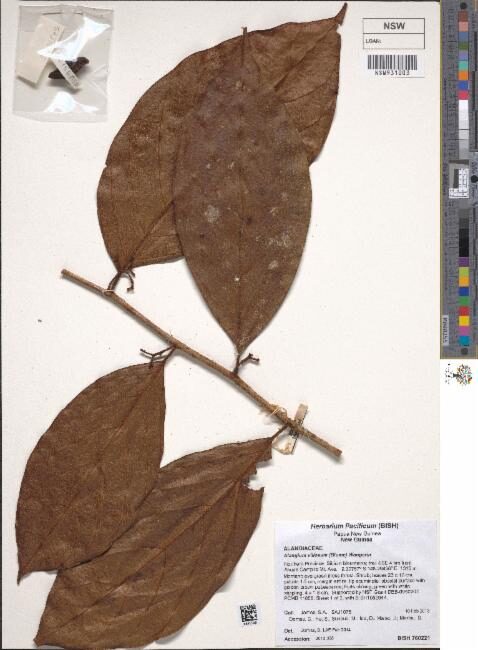
Cornus officinalis
Sieb. & Zucc.
Japanese Cornelian cherry
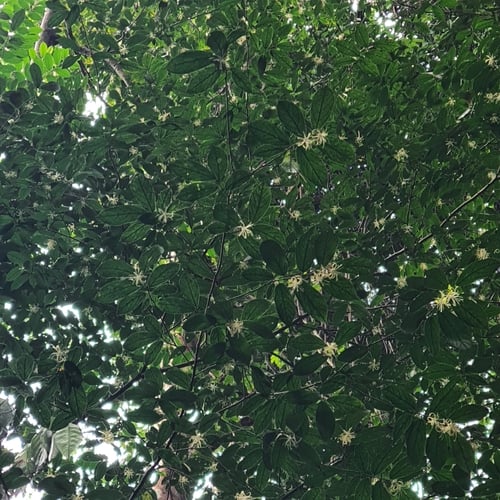
iNaturalist· cc-by-nc-sa
(c) Bob Gutowski, some rights reserved (CC BY-NC-SA)
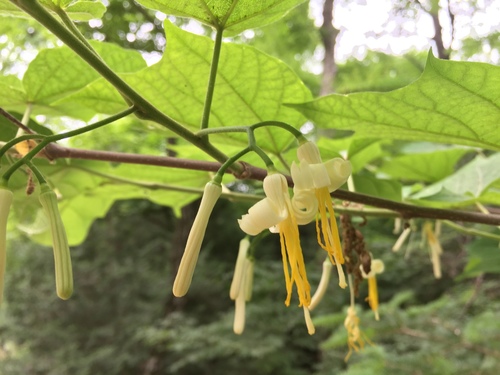
iNaturalist· cc-by-nc
(c) Thanakrit (Austin) Wongsatit, some rights reserved (CC BY-NC), uploaded by Thanakrit (Austin) Wongsatit
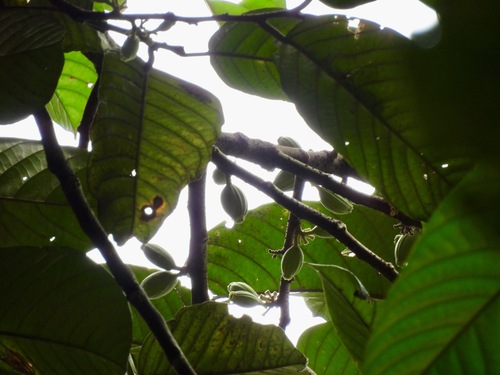
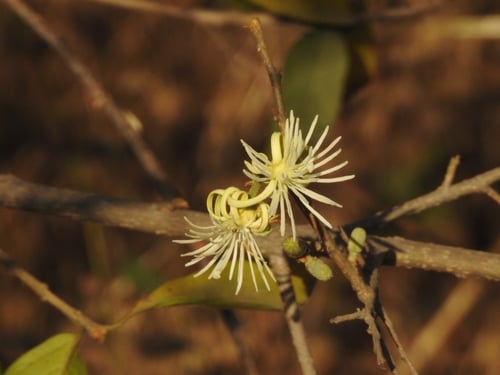
iNaturalist· cc-by-nc
(c) vulpesmacroura, some rights reserved (CC BY-NC)
Summary
Source: WikipediaCornus officinalis, the Japanese cornel or Japanese cornelian cherry, is a species of flowering plant in the dogwood family Cornaceae. Despite its name, it is native to China and Korea as well as Japan. It is not to be confused with C. mas, which is also known as the Cornelian cherry. It is not closely related to the true cherries of the genus Prunus.
Description
A deciduous shrub or tree. It grows 4-10 m high and spreads 4-6 m wide. The bark is flaky brown. The leaves are narrowly oval and 12 cm long. The flowers are yellow. The fruit are bright red when fully ripe. They are 1-1.5 cm across.
Edible Uses
The fruit can be eaten raw or cooked. Fully ripe fruit is quite pleasant though slightly astringent, and measures about 1.5cm long. It contains approximately 8.6% sugars, 2.9% malic acid, and 0.74% ash.
Traditional Uses
The fruit are eaten fresh when fully ripe. Fruit can be dried for later use. They are also used for making a liqueur like drink.
This uses section is brief — help expand it
Medicinal Uses
Shan Zhu Yu has been used for at least 2,000 years in Chinese herbal medicine as an herb that stabilizes and binds. It is used principally to reduce heavy menstrual bleeding and unusually active secretions including copious sweating, excessive urine, spermatorrhoea, and premature ejaculation. Because herbs that suppress bodily fluids can prolong or worsen symptoms when used alone, it is normally combined with tonic or detoxifying herbs such as Rehmannia glutinosa, and is an ingredient of the Pill of Eight Ingredients, used in China to warm and invigorate the yang of the loins. The fruit is antibacterial, antifungal, hypotensive, antitumor, astringent, diuretic, hepatic, and tonic. A decoction of the fruit without the seed is used to treat arthritis, fever, and a wide range of other ailments including senile lumbago, diabetes, cystitis, and tinnitus. The fruit has an antibacterial action, inhibiting the growth of Bacillus dysenteriae and Staphylococcus. Fruit is harvested fully ripe and dried for later use. The stem bark is astringent, antimalarial, and tonic. The plant as a whole is antibacterial, diuretic, hypotensive, and a urinary antiseptic.
Distribution
It is a temperate plant. It grows on mountains, slopes, forest margins, forests between 400-1500 (-2100) m in China. It can tolerate frost. It can grow in alkaline soils as well as clay soils. In can grow in sun or light shade. It suits hardiness zones 6-8.
Where It Grows
Asia, Australia, China*, Japan*, Korea,
Cultivation
An easily grown plant, it succeeds in any soil of good or moderate fertility, ranging from acid to shallow chalk. Grows well in heavy clay soils. Succeeds in full sun or light shade. A very ornamental plant, it is very closely related to C. mas but is more tree-like in its habit. Plants in this genus are notably resistant to honey fungus.
Propagation
Seed is best sown as soon as it is ripe, either in a cold frame or an outdoor seedbed if sufficient seed is available. The seed must be separated from the fruit flesh, which contains germination inhibitors. Stored seed should be cold stratified for 3–4 months and sown as early in the year as possible. Scarification may also help, as may a period of warm stratification before the cold stratification. Germination, especially of stored seed, can be very slow, taking 18 months or more. Prick out cold-frame seedlings into individual pots once large enough to handle, grow on through their first winter under glass, and plant out in spring after the last expected frosts. Cuttings of half-ripe side shoots can be taken in July/August in a frame. Cuttings of mature wood of the current year's growth, taken with a heel if possible, can be taken in autumn in a cold frame, with a high success rate. Layering of new growth in June/July takes around 9 months to root.
Other Uses
None known.
Notes
The fruit are used in medicine. There are about 45 Cornus species.
Synonyms
Also Known As
Cornel cherry, Japanese cornel, Sanshuyu, Shan zhu yu
References (18)
- Arora, R. K., 2014, Diversity in Underutilized Plant Species - An Asia-Pacific Perspective. Bioversity International. p 75 (As Macrocarpium officinale)
- Bodkin, F., 1991, Encyclopedia Botanica. Cornstalk publishing, p 283
- Brickell, C. (Ed.), 1999, The Royal Horticultural Society A-Z Encyclopedia of Garden Plants. Convent Garden Books. p 299
- Brown, D., 2002, The Royal Horticultural Society encyclopedia of Herbs and their uses. DK Books. p 181
- Cundall, P., (ed.), 2004, Gardening Australia: flora: the gardener's bible. ABC Books. p 416
Show all 18 references Hide references
- Etherington, K., & Imwold, D., (Eds), 2001, Botanica's Trees & Shrubs. The illustrated A-Z of over 8500 trees and shrubs. Random House, Australia. p 229
- Facciola, S., 1998, Cornucopia 2: a Source Book of Edible Plants. Kampong Publications, p 81
- Fl. jap. 1:100, t. 50. 1839 ("1835")
- Hanelt, P. et al, (Eds.), 2001, Mansfield's encyclopedia of agricultural and horticultural crops. p 1681
- Hu, Shiu-ying, 2005, Food Plants of China. The Chinese University Press. p 608
- John, L., & Stevenson, V., 1979, The Complete Book of Fruit. Angus & Robertson p 118
- Lyle, S., 2006, Discovering fruit and nuts. Land Links. p 156
- Pemberton, R. W. & Lee, N. S., 1996, Wild Food Plants in South Korea: Market Presence, New Crops, and Exports to the United States. Economic Botany, Vol. 50, No. 1, pp. 57-70
- Plants for a Future database, The Field, Penpol, Lostwithiel, Cornwall, PL22 0NG, UK. http://www.scs.leeds.ac.uk/pfaf/
- READ,
- Ryan, S., 2008, Dicksonia. Rare Plants Manual. Hyland House. p 18
- Seeram, N. P., et al, 2002, Characterization, Quantification and Bioactivities of Anthocynans in Cornus Species. Journal of Agricultural and Food Chemistry. 50:2519-2523
- Xiang Qiuyun; David E. Boufford, CORNACEAE [Draft], Flora of China