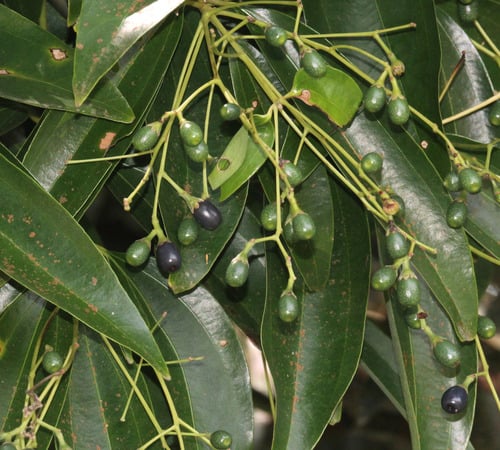
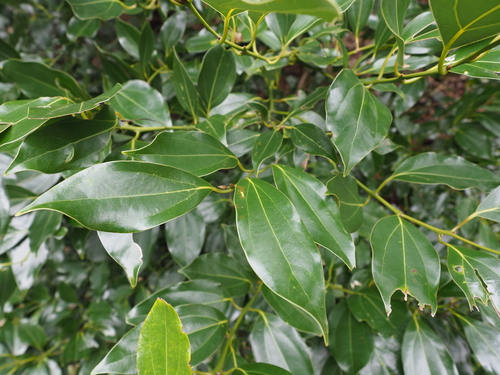
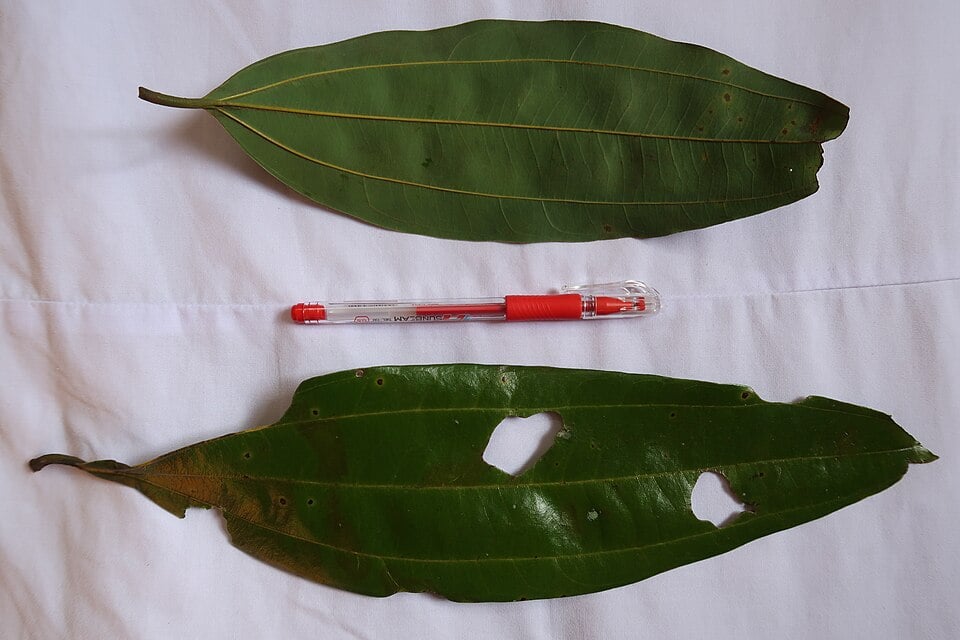
Ocotea floribunda
(Sw.) Mez
Flowery ocotea
iNaturalist· cc-by-nc
(c) Apipa, some rights reserved (CC BY-NC), uploaded by Apipa
iNaturalist· cc-by-nc
(c) Apipa, some rights reserved (CC BY-NC)
Description
A tropical tree in the laurel family (Lauraceae) with edible fruit.
This description is brief — help expand it
Edible Uses
The fruit is eaten.
Distribution
It is a tropical plant.
Where It Grows
Amazon, Andes, Bolivia, Brazil, Central America, Colombia, Costa Rica, Cuba, Dominican republic, Ecuador, Guadeloupe, Guianas, Guyana, Haiti, Panama, Peru, Puerto Rico, South America, St Lucia, Trinidad and Tobago, Venezuela, West Indies,
Cultivation
A tree of low to medium elevations in the moist tropics, found in areas with no dry season as well as areas with a distinct dry season. A dioecious species, both male and female forms need to be grown if fruit and seed are required.
Other Uses
The heartwood is pale yellow brown to creamy yellow or pinkish yellow when seasoned; it is not easily differentiated from the greyish sapwood. The texture is medium; the grain straight to interwoven or roey and often ribbon-grained at an oblique angle; lustre is satiny; when seasoned, it is without any distinctive taste but is fragrant like Central American cedar (Cedrella spp.). The wood is soft but firm, relatively durable in the soil. It works easily with both hand and power tools and finishes smoothly in all operations; it also glues and takes paint well. The wood is used extensively in its native range for interior work, ceilings, partitions, panelling, and other applications in building construction and in general carpentry. It is also used in low cost furniture and cabinetwork, turnery, inlay work, fruit boxes, ladders, coffins, walking sticks, and for planking in small boatbuilding. The wood is well suited for uses now occupied by the imported pines and Douglas-fir, principally where durability is not, of primary importance.
Synonyms
Also Known As
Aguacatilla, Aguacatillo blanco, Apici, Boniato laurel, Cedro colorado, Cigua aguacatillo, Cigia prieta, Fierrilo, Heburu, Hierrillo, Jigua, Kereti, Kereti silverballi, Lorie piant, Lebisa, Nasinaba, Pisi, Quina, Tingui apici, Tingi-apisi, Weti-apisi
References (3)
- Grandtner, M. M. & Chevrette, J., 2013, Dictionary of Trees, Volume 2: South America: Nomenclature, Taxonomy and Ecology. Academic Press p 454
- Lopez-Diago, D. & Garcia, N., 2021, Wild edible fruits of Colombia. Biota ColomBiana 22 (2) p 40
- Roa, J. A. G. & Boada, D. S. G., 2018, Fundación para el Fortalecimiento de la Fruticultura y Plantas Alimenticias no Convencionales en Colombia.