Cordia subcordata
Lamarck & Poiret
Sea trumpet, White bush apple
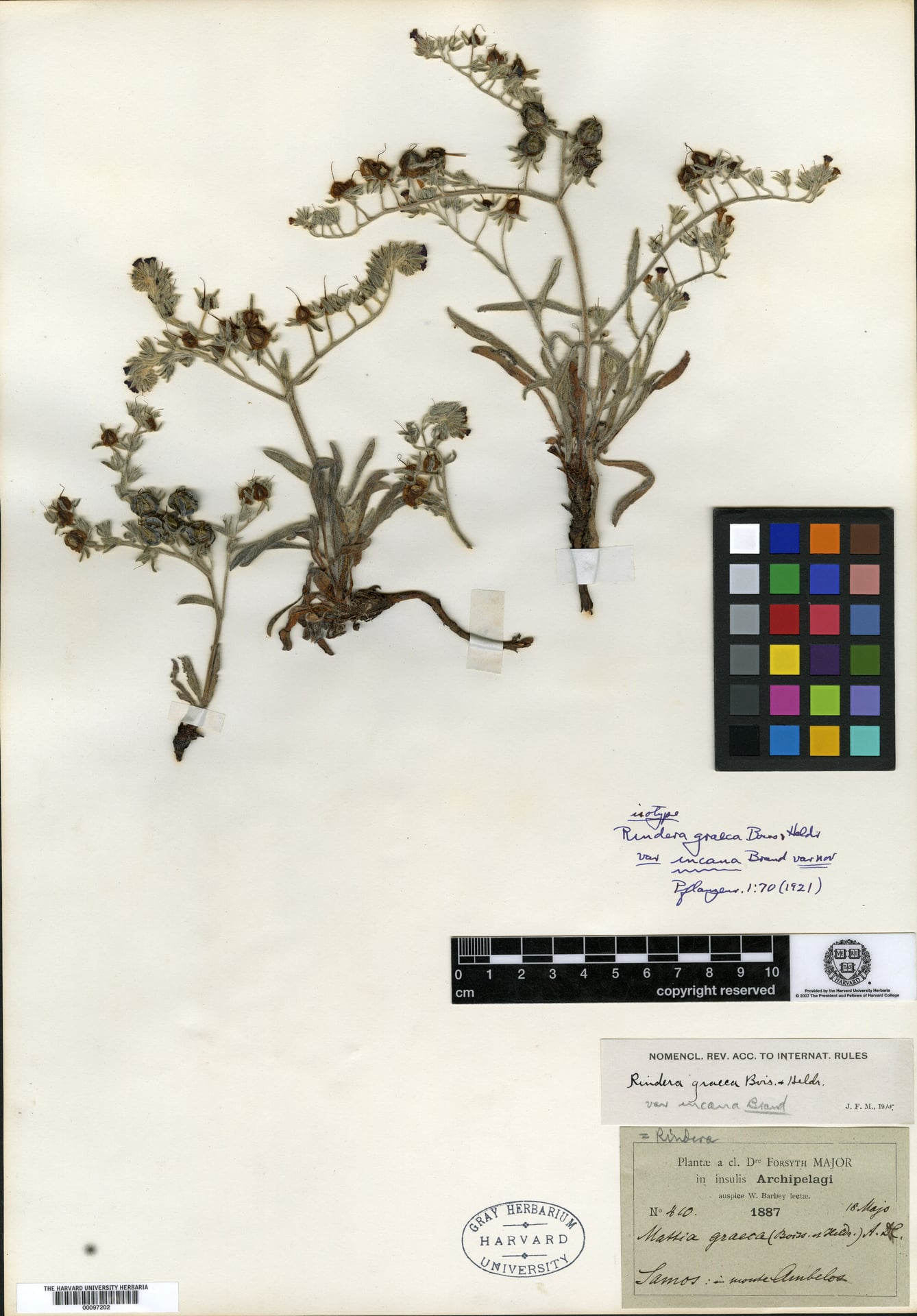
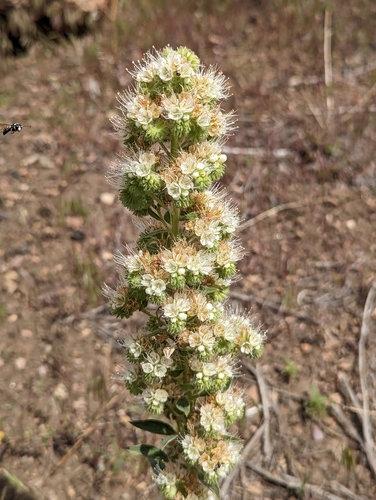
iNaturalist· cc-by-nc
(c) CORDENOS Thierry, some rights reserved (CC BY-NC), uploaded by CORDENOS Thierry
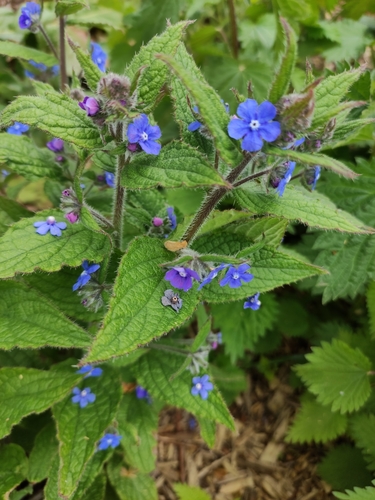
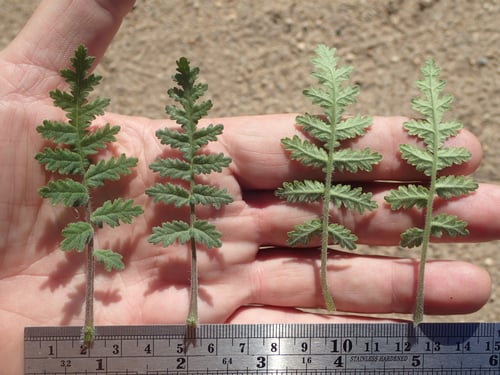
iNaturalist· cc-by-nc
(c) Leon Perrie, some rights reserved (CC BY-NC), uploaded by Leon Perrie
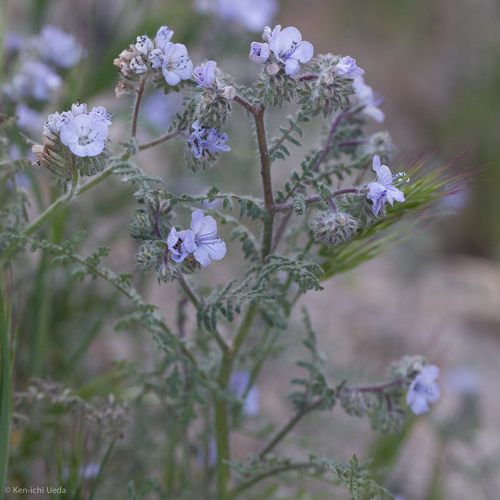
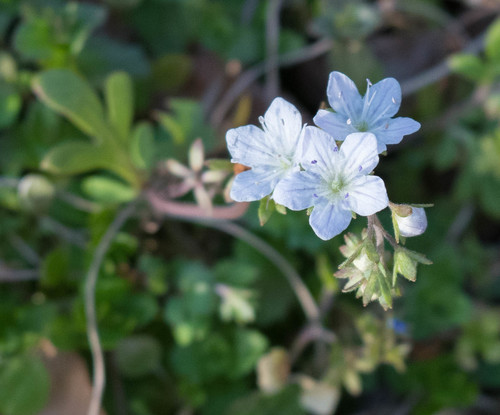
iNaturalist· cc-by-nc-sa
(c) Kuan-Chieh (Chuck) Hung, some rights reserved (CC BY-NC-SA), uploaded by Kuan-Chieh (Chuck) Hung
Summary
Source: WikipediaCordia subcordata is a species of flowering tree in the family Cordiaceae. It can be found growing in eastern Africa, South Asia, Southeast Asia, northern Australia and the Pacific Islands. The plant is known by a variety of names, including kou, beach cordia, sea trumpet, and kerosene wood.
Description
A spreading shrub or tree, 2-15 m high. It spreads to 3-10 m across. The stem is erect and the bark is grey and slightly rough. It has cracks along its length. The leaves are broad and oval. They are 8-20 cm long and 5-15 cm wide. Sometimes they have 2 lobes near the base, making the leaf heart-shaped. On the lower surface of the leaf, there are fine hairs near the veins. The leaves are glossy green on top and paler underneath. The leaf stalks are long (3-5 cm). The flowers are orange. They form a tube 3.5-5 cm long and with 5-7 broad lobes which spread to 3-4 cm across. The flower heads are made up of 6-20 flowers, and they occur at the ends of branches. The fruit is 2-3 cm long, by 1.5-2.5 cm across. It is green or yellow. It hangs down and turns brown when ripe. There is a single seed inside, and it is 2-3 cm long. The fruit has a beak at the tip and an apple like texture, but fairly hard.
Edible Uses
The seeds are edible and have been eaten during famine. The wood of the tree has a specific gravity of 0.45, is soft, durable, easily worked, and resistant to termites. In ancient Hawaiʻi kou wood was used to make ʻumeke (bowls), utensils, and ʻumeke lāʻau (large calabashes) because it did not impart a foul taste to food. ʻUmeke lāʻau were 8–16 litres (2–4 gal) and used to store and ferment poi. The wood burns readily, and this led to the nickname of "kerosene tree" in Papua New Guinea. The flowers were used to make lei, while a dye for kapa cloth and aho (fishing lines) was derived from the leaves. Fijians obtain fibre to make baskets and garlands from its inner bark by soaking it in seawater. In the western Solomon Islands, in Vanuatu, on Waya Island, and in Tonga, it is used for carving. On New Ireland, its wood is always used for the ceremonial entrances to men's houses.
Traditional Uses
The fruit is eaten raw. It is also cooked and used as a vegetable. The seeds are eaten. The flowers are pickled or eaten as a vegetable.
This uses section is brief — help expand it
Medicinal Uses
The plant has medicinal uses. No further information.
Distribution
A tropical plant. It grows near beaches, above high tide level, in vine thickets. It is usually from sea level up to 30 m altitude. It can grow up to 150 m altitude. It needs well drained, moist soils, in an open sunny position. It needs full sun. It can grow on sandy and clay soils as well as limestone rocky places. It does best with a pH of 6.1-7.4. It can grow on salty soils. It is drought and frost tender. It suits hardiness zones 10-12.
Where It Grows
Africa, Andamans, American Samoa, Asia, Australia, British Indian Ocean Terr., BIOT, Caroline Islands, China, Chuuk, Comoros, Cook Islands, East Africa, East Timor, Fiji, FSM, Guam, Hawaii, India, Indochina, Indonesia, Kenya, Kiribati, Madagascar, Malaysia, Maldives, Malesia*, Mariana Islands, Marquesas, Marshall Islands, Micronesia, Mozambique, Myanmar, Nauru, New Caledonia, Niue, Pacific, Palau, Papua New Guinea, PNG, Philippines, Polynesia, Rotuma, Samoa, SE Asia, Solomon Islands, Southern Africa, Thailand, Timor-Leste, Tokelau, Tonga, Tuvalu, USA, Vanuatu, Vietnam, Wallis & Futuna, Yap,
Cultivation
Plants are grown from seed. The seed needs to be sown fresh. Whole fruit can be sown or the ends can be clipped to quicken the germination. Hardened or woody fruit can be soaked for 24 hours before sowing. Seeds normally germinate in 3-4 weeks. Seedlings can be planted into the field after 6-8 months.
Propagation
Seed - seeds are reported to take 19 - 62 days to germinate, with about 25% of the seeds being viable. However, data from Indonesia show that viability may be as high as 90-100%, but seed collected from the ground showed 40-50% germination. The germination process can be sped up if the seed is first scarified by lightly abrading the seedcoat to allow easier ingress of water. Storage under ambient conditions reduces the viability from 60% initially to 40% after 7 months. It is recommended to sow the seeds 1.5-2 cm deep, pointing downwards. Seedlings should be watered sparingly.
Other Uses
A brown dye is obtained from the bark. A warm brown to red dye is obtained from older leaves. It is used to dye kapa. A fibre obtained from the bark is used for making clothes, hats, baskets etc. The wood is reported to burn fast and can easily be ignited by rubbing two pieces of wood together. The heartwood is pale brown to dark brown, often with a purplish tinge and dark brown to nearly black streaks; it is distinctly demarcated from the pale yellowish brown sapwood. The grain is usually interlocked; texture moderately fine; the wood rather glossy. The wood is moderately lightweight, though wood from Polynesia is said to be heavier; soft but durable and very resistant to termites. It is easy to saw and can be worked well with both hand and machine tools; it takes a good finish with nice lustre when a filler is used. It is used for light construction, beams and posts, wharves, cabinets, furniture, musical instruments, scabbards, tools, carvings, and fancy articles; also for veneer. Traditionally used to make plates, cups, bowls etc because the wood does not impart any flavour to the food. The wood is used for fuel in the Solomon Islands. The tre is planted as a windbreak and living fence, and also for coastal protection
Production
Young plants can grow rapidly. In Australia the tree flowers from February to March and fruits March to May.
Other Information
The seeds are eaten especially by children.
Notes
The tree had important cultural importance by people of the Pacific. There are about 300 Cordia species.
Nutrition
| Part | Moisture | kJ | kcal | Protein | Vit A | Vit C | Iron | Zinc |
|---|---|---|---|---|---|---|---|---|
| Leaves | 70 | 292 | 70 | 3.7 | 459 | 10 | 1.5 | 5 |
Synonyms
Also Known As
Anau, Anda, Antafabory, Beach cordia, Cheng hua po bu mu, Galu, Ikoak, Ikoik, Ironwood, Island walnut, Jave, Kaani, Kalau, Kanau, Kanava, Kanaw, Kauni, Kaunibuka, Koa, Kono, Kou, Malmalsebuek, Mamalsebuet, Mankanai, Marer, Motou, Nawanawa, Niyoron, Pohon kalimasada, Puataukanave, Tauanave, Te kanawa, Thanat, Tou, Vaua asi
References (60)
- REFERENCES Cordia subcordata
- Altschul, S.V.R., 1973, Drugs and Foods from Little-known Plants. Notes in Harvard University Herbaria. Harvard Univ. Press. Massachusetts. no. 3551
- Barrau, J., 1976, Subsistence Agriculture in Melanesia. Bernice P. Bishop Museu, Bulletin 219 Honolulu Hawaii. Kraus reprint. p 53
- Barwick, M., 2004, Tropical and Subtropical Trees. A Worldwide Encyclopedic Guide. Thames and Hudson p 133
- Bindon, P., 1996, Useful Bush Plants. Western Australian Museum. p 90
Show all 60 references Hide references
- Blench, R., 2004, Fruits and Arboriculture in the Indo-Pacific Region. Indo-Pacific Prehistory Association Bulletin 24. (Taipei Papers Volume 2) p 37
- Bodkin, F., 1991, Encyclopedia Botanica. Cornstalk publishing, p 280
- Borrell, O.W., 1989, An Annotated Checklist of the Flora of Kairiru Island, New Guinea. Marcellin College, Victoria Australia. p 59, 179
- Brock, J., 1993, Native Plants of Northern Australia, Reed. p 126
- Cabalion, P. and Morat, P., 1983, Introduction le vegetation, la flore et aux noms vernaculaires de l'ile de Pentcoste (Vanuatu), In: Journal d'agriculture traditionnelle et de botanique appliquee JATBA Vol. 30, 3-4
- Cherikoff V. & Isaacs, J., The Bush Food Handbook. How to gather, grow, process and cook Australian Wild Foods. Ti Tree Press, Australia p 198
- Clarke, W.C. & Thaman, R.R., 1993, Agroforestry in the Pacific Islands: Systems for sustainability. United Nations University Press. New York. p 234
- Cooper W & Cooper W T, 1994, Fruits of the Rain Forest. RD Press p 78
- Cooper, W. and Cooper, W., 2004, Fruits of the Australian Tropical Rainforest. Nokomis Editions, Victoria, Australia. p 93
- Cowie, I, 2006, A Survey of Flora and vegetation of the proposed Jaco-Tutuala-Lore National Park. Timor-Lests (East Timor) www.territorystories.nt/gov.au p 45
- Cribb, A.B. & J.W., 1976, Wild Food in Australia, Fontana. p 85
- Elevitch, C.R.(ed.), 2006, Traditional Trees of the Pacific Islands: Their Culture, Environment and Use. Permanent Agriculture Resources, Holualoa, Hawaii. p 301
- Elliot, W.R., & Jones, D.L., 1984, Encyclopedia of Australian Plants suitable for cultivation. Vol 3. Lothian. p 87
- Etherington, K., & Imwold, D., (Eds), 2001, Botanica's Trees & Shrubs. The illustrated A-Z of over 8500 trees and shrubs. Random House, Australia. p 225
- Flora of Solomon Islands
- Franklin, J., Keppel, G., & Whistler, W., 2008, The vegetation and flora of Lakeba, Nayau and Aiwa Islands, Central Lau Group, Fiji. Micronesica 40(1/2): 169–225, 2008
- French, B.R., 2010, Food Plants of Solomon Islands. A Compendium. Food Plants International Inc. p 314
- Gillaumin, R., 1954, Les Plantes utiles des Nouvelles-Hebrides (fin et complement) In: Journal d'agriculture tropicale et de botanique appliquee Vol. 1, No. 10-12 pp 453-460
- GTZ 1996, A Guide to some Indigenous Fijian Trees. GTZ Suva. p 143
- Hibbert, M., 2002, The Aussie Plant Finder 2002, Florilegium. p 73
- http://www.ntbg.org/plants/plant details.php
- Jones D, L, 1986, Ornamental Rainforest Plants in Australia, Reed Books, p 208
- Lazarides, M. & Hince, B., 1993, Handbook of Economic Plants of Australia, CSIRO. p 65
- Lebot, V. & Sam, C., Green desert or ‘all you can eat’? How diverse and edible was the flora of Vanuatu before human introductions?. Terra australis 52 p 410
- Levitt, D., 1981, Plants and people. Aboriginal uses of plants on Groote Eylandt, Australian Institute of Aboriginal Studies, Canberra. p 84
- Lyle, S., 2006, Discovering fruit and nuts. Land Links. p 152
- Massal, E. and Barrau, J., 1973, Food Plants of the South Sea Islands. SPC Technical Paper No 94. Nounea, New Caledonia. p 32
- Menninger, E.A., 1977, Edible Nuts of the World. Horticultural Books. Florida p 116
- Paczkowska, G. & Chapman, A.R., 2000, The Western Australian Flora. A Descriptive Catalogue. Western Australian Herbarium. p 181
- Parham, H. B. R, 1940, Supplement to the Journal of the Polynesian Society No. 16. Fiji Plants: Their Name and Uses.
- Parham, B. E. V., 1971, The Vegetation of the Tokelau Islands with special reference to the Plants of Nukunonu Atoll. New Zealand Journal of Botany. 9:4, 576-609
- Parham, B. E. V., 1972, Plants of Samoa. New Zealand Department of Scientific and Industrial Research. Information Series. No. 85 p 122
- Peekel, P.G., 1984, (Translation E.E.Henty), Flora of the Bismarck Archipelago for Naturalists, Division of Botany, Lae, PNG. p 469, 470
- Roy, S. D., et al, 2009, Mangroves of Andaman and Nicobar Islands. ICAR p 53
- Selvam, V., 2007, Trees and shrubs of the Maldives. RAP Publication No. 2007/12 p 76
- Smith, A.C., 1991, Flora Vitiensis Nova, Lawaii, Kuai, Hawaii, Volume 5 p 152
- Staples, G.W. and Herbst, D.R., 2005, A tropical Garden Flora. Bishop Museum Press, Honolulu, Hawaii. p 198
- Sujanapal, P., & Sankaran, K. V., 2016, Common Plants of Maldives. FAO & Kerala FRI, p 97
- Sukarya, D. G., (Ed.) 2013, 3,500 Plant Species of the Botanic Gardens of Indonesia. LIPI p 209
- Tabl. encycl. 1(vol. 2):421. 1792
- Thaman, R. R., 1987, Plants of Kiribati: A listing and analysis of vernacular names. Atoll Research Bulletin No. 296
- Thaman, R. R, 2016, The flora of Tuvalu. Atoll Research Bulletin No. 611. Smithsonian Institute p 72
- The Pacific Islands Food Composition Tables http://www.fao.org/docrep No C102
- Topp, J. M. W., 1988, An Annotated Check List of the Flora of Diego Garcia, British Ocean Territory. Atoll Research Bulletin No. 313
- Townsend, K., 1994, Across the Top. Gardening with Australian Plants in the tropics. Society for Growing Australian Plants, Townsville Branch Inc. p 139
- Walter, A & Sam, C., 1995, Indigenous Nut Trees in Vanuatu: Ethnobotany and Variability. In South Pacific Indigenous Nuts. ACIAR Proceedings No 69. Canberra. p 57
- Walter, A. & Sam C., 2002, Fruits of Oceania. ACIAR Monograph No. 85. Canberra. p 139
- Wheeler, J.R.(ed.), 1992, Flora of the Kimberley Region. CALM, Western Australian Herbarium, p 768
- Whistler, A. S., Edible vascular plants of the Line Islands. Pacific Health Dialog. Vol. 3 No. 2
- Whistler, W. A., 1988, Ethnobotany of Tokelau: The Plants, Their Tokelau Names, and Their Uses. Economic Botany 42(2): 155-176
- http://cookislands.bishopmuseum.org
- World Checklist of Useful Plant Species 2020. Royal Botanic Gardens, Kew
- Yuncker, T.G., 1959, Plants of Tonga, Bernice P. Bishop Museum, Hawaii, Bulletin 220. p 229
- Yunupinu Banjgul, Laklak Yunupinu-Marika, et al. 1995, Rirratjinu Ethnobotany: Aboriginal Plant Use from Yirrkala, Arnhem Land, Australia. Northern Territory Botanical Bulletin No 21. Parks and Wildlife Commission of the Northern Territory. p 30.
- Zhu Ge-ling; Harald Riedl, Rudolf Kamelin, BORAGINACEAE, Flora of China.