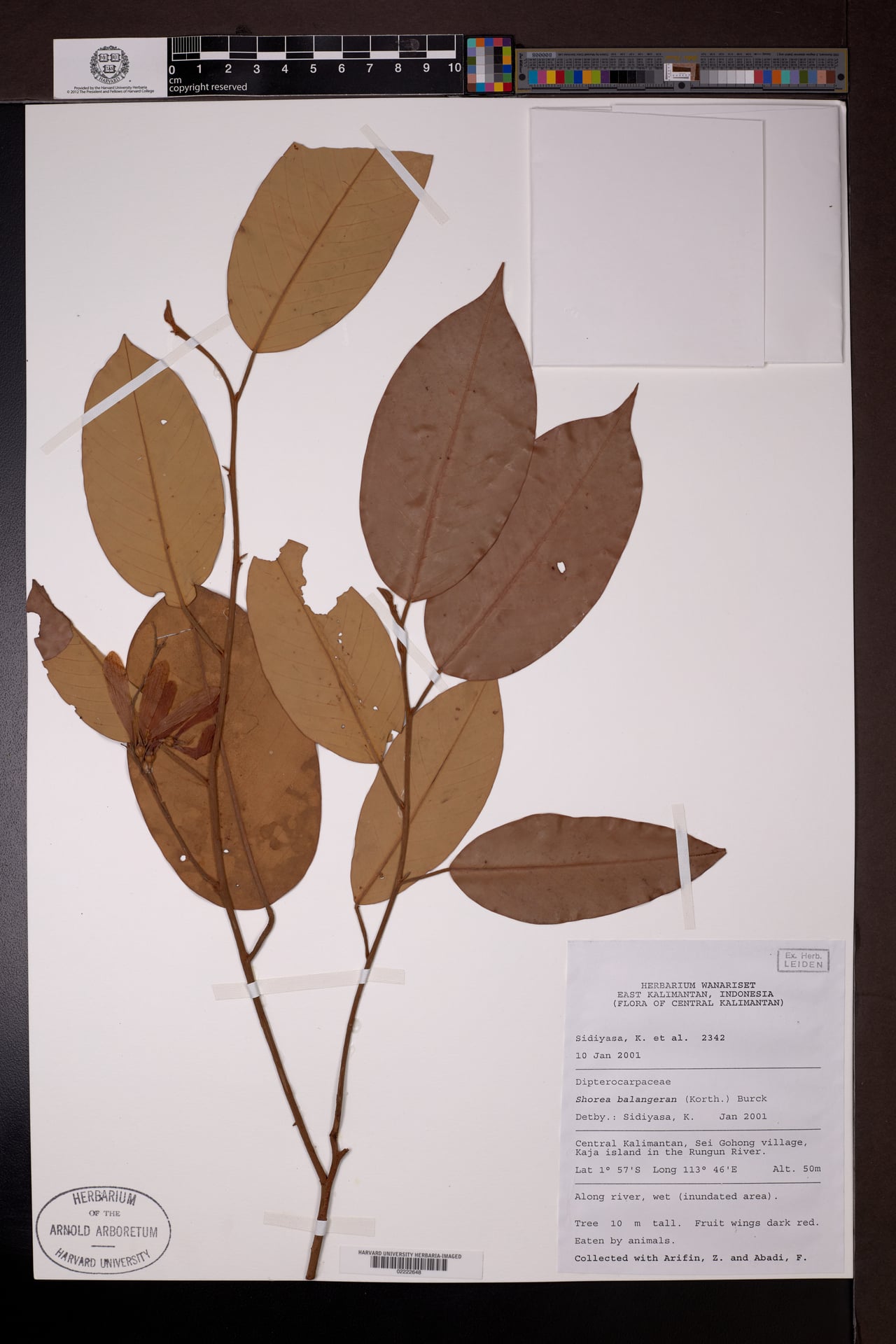
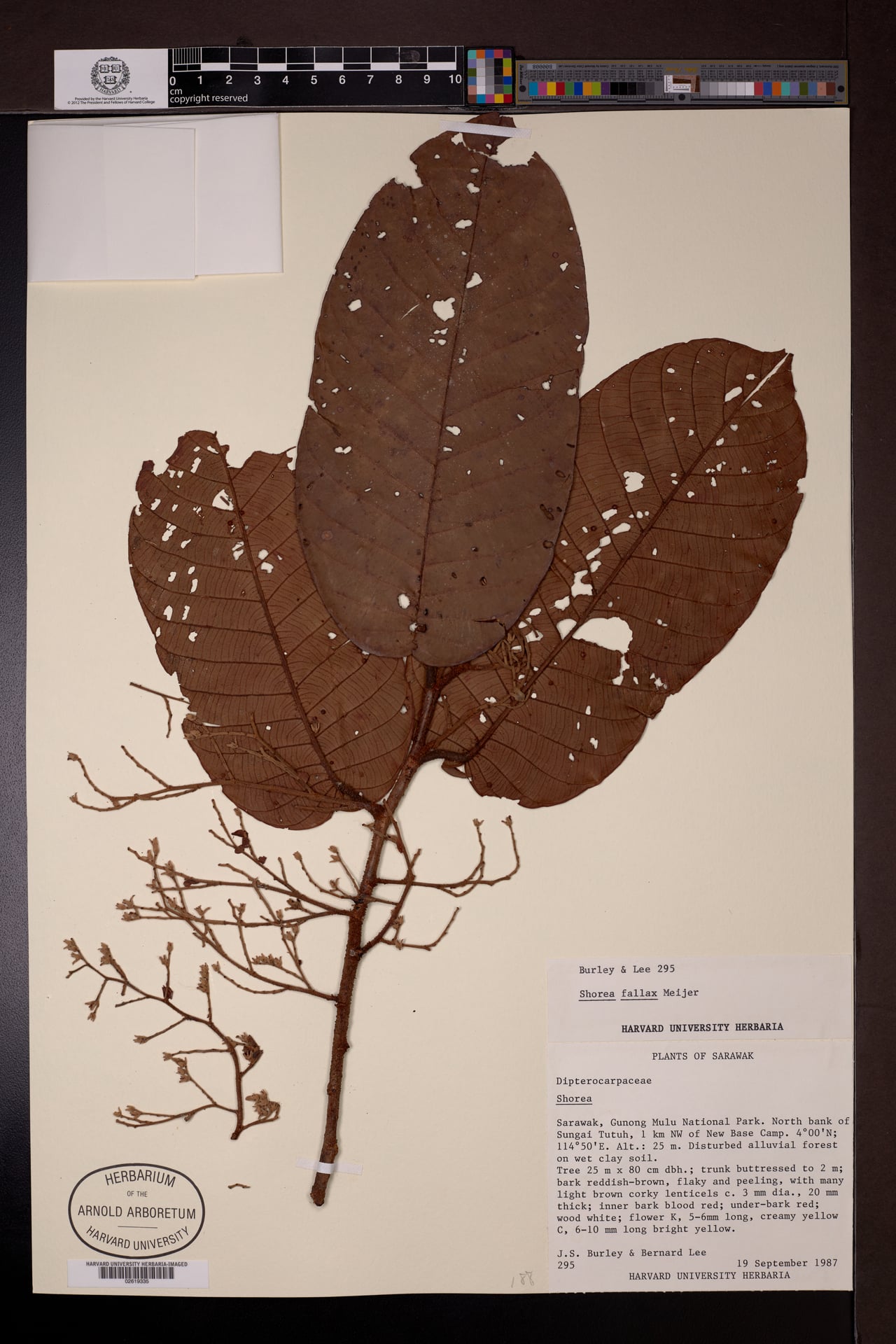
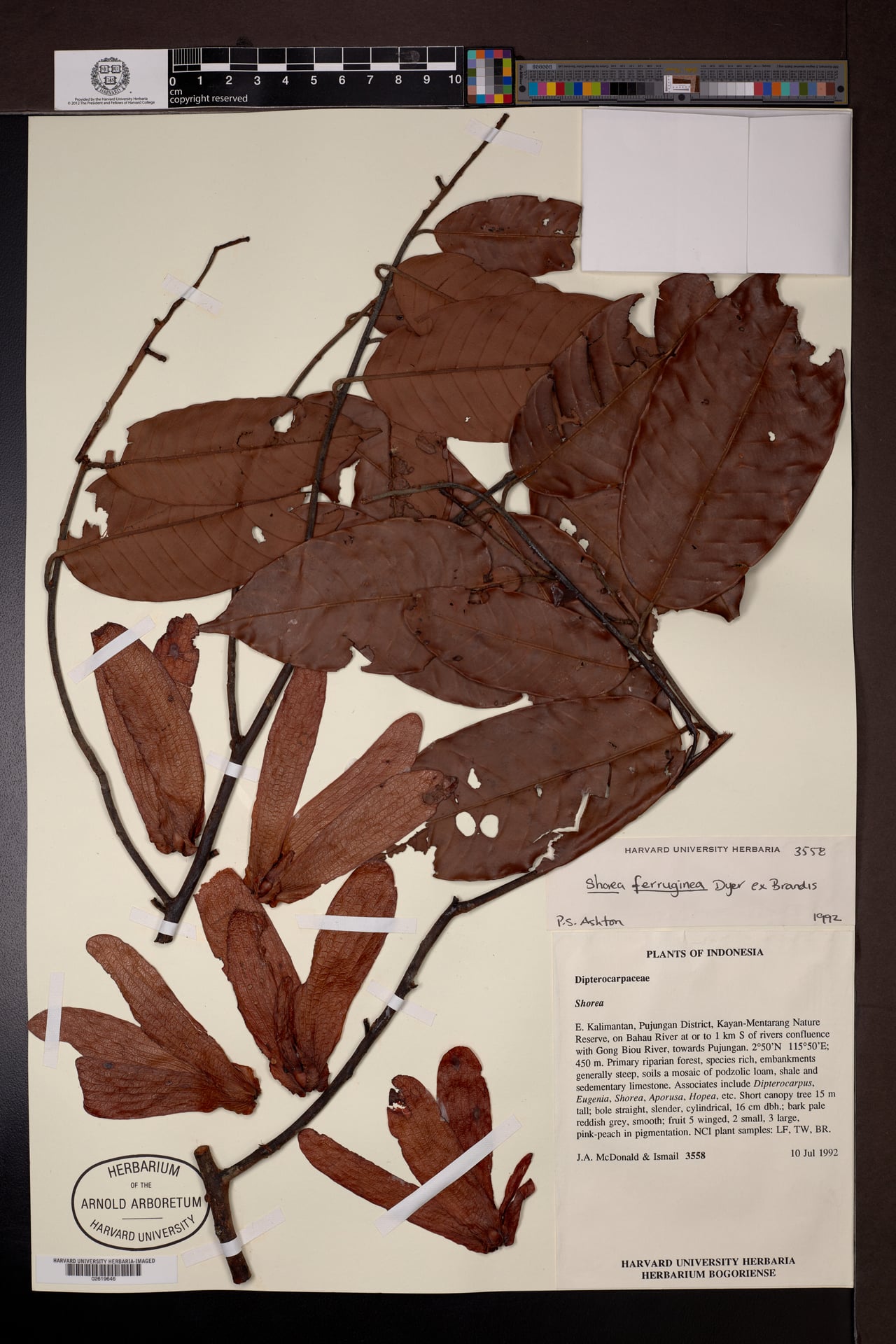
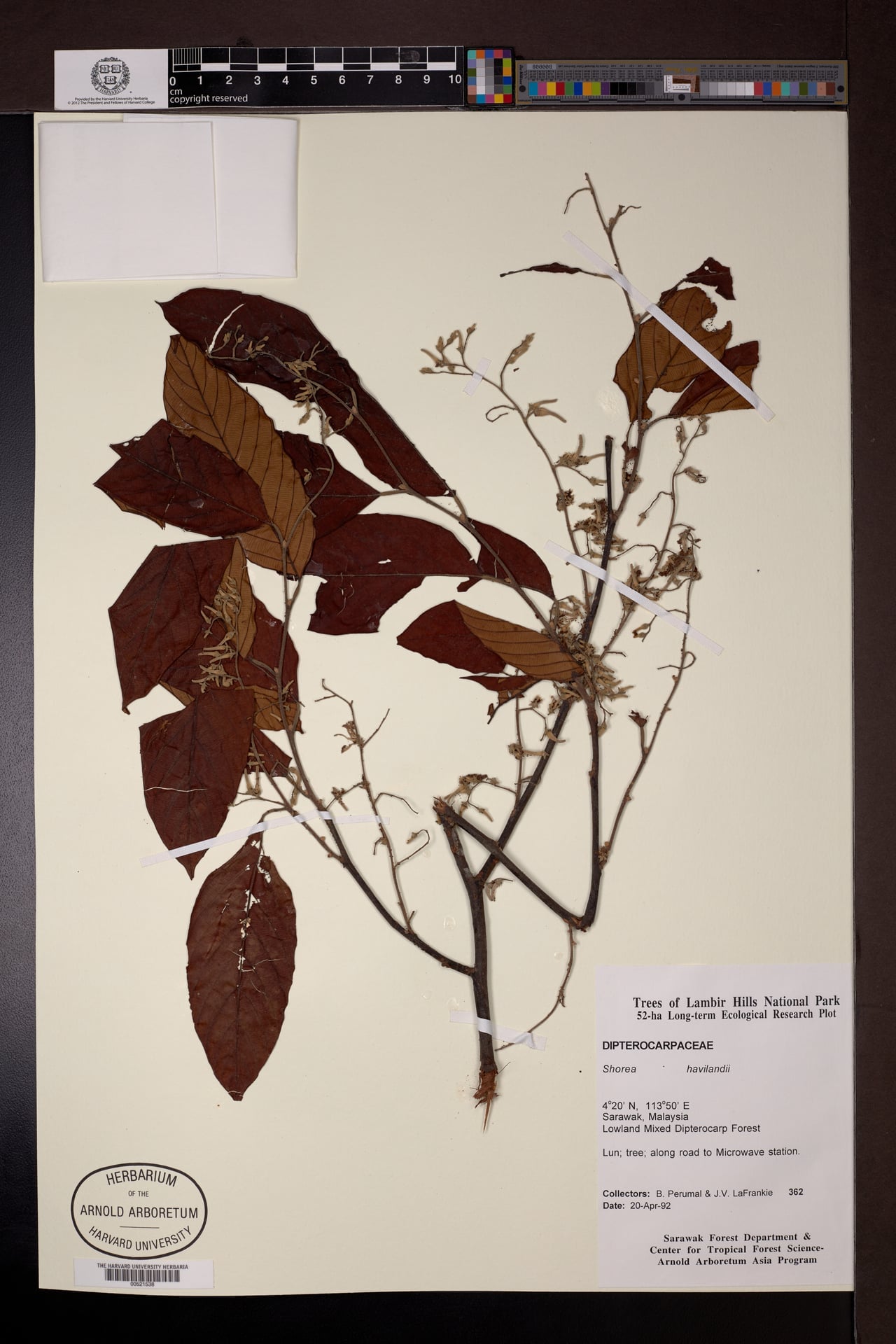
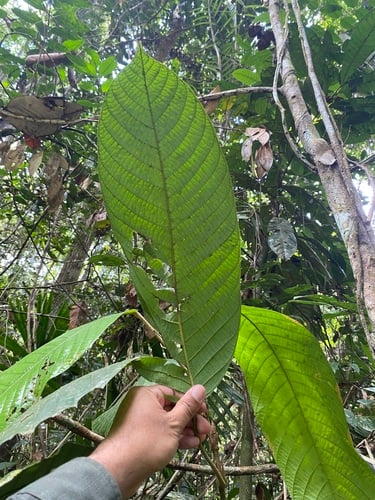
Shorea flemmichii
Symington
gbif· cc0
President and Fellows of Harvard College
gbif· cc0
President and Fellows of Harvard College
gbif· cc0
President and Fellows of Harvard College
Description
A tropical tree in the Dipterocarpaceae family native to tropical regions.
This description is brief — help expand it
Edible Uses
The nuts are processed for oil extraction.
Distribution
It is a tropical plant.
Where It Grows
Asia, Malaysia, SE Asia,
Cultivation
A slow-growing tree.
Propagation
We have no specific information for this species - the information below is a general guide for the genus. Seed - best sown as soon as possible. It does not require pre-treatment, but it is recommended to soak the seed for 12 hours prior to sowing. The seeds are sown in seedbeds, where they are covered with a mixture of sand and soil (1:1) or with a thin layer of sawdust. Germination of fresh seeds is usually good and rapid. About two weeks after germination, when the seedlings are 5 - 6cm tall, they are potted up into individual containers about 15 x 23cm with good drainage holes at their base. It is normally recommended to use a mixture of forest soil and sand (at a ratio of 3:1) as the potting medium in order to introduce the appropriate mycorrhiza to the roots. The seedlings are placed in 50 - 60% sunlight and watered twice daily. Seedlings can be planted out when 30 - 40cm tall - harden the seedlings off in full sunlight for one month prior to planting.
Other Uses
The wood is a source of the timber 'Dark Red Meranti'. We do not have a specific description, but the general description of dark red meranti is as follows:- The heartwood is pink-brown to dark red or purplish-brown, with white resin streaks; it is clearly demarcated from the 4 - 8cm wide band of sapwood. The texture is medium; the grain interlocked. The wood is moderately heavy, soft, moderately durable. It seasons well and is stable in service. It has a fairly high blunting effect and so stellite-tipped and tungsten-carbide tools are recommended, there is some risk of tearing due to the interlocked grain; nailing and screwing are goo; gluing is correct. The wood has a wide range of uses including for interior and exterior panelling and joinery, light carpentry, flooring, turnery, sculpture, wood-ware and cabinetwork.
References (1)
- Coolen, Q. T., 2013, The Illipe nut (Shorea spp.) as additional resource in plantation forestry. Van Hall Larenstein University and Sarawak Forestry.